
Lawn
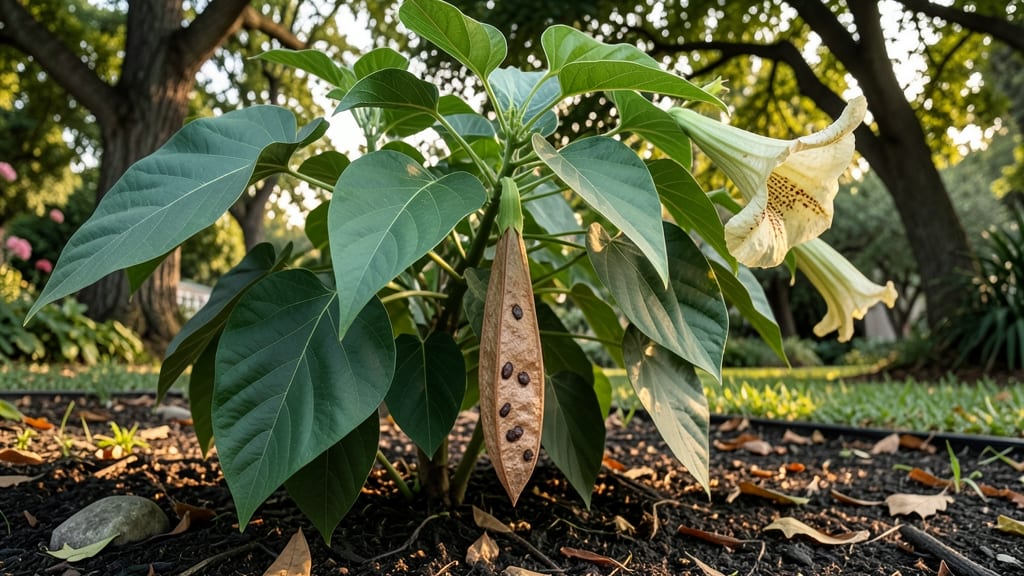
Harvesting angel trumpet seed pods without twisting them is the secret to viable seeds that germinate reliably. 🌱 I’ve learned the hard way—twisting the pods too soon ruins the seeds inside, leaving you with nothing but empty shells.
The key is patience and knowing exactly when to harvest for the best results every season.
You’ll need basic tools: sharp pruning shears, a paper bag for collecting pods, and a dry, well-ventilated space for drying. Once the pods turn brown and feel slightly leathery (usually late summer or early fall), gently twist them off the stem—no force needed.
The seeds inside are the size of tiny beans, and they need proper drying to break dormancy.
After harvesting, spread the pods in a single layer on newspaper to dry for 2-3 weeks in a warm, dry spot. Once fully dry, crack them open to release the seeds, then store them in an airtight container in the fridge until spring.
Germination can take 4-8 weeks, so start indoors in early spring for the best success.
Direct sowing is tricky because angel trumpets prefer warmth, so indoor starts give them a head start. Just remember—these seeds are toxic, so keep them away from pets and kids. With the right timing and care, you’ll have thriving angel trumpets in no time!
📚 In This Guide
- What you need
- Instructions
- Tips and common mistakes
- Wrapping up and next steps
What you need
- ● Angel trumpet seed pods: Mature, dried pods (harvest when they turn brown and split slightly). Aim for at least 10 pods for a reliable seed yield.
- ● Pruning shears or sharp scissors: For cleanly snipping pods from the plant. Opt for bypass pruners (not anvil-style) to avoid crushing seeds.
- ● Paper bags or breathable fabric sacks: 2–3 medium-sized bags (10–12 inches wide) to collect pods and prevent moisture buildup.
- ● Newspaper or cardboard: A large sheet (24" x 36") for drying seeds indoors.
- ● Fine-mesh sieve or colander: To separate seeds from chaff. A ¼-inch mesh works best.
- ● Paper towels or coffee filters: For gently separating seeds from debris.
- ● Small paintbrush or soft-bristle brush: For dislodging seeds stuck to pod fibers.
- ● Air-tight seed storage containers: 2–4 small jars or envelopes (1 oz capacity each) with silica gel packets or desiccant.
- ● Labeling supplies: Masking tape + marker to label containers with harvest date and variety.
- ○ Optional: Handheld fan or hairdryer (cool setting) to speed up drying if humidity is high.
- ● A sunny, dry day (morning harvest is ideal) to avoid damp pods.
- ● Patience: Seed pods need 2–3 weeks to fully dry on the plant before harvesting.
- ● Knowledge of plant maturity: Wait until pods turn brown and crack open slightly—green pods won’t yield viable seeds!
Step-by-step guide to harvesting angel trumpet seed pods
Here’s how to collect seeds without the frustrating twists—plus keep your plants thriving.
🌿 Step 1: Identify Mature Seed Pods
Angel trumpet pods turn from green to a papery brown when ready—this usually happens in late summer or early fall. Look for pods that feel dry and hollow when tapped gently; they’ll rattle with seeds inside. Avoid harvesting if the pods are still firm or green, as seeds won’t be viable yet.
I always check pods in the morning when humidity is lowest—this prevents sticky sap from clinging to your hands. If pods open naturally (they often split along the seams), collect seeds immediately to avoid scattering. Wear gloves if your skin is sensitive; the plant’s sap can irritate.
✂️ Step 2: Harvest Without Twisting the Pods
Use clean, sharp pruning shears to snip the stem just above the pod—never pull or twist, as this can damage the plant or cause the pod to burst prematurely. Cutting cleanly also prevents disease from entering the stem. Place harvested pods in a paper bag (not plastic) to allow airflow and prevent mold.
Here’s the trick: if pods are stubbornly closed, place them in a warm, dry spot for 1-2 days. The heat will encourage them to open naturally. Once open, gently shake seeds into your bag—don’t crush the pods, as this can release bitter sap that may coat the seeds.
🪴 Step 3: Dry and Store Seeds Properly
Spread seeds on a clean, dry towel in a single layer, away from direct sunlight. Let them dry for 5-7 days until completely brittle—you’ll know they’re ready when they crumble easily between your fingers. Store dried seeds in a sealed envelope or small jar in a cool, dark place like a pantry.
Label each container with the harvest date and variety (if applicable). Seeds remain viable for 2-3 years when stored properly, but germination rates drop after the first year. I like to test a few seeds annually to confirm they’re still good—just plant a small batch in a pot and watch for sprouts in 2-4 weeks.
🌱 Step 4: Encourage Future Seed Production
After harvesting, prune back any spent flowers or damaged stems to redirect the plant’s energy into new blooms. Angel trumpets thrive with well-draining soil and morning sun, so ensure they’re planted in a spot that meets these needs. Fertilize lightly in spring with a balanced 10-10-10 formula to support robust growth.
This is the moment that matters: if your plant looks stressed after harvesting, give it a deep watering and a week of rest before encouraging more blooms. Over-pruning can shock the plant, so limit cuts to no more than 1/3 of the foliage at once. Repeat the process next season for a fresh batch of seeds!
Tips & tricks for perfect angel trumpet seed harvesting
Real talk: Harvesting angel trumpet seed pods without the mess takes patience—and a few clever tricks. Here's how to avoid the common pitfalls I learned the hard way.
Timing Secret: Harvest pods in the morning when humidity is lowest to prevent sticky sap from clinging to your hands and tools. The morning light also helps you spot the papery brown color that signals maturity—this is when pods are truly ready and seeds are viable. If pods open naturally, collect seeds immediately to avoid scattering, which can happen quickly in breezy conditions.
Tool Technique: Always use clean, sharp pruning shears to snip stems just above the pod—never pull or twist. This prevents damaging the plant and avoids bursting the pods prematurely. After cutting, place pods in a paper bag (not plastic) to allow airflow, which prevents mold from forming on the seeds. I keep a dedicated pair of shears just for this task to avoid cross-contamination with other plants.
Drying Strategy: Spread seeds on a clean, dry towel in a single layer away from direct sunlight for the full 5-7 days. This gradual drying process is crucial—seeds that dry too quickly may not be viable. Test dryness by gently crushing a seed between your fingers; if it crumbles easily, they're ready for storage. I use a mesh screen over a towel to allow even airflow from underneath while keeping seeds contained.
Storage Wisdom: Label your seed containers with the harvest date and variety—this helps track viability over time. Store in a cool, dark pantry where temperatures stay consistent. I test a few seeds annually by planting them in small pots to confirm they still germinate within 2-4 weeks. This simple test saves you from discovering old seeds that won't sprout when you're ready to replant.
Pro Tips for Angel Trumpet Seed Pod
- Real talk: Harvesting angel trumpet seed pods without the mess takes patience—and a few clever tricks.
- Timing Secret: Harvest pods in the morning when humidity is lowest to prevent sticky sap from clinging to your hands and tools.
- Tool Technique: Always use clean, sharp pruning shears to snip stems just above the pod—never pull or twist.
Frequently asked questions
about angel trumpet seed pods—because harvesting shouldn’t be a guessing game!How do I know when angel trumpet seed pods are ready for harvesting?
The pods are ready when they turn light brown and split open slightly—usually in late summer or early fall. Gently shake the pod; if seeds rattle inside, they’re ripe! Avoid harvesting if pods are still green or hard. Pro tip: Morning harvests prevent seeds from scattering in the wind.
Can I save seeds from angel trumpet pods year after year?
Yes! Angel trumpet seeds remain viable for 2–3 years if stored properly in a cool, dry place (like a sealed envelope or jar). Label them with the harvest year to track freshness. For best results, replant within 1–2 years to maintain vigor. Warning: Seeds lose viability faster in humid climates.
What’s the best way to store angel trumpet seeds to prevent mold?
After harvesting, let seeds dry for 1–2 weeks in a warm, shaded spot (like a paper bag). Then, store them in an airtight container with a silica gel packet to absorb moisture. Avoid plastic bags—condensation causes mold! Bonus: Freeze seeds for 24 hours before storage to kill pests.
Are there alternatives if my angel trumpet pods don’t open naturally?
If pods stay closed, try drying them indoors (place in a paper bag for 1–2 weeks) or lightly nicking them with scissors to release seeds. Overripe pods may also rot—harvest earlier if humidity is high. For stubborn cases, hand-pollinate flowers with a paintbrush to ensure seed set next season.
Why did my angel trumpet seeds not germinate last year?
Common culprits: old seeds (over 3 years), poor storage (moisture/mold), or improper timing (planting too early). Try soaking seeds in lukewarm water for 24 hours before sowing, or test viability by crushing a seed—if it smells musty, it’s likely bad. Hot tip: Angel trumpets thrive in well-draining soil; soggy roots = failed germination.
Wrapping up and next steps
Harvesting angel trumpet seed pods doesn’t have to be a twisty, messy ordeal—with the right techniques, you can gather viable seeds year after year with ease! Whether you’re a seasoned gardener or just starting out, patience and precision are your best tools.
The key takeaway? Timing, gentle handling, and proper storage ensure healthy seeds for future blooms.
Ready to grow your angel trumpet collection? 🌱 Start by marking your calendar for next season’s harvest and experiment with storage methods to find what works best for your climate. Happy gardening—your future plants will thank you!