
Lawn
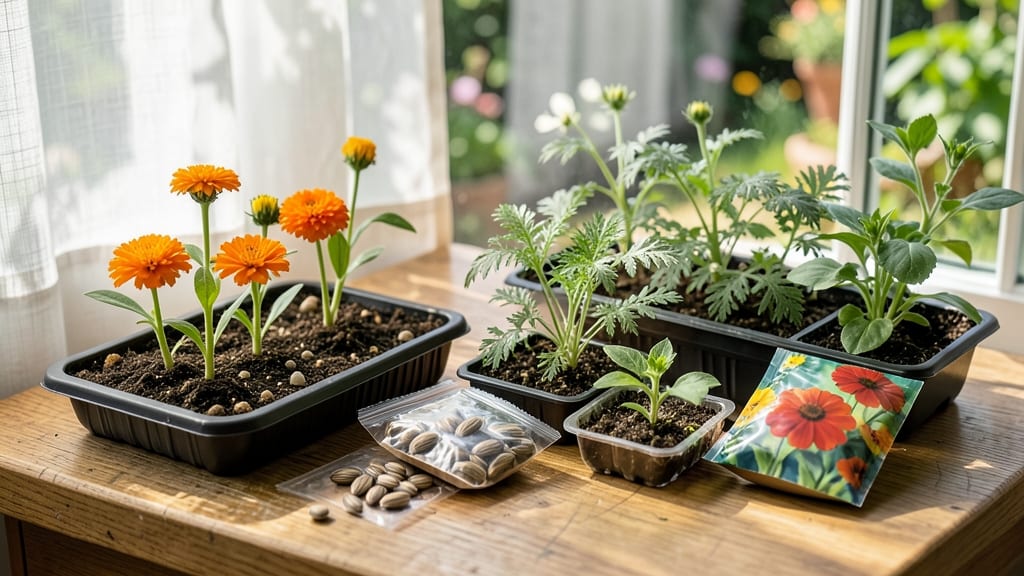
Mastering common flower seed identification saves you from growing weeds instead of zinnias. 🌻 The right seed mix means your garden blooms with what you planted, not surprises you didn’t ask for.
I’ve spent years sorting through seed packets and catalogs, and the key is noticing tiny details—seed size, shape, and texture—that make all the difference between a dream garden and a disappointment.
Start with the basics: round seeds like marigolds or flat, ribbed ones like sunflower seeds. A magnifying glass helps spot fine details, and a good seed guide (or app) lets you compare unknown seeds to proven varieties.
My go-to trick? Compare seed packets to photos of mature plants—what you’re planting should grow into something recognizable.
Once you master the visual clues, you’ll spot common mix-ups like cosmos vs. bachelor’s buttons or forget-me-nots vs. lobelia. The payoff is a garden that thrives without mystery—just vibrant blooms that match your vision. No more guessing games when you’re holding a packet.
For tricky seeds, keep a notebook with sketches or photos of what you’ve planted. Over time, your eye sharpens, and you’ll recognize seeds at a glance. The more you practice, the easier it gets—until you’re identifying seeds faster than you can say “bloom season.”
📚 In This Guide
- What you need
- Instructions
- Tips and common mistakes
- Wrapping up and next steps
What you need
- ● Magnifying glass or hand lens (3x–10x magnification) – for examining fine seed details.
- ● Ruler or measuring tape – to gauge seed size accurately (in inches or millimeters).
- ● Seed identification guidebook or printed reference sheets – for cross-checking features (e.g., Sunflower Seeds of North America or The Flower Seed Book).
- ● Small paintbrush or cotton swabs – for gently brushing away debris or highlighting textures.
- ● White or light-colored tray or plate – to display seeds against a contrasting background for better visibility.
- ● Notebook and pencil – to record observations (shape, color, texture, etc.).
- ● Access to sunlight or a bright lamp – natural light enhances color and detail visibility.
- ● Digital microscope or smartphone with macro lens – for high-resolution close-ups and photo documentation.
- ● Seed sorting trays or muffin tin – to organize seeds by type or size for easier comparison.
- ● Moisture control tools (e.g., silica gel packets) – to preserve seeds if you’re collecting them for later study.
- ● Field guide app (e.g., iNaturalist or PictureThis) – for on-the-go identification with photo uploads.
- ● Labeling tags and markers – to tag seeds with notes like “collected from location” or “likely species.”
How to identify common flower seeds visually
Here's my foolproof method for telling seeds apart—no guesswork, just clear visual cues.
🌱 Step 1: Examine Seed Shape and Size
Start by comparing each seed to common reference shapes. Most flower seeds fall into three basic categories: round and plump (like marigolds), flat and oval (like zinnias), or elongated and ribbed (like cosmos). I keep a small ruler nearby to check sizes—most annuals range from 1/8 to 1/4 inch in diameter.
Notice the texture too. Smooth seeds like petunias often have a shiny coating, while rough seeds like snapdragons feel gritty to the touch. Hold them up to a bright light—you'll see tiny patterns or ridges that reveal the plant family. For example, seeds with papery wings (like milkweed) belong to the milkweed family, while tiny, dust-like seeds (like baby's breath) are from the Asteraceae family.
🌿 Step 2: Check for Distinctive Markings
Look closely for color variations or unique patterns. Many seeds have one or both ends differently colored—a classic sign of the right variety. For instance, sunflower seeds often have a striped pattern, while nasturtium seeds have a flat, shield-like shape with a noticeable notch.
Some seeds even have tiny "eyes" or indentations that help with identification. I always check seed packets for magnified images, but when I'm working without them, I rely on these natural clues. If a seed has a fuzzy or hairy texture, it's likely from a member of the mint family (like agastache or salvia).
☀️ Step 3: Compare with Known Reference Seeds
Keep a small jar of reference seeds from plants you've already grown. Place them alongside unknown seeds and compare shapes, sizes, and textures side by side. I like to use a white background or a light-colored tray to make differences stand out clearly.
Pay attention to how the seeds feel when you roll them between your fingers. Some are lightweight and almost hollow (like cosmos), while others feel dense and solid (like marigolds). If you're still unsure, try the "float test"—place seeds in a bowl of water. Some, like poppy seeds, float, while others sink immediately.
⏰ Step 4: Verify with Seed Packet Labels
Even with visual clues, I always cross-reference with seed packet labels. Look for keywords like "flat," "round," or "winged" in the description, and compare them to your observations. Many reputable seed companies include tiny illustrations on their packets—these are incredibly helpful for double-checking.
If you're working with mixed seed collections, sort them into groups based on your observations. Label each group with your best guess and note any uncertainties. Over time, you'll build a mental library of seed characteristics that makes identification faster and more intuitive.
💧 Step 5: Test Germination for Confirmation
For seeds you're still unsure about, try a small germination test. Plant a few seeds in individual pots and observe their growth patterns. Different flowers sprout at different rates and develop distinct first leaves—some are round and lobed (like petunias), while others are narrow and elongated (like snapdragons).
Keep a journal of your findings, including photos of the seeds and early seedlings. This creates a visual reference for future identification. The more you practice, the easier it becomes to recognize seeds by sight alone—no labels or tests required.
Tips & tricks for perfect flower seed identification
Here's what nobody tells you about making seed identification foolproof—these little tricks save hours of guesswork.
Lighting is Everything: Natural daylight is your best friend for seed identification. Place seeds on a white tray near a window—this eliminates shadows and makes subtle color variations and textures pop. I keep a small magnifying lamp nearby for close-up inspection of tiny details like seed notches or fuzzy textures. Artificial light can cast misleading shadows that hide important clues.
Texture Talk: The way seeds feel reveals their family. Roll seeds between your fingers to detect subtle differences: smooth seeds like petunia often feel slick, while rough seeds like snapdragons have a gritty surface. For fuzzy seeds, gently brush them with your fingertip—mint family seeds will leave a noticeable powdery residue. This tactile check is especially helpful when visual cues are unclear.
Create a Reference Library: Build a collection of labeled seeds from known plants. Store them in small vials or envelopes with plant names and photos. When you encounter an unknown seed, compare it directly to your reference samples. I keep mine in a clear plastic box with compartments—this makes side-by-side comparisons effortless. Over time, you'll develop an instinct for recognizing common patterns.
Pro Tips for Common Flower Seed Identification
- Here's what nobody tells you about making seed identification foolproof—these little tricks save hours of guesswork.
- Lighting is Everything: Natural daylight is your best friend for seed identification.
- Texture Talk: The way seeds feel reveals their family.
Frequently asked questions
Got questions about flower seed identification? You’re not alone! Here are some of the most common queries gardeners have when diving into seed selection—and how to tackle them like a pro.
How do I know if my flower seeds are still viable?
Freshness matters! Most flower seeds stay viable for 1–3 years if stored in a cool, dry place. For older seeds, do a float test: Drop them in water—sinkers are good, floaters are likely dead. Alternatively, check the packaging date or test a few in damp paper towels for sprouting in 7–14 days.
What’s the best time to plant flower seeds outdoors?
Timing depends on your climate and the flower type. Cool-season blooms (like pansies or snapdragons) thrive when soil temps are below 70°F, ideally in early spring or fall. Warm-season favorites (e.g., marigolds, zinnias) wait until after the last frost when soil is at least 60°F. Always check seed packets for specifics!
Can I use last year’s flower seeds, or should I buy new ones?
Many seeds retain viability for a year or two, but hybrid varieties (marked "F1") often lose vigor. For heirloom or open-pollinated seeds, store them in an airtight container with silica gel or a seed-saving kit. If unsure, opt for new seeds—especially for annuals—to ensure robust blooms and disease resistance.
What are some easy-to-identify flower seeds for beginners?
Start with these foolproof picks:
- Sunflower: Large, striped seeds (resemble tiny suns!)
- Marigold: Tiny, ribbed seeds in papery pods
- Zinnia: Flat, oval seeds with a slightly crinkled texture
- Cosmos: Feather-light, papery seed heads (easy to collect)
Why aren’t my flower seeds germinating? Troubleshooting tips.
Try these fixes if your seeds aren’t sprouting:
- Check moisture: Keep soil consistently damp (not soggy) with a spray bottle.
- Verify depth: Most seeds need 2–3x their width of soil coverage.
- Light vs. dark: Some (like basil) need light; others (e.g., tomatoes) prefer darkness.
- Temperature: Use a seedling heat mat if your home runs cold.
- Test for viability: See the float test above!
Wrapping up and next steps
Mastering common flower seed identification is your gateway to a vibrant, thriving garden! 🌸 With this visual guide to 50+ garden staples, you’ve got the tools to confidently pick, plant, and nurture flowers that bring color and life to your outdoor space.
Whether you’re a beginner or a seasoned gardener, every seed you sow is a step toward a more beautiful yard.
Ready to take the next step? Start small—grab a few seed packets, sketch your garden layout, and dive in! 🌱 Explore our full seed guide or share your progress with fellow gardeners for inspiration.