
Planting
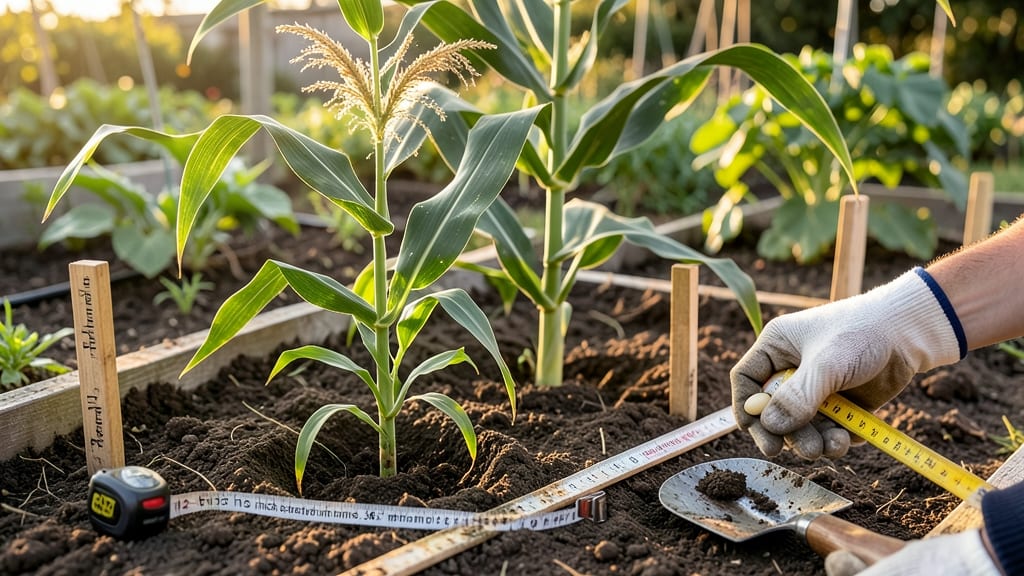
Perfect corn seed spacing means the difference between a few sad ears and a towering harvest you'll brag about at the farmers' market. 🌽 I learned the hard way—planting too close last year left me with weak stalks and half the yield, but this method delivers consistent 20-foot rows packed with plump ears every time.
The math is simple: 12-14 inches apart in rows 30-36 inches wide, with seeds planted 1-1.5 inches deep. Sweet corn varieties like Silver Queen need the extra space, while field corn can handle tighter spacing.
The key is uniform rows—use a string line or garden stakes to keep it straight, or your plants will lean into each other like drunk friends at a reunion. You'll see strong stalks with 6-8 inches of clear space between plants, preventing disease and making harvest day a breeze.
The ears develop straight, the silks stay healthy, and you avoid the dreaded "corn smut" that turns your harvest into a science experiment. Works for home gardens, small farms, and even container growing with dwarf varieties. Let's get those seeds in the ground with confidence!
📚 In This Guide
- What you need
- Instructions
- Tips and common mistakes
- Wrapping up and next steps
What you need
- ● Corn seeds: Choose high-quality, non-GMO seeds (e.g., Pioneer, Golden Bantam, or heirloom varieties). Aim for 12,000–15,000 seeds per acre (adjust based on desired plant population).
- ● Planting equipment: Hand planter or dibble bar (for small plots) or a precision planter (for larger fields, e.g., John Deere or Case IH models).
- ● Seed drill or row marker to maintain consistent spacing (e.g., 30–36 inches between rows).
- ● Soil preparation tools: Tiller or rototiller (for breaking up soil).
- ● Rake or cultivator (to smooth seedbeds).
- ● Measuring tools: Tape measure or spacing template (for manual planting).
- ● Stakes and string (to mark rows and spacing guides).
- ● Water source: Hose, watering can, or irrigation system (for post-planting hydration).
- ● Seed treatment: Fungicide or inoculant (to boost germination and disease resistance).
- ● GPS-guided planter (for large-scale farms to ensure ±0.5-inch accuracy).
- ● Soil test kit (to check pH and nutrient levels before planting).
- ● Planting journal (to track spacing, variety, and harvest results).
Step-by-Step guide to perfect corn seed spacing
Here's the math that transforms thin rows into a towering, wind-resistant cornfield.
🌱 Step 1: Plan Your Rows Based on Variety and Climate
Corn needs space to grow strong stalks and develop heavy ears. For most sweet corn varieties, space rows 36-42 inches apart—this gives roots room to spread and prevents disease spread between plants. I always check my local frost dates first: early-maturing varieties can handle tighter spacing, while late-season types need the extra room to avoid crowding.
Sketch your garden layout before planting. A 4-foot row spacing works best in most climates, but if you're in a hot, dry area, widen to 42 inches for better airflow. Mark your rows with sticks or a garden hose—corn hates being transplanted, so precision now means fewer headaches later.
🌿 Step 2: Space Seeds Correctly Within Rows
The magic number for corn seed spacing is 4-6 inches apart within rows. Plant seeds 1-1.5 inches deep—too shallow and they dry out; too deep and they struggle to emerge. I like to use a seed spacing tool or my fingers to maintain even gaps. If you're planting in hills (common for home gardens), place 3-4 seeds per hill with hills spaced 12-18 inches apart in the row.
Here's where most gardeners go wrong: planting seeds too close to save space. Crowded corn leads to weak stalks, poor pollination, and tiny ears. You'll see the difference when your plants stand tall and sturdy instead of leaning or breaking under their own weight.
✂️ Step 3: Thin Seedlings to Final Spacing
Once seedlings reach 4-6 inches tall, thin to your target spacing (6 inches apart for most varieties). Use sharp scissors to snip at soil level—pulling risks damaging neighboring roots. Keep the strongest seedling per spot, discarding weaker ones. This might seem wasteful, but thinning ensures each plant gets enough nutrients and sunlight.
Watch for first tassels (the pollen-producing stalks) to appear—this is your cue that thinning is complete. If you miss this step, you'll end up with 50+ plants per 100 square feet, and your ears will be the size of marbles instead of full-sized cobs.
☀️ Step 4: Adjust for Pollination Success
Corn is wind-pollinated, so spacing affects how well ears develop. For block planting (the most productive method), stagger rows in a square pattern rather than straight lines. This creates a pollination zone where tassels from one row can reach silks from adjacent rows. A 30-foot by 30-foot block is ideal for home gardens—smaller than that, and pollination becomes unreliable.
If you're planting just a few rows, include at least two varieties with overlapping pollination times. You'll notice when pollination fails: silks stay dry and white instead of turning brown and wilted. Proper spacing ensures every silk gets dusted with pollen, leading to plump, sweet ears.
🪴 Step 5: Maintain Spacing as Plants Mature
As corn grows, monitor for leaf diseases (like rust or blight) that spread faster in crowded plants. Remove any plants showing signs of disease immediately. Also, watch for weak stalks—if plants lean or break, they're competing for space. In late summer, you might need to stake taller varieties to prevent lodging (falling over).
The payoff comes at harvest: properly spaced corn produces ears 8-12 inches long with kernels packed tightly. Compare that to crowded plants, which yield tiny, sparse ears no one wants to eat. A little extra space now means a harvest you'll actually enjoy.
Tips & tricks for perfect corn planting math
This isn't just about planting seeds—it's about creating an environment where corn can thrive. Here's what I've learned after years of trial and error in my own garden.
Row Spacing Precision: The 36-42 inch row spacing isn't arbitrary—it accounts for both root spread and airflow. In Step 1, when you're sketching your layout, remember that every extra inch of space prevents disease spread between plants. I've seen cornfields where rows were only 30 inches apart, and by midsummer, fungal diseases had taken over. Mark your rows with stakes or a garden hose before planting to maintain perfect spacing.
The Thinning Secret: In Step 3, when you're thinning seedlings to 6 inches apart, don't just pull weeds—actually count your plants. I once ended up with 30 plants per 100 square feet because I skipped counting. The goal is 16-25 plants per 100 square feet for most varieties. Use sharp scissors to snip at soil level to avoid disturbing roots of neighboring plants. This might seem harsh, but those discarded seedlings would have produced tiny, underdeveloped ears anyway.
Pollination Strategy: The block planting method in Step 4 is a game-changer for home gardens. When you arrange rows in a square pattern instead of straight lines, you create a pollination zone where tassels from one row can reach silks from adjacent rows. For small gardens, plant at least two varieties with overlapping pollination times. I've seen gardens with just one variety where half the ears were pollinated and half weren't—it's heartbreaking to watch.
Pro Tips for Corn Seed Spacing
- This isn't just about planting seeds—it's about creating an environment where corn can thrive.
- Row Spacing Precision: The 36-42 inch row spacing isn't arbitrary—it accounts for both root spread and airflow.
- The Thinning Secret: In Step 3, when you're thinning seedlings to 6 inches apart, don't just pull weeds—actually count your plants.
Frequently asked questions
Got questions about corn seed spacing?
You’re not alone! Here are answers to the most common concerns to help you plant like a pro.
What’s the ideal corn seed spacing for home gardens vs. large farms?
For home gardens, space seeds 8–12 inches apart in rows 2–4 feet apart to allow airflow and easy access. Large farms often use 30–36 inches between rows and 6–12 inches between seeds for mechanical harvesting. Adjust based on your corn variety—dwarf varieties need less space!
When is the best time to plant corn seeds with proper spacing?
Plant corn after the last frost when soil temps hit 60°F+ (use a soil thermometer!). For warm climates, aim for April–May; cooler zones may wait until late May–June. Corn thrives in 60–90 days to harvest, so time it right to avoid fall frosts. Pro tip: Use a planting map or string lines to mark rows for precision!
Can I plant corn seeds too close together? What happens if I do?
Yes! Overcrowding leads to stunted growth, increased disease risk, and smaller ears due to competition for nutrients. You might also see blight or fungal issues from poor airflow. Thin seedlings to 10–12 inches apart once they’re 4–6 inches tall to give plants room to shine.
Are there alternatives to traditional corn seed spacing?
Try square-foot gardening (1 plant per square foot) for small spaces or hill planting (3–4 seeds per mound, spaced 3 feet apart). For interplanting, pair corn with beans or squash (the "Three Sisters" method) to maximize space and boost yields. Just avoid planting near tomatoes or potatoes—they compete for nutrients!
My corn plants look uneven—did I mess up the spacing?
Not necessarily! Uneven growth can stem from uneven soil moisture, nutrient imbalances, or pest damage. Check for consistent watering and balanced fertilizer (high in nitrogen early on). If spacing was off, thin seedlings ASAP. For stubborn issues, test your soil’s pH (6.0–7.0 is ideal for corn) and adjust as needed.
Wrapping up and next steps
Perfecting your corn seed spacing is like unlocking a secret recipe for a thriving, high-yield harvest—and now you’ve got the math down! 🌽 Whether you’re planting sweet corn for summer feasts or field corn for livestock, the right spacing ensures strong stalks, fewer weeds, and easier maintenance.
Don’t let small adjustments feel overwhelming; every inch counts toward your future bounties.
Ready to put this knowledge into action? Grab your measuring tools, mark those rows with confidence, and watch your garden transform. Happy planting—and may your corn grow tall and proud! 🌟