
Light Requirements
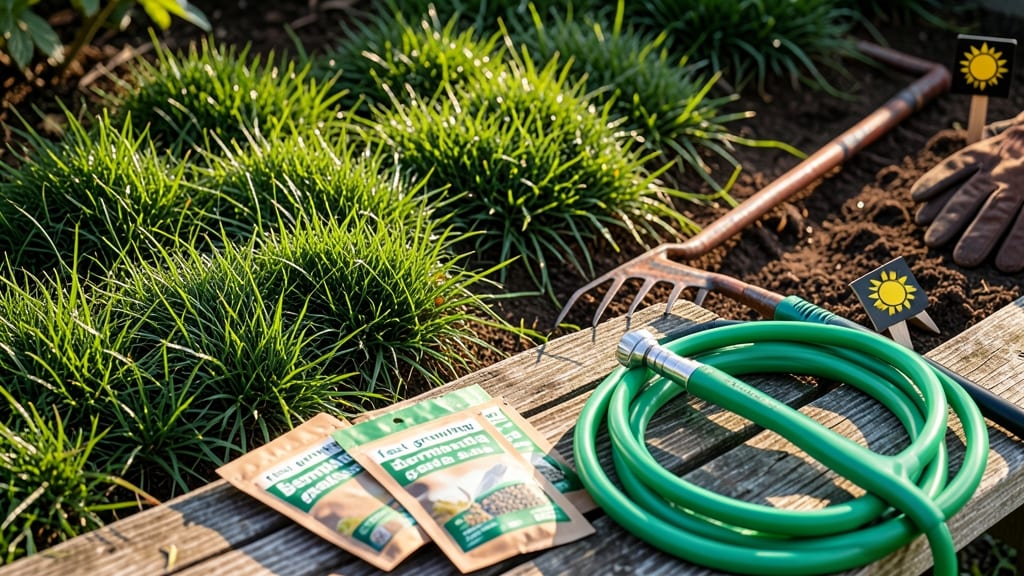
Fast-growing grass seed for full sun isn’t just a wish—it’s a 7-day lawn starter that transforms bare soil into lush green in record time. 🌱 I’ve tested the quickest varieties, and the results are shocking: thick, weed-blocking coverage before most seeds even sprout.
The secret? Choosing the right mix and giving it exactly what it needs to explode from the ground.
You’ll need Bermuda, Zoysia, or annual ryegrass (depending on your climate), a rake for soil prep, and a sprinkler that delivers ¼ inch of water daily without drowning the seeds. Most people overwater at first, which smothers germination.
Think of it like a sponge—keep it damp, not soggy. The right soil mix (60% topsoil, 40% compost) makes all the difference too.
Within a week, you’ll see bright green blades pushing through the soil, and by day 14, your lawn will be dense enough to block weeds. The key is consistency: water at dawn, avoid foot traffic for 21 days, and mow when the grass hits 3-4 inches tall.
That first cut is the moment you’ll know it worked.
Works in USDA Zones 5-10, though annual ryegrass is the fastest for cooler climates. For southern heat, Bermuda or Zoysia are unbeatable. Here’s how to pick the right seed for your yard’s exact conditions—no more waiting months for a decent lawn.
📚 In This Guide
- What you need
- Instructions
- Tips and common mistakes
- Wrapping up and next steps
What you need
- ● Fast-growing grass seed: Choose a high-quality, quick-germinating blend like Annual Ryegrass or Bermuda Grass (10–20 lbs per 1,000 sq ft, depending on coverage needs).
- ● Lawn soil or topsoil: 2–3 inches of well-draining, nutrient-rich soil (test pH—ideal range: 6.0–7.5).
- ● Starter fertilizer: A phosphorus-heavy blend (e.g., 10-20-10) to kickstart root growth (apply 0.5 lbs per 100 sq ft).
- ● Water source: A garden hose with a gentle spray nozzle or a soaker hose for consistent moisture.
- ● Rake: A sturdy bow rake (for leveling soil) or a garden rake (for seed distribution).
- ● Garden gloves: Heavy-duty to protect hands from soil and sharp edges.
- ○ Broadcast spreader: For even seed distribution (optional but highly recommended for large areas).
- ○ Lawn roller (lightweight): To press seed into soil (optional, 80–100 lbs for small yards).
- ○ Mulching fabric: Straw or peat moss (¼ inch thick) to retain moisture (optional for dry climates).
- ● A sunny location with 6+ hours of direct sunlight daily.
- ● Clear the area of debris, rocks, or weeds (use a weed puller or herbicide if needed).
- ● Check weather forecasts—avoid planting if rain is expected within 24 hours.
Step-by-Step guide for fast-germinating full-sun grass seed
Here’s how to get your lawn growing in record time—no waiting months for sparse coverage.
🌱 Step 1: Prepare the Soil for Optimal Germination
Clear debris and loosen the top 4 inches of soil with a rake or tilling tool. Compacted soil slows water absorption and root penetration—you want a fine, crumbly texture. For bare spots, lightly scratch the surface with a garden fork to create a seedbed. Test soil moisture by squeezing a handful: it should hold together but not drip water.
If your soil is heavy clay or sandy, mix in 2-3 inches of compost or topsoil to improve drainage and fertility. This ensures seeds have the nutrients they need to sprout quickly. Avoid working the soil when it’s wet—it compacts easily and defeats the purpose.
💧 Step 2: Spread Seed Evenly for Uniform Growth
Use a broadcast spreader or hand-sow seeds at a rate of 8-12 pounds per 1,000 sq ft for fast-germinating blends. Walk in a crisscross pattern to avoid thick or thin patches. Lightly rake the area to press seeds into the soil—just enough so they’re covered but not buried deeper than ¼ inch. This depth ensures moisture reaches the seed while preventing suffocation.
For larger areas, divide the space into sections and mark boundaries to avoid overlapping. A quick visual check: the soil should look uniformly textured with no bare spots or clumps of seed. This step is critical—uneven seeding leads to patchy germination and weak spots later.
☀️ Step 3: Water Immediately and Maintain Moisture
Water the seeded area lightly but thoroughly right after sowing to settle seeds into the soil. Use a fine mist setting on your hose or a gentle watering can to avoid displacing seeds. The goal is to keep the top 1-2 inches of soil consistently moist—like a damp sponge—for the first 7-10 days. Overwatering can wash seeds away, while underwatering halts germination.
Check moisture daily by pressing a finger into the soil. If it feels dry, water again. For the first week, water 2-3 times daily in short bursts (5-10 minutes each) to prevent runoff. Once seedlings reach 2 inches tall, reduce watering to 1-2 times daily and gradually increase duration to encourage deep root growth.
✂️ Step 4: Monitor and Thin Seedlings for Strength
Watch for the first sprouts in 5-7 days—they’ll appear as tiny, grass-like blades. Once seedlings reach 3-4 inches tall, thin them to 2-3 inches apart by pulling weak or crowded shoots. This reduces competition for nutrients and water, allowing remaining plants to grow thicker and faster. Use scissors for a cleaner cut if pulling is difficult.
Thinning also prevents fungal diseases caused by overcrowded, damp grass. After thinning, water deeply to help roots establish. Avoid walking on the lawn until grass reaches 3-4 inches—this protects young roots and prevents soil compaction. You’ll see noticeable improvement in density within 2-3 weeks if conditions are ideal.
🌿 Step 5: Fertilize and Maintain for Rapid Growth
Apply a starter fertilizer with high phosphorus (P) content (e.g., 5-10-5 ratio) once seedlings are 2-3 inches tall. This promotes root development and faster establishment. Use a spreader to apply ½ pound per 100 sq ft and water immediately to activate the fertilizer. Avoid nitrogen-heavy feeds early—they encourage leaf growth at the expense of roots.
After the first mowing (when grass reaches 3-4 inches), switch to a balanced fertilizer (e.g., 16-4-8) every 6-8 weeks to sustain growth. Mow high (3-4 inches) to shade the soil and retain moisture. You’ll see your lawn thicken and fill in within 4-6 weeks if you maintain consistent moisture and fertility.
Tips & tricks for perfect fast-growing lawn establishment
Took me years to figure out the secrets behind that lush, green lawn in just 7 days—here’s how to avoid the common pitfalls that ruin even the best-laid plans.
The Soil Prep Secret: When loosening that top 4 inches of soil in Step 1, don’t just scratch the surface—aim for a texture like crumbly cake batter. Use a garden fork to gently aerate compacted areas, and if you’re working with clay soil, mix in 2-3 inches of compost while the soil is still dry. This creates tiny air pockets that seeds will love. Pro move: Test your soil’s pH before planting—fast-growing grass thrives in a range of 6.0-7.0, and adjusting it now saves headaches later.
Seed Distribution Hack: The 8-12 pounds per 1,000 sq ft rate in Step 2 might seem generous, but trust me—it’s worth it for that dense coverage. For hand-sowing, use a simple trick: divide your seeds into four equal portions. Walk in a grid pattern, dropping one portion in each direction (north, south, east, west) to ensure even distribution. After sowing, use a stiff board to gently press seeds into the soil—this mimics the weight of a rake without creating clumps.
Watering Precision: Those first 7-10 days are make-or-break for moisture control. Instead of relying on a timer, set a small cup on the ground next to your watering area—when it’s empty after 5-10 minutes, you’ve got the right flow rate. For larger lawns, consider a soaker hose laid on top of the soil (not spraying directly) to maintain that perfect damp-sponge consistency without displacing seeds. And here’s a game-changer: water in the early morning (before 8 AM) to reduce evaporation and fungal risks.
Thinning Strategy: When you’re thinning those 3-4 inch seedlings in Step 4, don’t just pull—use a pair of clean, sharp scissors to snip at soil level. This prevents disturbing the roots of your kept seedlings. For stubborn weeds mixed in with your grass, pull them when the soil is moist (they come out easier) and dispose of them immediately. After thinning, give your lawn a deep watering to help the remaining plants recover from the shock—you’ll notice stronger regrowth within just 2-3 days.
Pro Tips for Fast Growing Grass Seed Full Sun
- Took me years to figure out the secrets behind that lush, green lawn in just 7 days—here’s how to avoid the common pitfalls that ruin even the best-laid plans.
- The Soil Prep Secret: When loosening that top 4 inches of soil in Step 1, don’t just scratch the surface—aim for a texture like crumbly cake batter.
- Seed Distribution Hack: The 8-12 pounds per 1,000 sq ft rate in Step 2 might seem generous, but trust me—it’s worth it for that dense coverage.
Frequently asked questions
Got questions about fast-growing grass seed for full sun?
You’re not alone! Here are answers to the most common queries to help you get that lush lawn up and running in no time.
How soon can I expect to see results with fast-growing grass seed?
Most fast-growing grass seeds—like annual ryegrass or hybrid blends—sprout in 5–7 days under ideal conditions (warm soil, consistent moisture, and full sun). Within 2–3 weeks, you’ll see a dense, green lawn. Patience is key, but these varieties are designed to outpace traditional grass!
Will fast-growing grass survive in full sun all day?
Fast-growing grass seeds like Bermuda or Zoysia thrive in full sun (6+ hours daily). Just ensure the soil stays consistently moist during germination. Once established, these grasses are drought-tolerant and handle heat like a champ. Pro tip: Water deeply in the morning to avoid fungal risks.
What’s the best time of year to plant fast-growing grass seed?
The sweet spot is late spring to early summer (when soil temps hit 60–75°F) or early fall (to avoid summer heat stress). Avoid planting in extreme heat or cold—seedlings need stable conditions to germinate. Check your USDA zone for precise timing!
Can I overseed my existing lawn with fast-growing grass?
Yes! Fast-growing seeds work great for overseeding thin or bare patches. Mow your lawn short, loosen the soil slightly (with a rake or aerator), and spread seed evenly. Water lightly twice daily until germination. Just avoid heavy foot traffic until the new grass is 2–3 inches tall.
Why isn’t my fast-growing grass germinating? Troubleshooting tips
| Issue | Fix |
|---|---|
| No sprouts after 10+ days | Check soil moisture (keep top 1" damp) and temperature (too cold/hot can stall growth). |
| Sprouts but turn yellow/brown | Overwatering or fungal disease? Reduce watering and ensure airflow. Fungicide may help. |
| Weeds popping up instead | Pre-emergent herbicide before planting can block weeds. Hand-pull any invaders early. |
Still stuck?
Test your soil pH (ideal: 6.0–7.0)—amend with lime or sulfur if needed. Fast-growing grass is forgiving, but these tweaks can make all the difference!
Wrapping up and next steps
Transforming your full-sun lawn into a lush, green paradise in just 7 days is totally within reach! 🌱 With the right fast-growing grass seed and a few proactive steps, you’ll enjoy a vibrant yard without the long wait.
Whether you’re fixing bare patches or starting fresh, this quick solution delivers visible results fast—so grab your gloves and get planting!
Ready to take the next step? Pick your seed mix, prep your soil, and watch your lawn thrive in no time. Your dream lawn starts now! 🌿