
Propagation
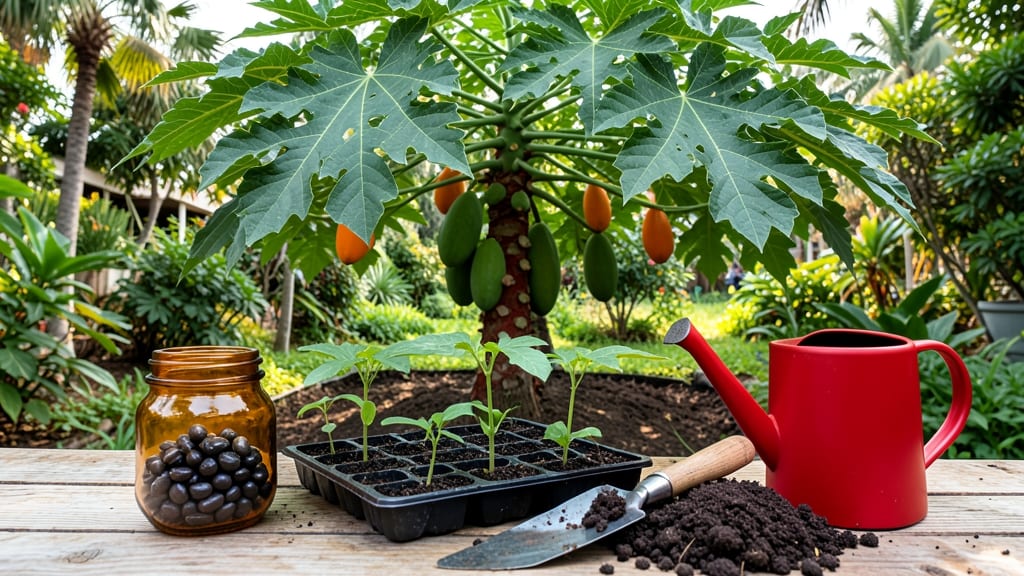
Growing papaya from seed to fruit is a thrilling 12-month adventure that rewards patience with tropical sunshine in your kitchen. 🌱 I still remember the first time I watched a tiny seedling unfurl into a plant bearing its own fruit—it changed how I saw home gardening forever.
The key isn't just tropical heat; it's understanding the plant's rhythm from that first sprout to the moment you slice into sweet, vibrant fruit.
Here's the thing—papayas thrive where summers stay warm, but with the right setup, you can grow them indoors near sunny windows or in containers moved outdoors during warm months. You'll need well-draining soil, a spot with 6+ hours of direct sunlight daily, and consistent moisture (but never soggy roots).
The real magic happens when you mimic their native tropical environment, even if you're not in a Zone 10-12 climate.
By month 6, you'll be pinching off early flowers to encourage stronger growth, and by month 10, you'll see those distinctive papaya blossoms appear. With proper pollination (hand-pollination works indoors), your plant will develop fruit within 3-4 months of flowering.
The first harvest? Pure satisfaction—nothing beats the taste of fruit you grew from a tiny seed.
Whether you're in Florida or a balcony in Boston, this guide covers everything from seed selection to troubleshooting common issues. Let's get those seeds sprouting—your future papaya harvest starts now!
📚 In This Guide
- What you need
- Instructions
- Tips and common mistakes
- Wrapping up and next steps
What you need
- ● Papaya seeds: 3–5 fresh, viable seeds (extract from a ripe papaya—see Pro Tip below).
- ● Seed-starting mix: 1 small pot (4–6 inches deep) filled with sterile, well-draining potting soil (e.g., coco coir + perlite blend).
- ● Spray bottle: For gentle watering (avoid over-saturating seeds).
- ● Plastic wrap or dome: To create a humidity tent (e.g., a clear plastic bag or propagator lid).
- ● Grow lights or sunny window: A south-facing window or LED grow light (12–16 hours/day) for seedlings.
- ● Fertilizer: Balanced liquid fertilizer (e.g., 10-10-10 or fish emulsion) diluted to half-strength for young plants.
- ● Larger pots (5–7 gallons): For transplanting seedlings (papaya roots grow fast!).
- ● Well-draining soil: Mix of topsoil, compost, and perlite (ratio: 60% soil, 30% compost, 10% perlite).
- ● Support stake or trellis: A 6-foot bamboo stake or wire cage for climbing varieties (e.g., 'Solo' or 'SunUp').
- ● Pruning shears: For shaping the plant and removing lower leaves (sanitize with rubbing alcohol).
- ● Seedling heat mat: Keeps soil warm (75–85°F) to speed up germination.
- ● pH test kit: Ensures soil pH is 6.0–7.0 (papaya prefers slightly acidic to neutral).
- ● Organic mulch: Straw or wood chips to retain moisture and suppress weeds.
- ● Pollination aid: A soft paintbrush to hand-pollinate flowers (if growing indoors).
- ● Garden journal: Track growth stages, watering, and fertilizer dates!
Step-by-Step instructions for growing papaya from seed to fruit
Here’s how I grow papayas from seed to fruit—fast, reliable, and with minimal fuss.
🌱 Step 1: Prepare Seeds and Germinate Indoors
Papaya seeds germinate quickly, but they need warmth and moisture to start. Remove the seed from the fruit’s center and rinse off any pulp. Soak the seed in lukewarm water for 12 hours—this softens the outer coat and speeds up germination. Place it between damp paper towels in a sealed plastic bag, then set it in a warm spot (75-85°F).
Check daily for sprouts, which should appear in 3-7 days. Once the sprout reaches 1 inch tall, transfer it to a 3-inch pot filled with sterile seed-starting mix. Press the soil lightly around the seedling to keep it stable. Keep the pot in bright, indirect light until the first true leaves appear—this usually takes 2-3 weeks.
☀️ Step 2: Harden Off and Transplant
Papayas thrive in warm climates, so they need 6-8 months of full sun to fruit. Once seedlings have 4-6 true leaves, start hardening them off by placing them outside in partial shade for 1-2 hours the first day. Gradually increase exposure over 10-14 days, moving them to direct sun by day 7.
After hardening, transplant into the ground or a large container (at least 15 gallons) with well-draining soil. Papayas grow fast, so choose a spot with 6+ hours of sun daily and protection from strong winds. Dig a hole twice as wide as the root ball and mix in a handful of balanced fertilizer (10-10-10) to encourage strong root growth.
💧 Step 3: Water and Fertilize for Growth
Papayas need consistent moisture but hate soggy roots. Water deeply 2-3 times per week, ensuring the top 2 inches of soil stay slightly damp. Reduce watering slightly as the plant matures—overwatering causes fruit rot. Mulch around the base with 2 inches of organic mulch to retain moisture and regulate soil temperature.
Feed every 4-6 weeks with a low-nitrogen fertilizer (5-10-10) to promote flowering and fruiting. You’ll see new leaves and stems emerge within 4-6 weeks after transplanting. If the plant grows leggy, prune the top 1-2 inches to encourage bushier growth—this helps support fruit later.
⏰ Step 4: Pollinate and Support Fruit Development
Papayas are self-pollinating, but sometimes they need a little help. Gently shake the plant or use a small brush to transfer pollen between flowers. Flowers open in the morning, so pollinate between 8-10 AM for the best results. Female flowers have a small fruit bump at the base, while males don’t—focus on pollinating the females.
Once fruit forms, support heavy branches with stakes or cages to prevent breaking. Papayas take 4-6 months to ripen after flowering. You’ll know they’re ready when the skin turns orange or yellow and gives slightly when gently squeezed. Harvest carefully with pruning shears to avoid damaging the stem.
Tips & tricks for growing papaya from seed to fruit
Small details make all the difference when growing papayas from seed—here’s how to avoid common pitfalls and maximize success.
Germination Boost: After the 12-hour soak, rinse the seed one last time before placing it between paper towels. This removes any lingering pulp that could mold. I also use a small heating pad set to low under the sealed bag—this maintains that 75-85°F range even if your home runs cooler. The extra warmth cuts germination time from 7 days to just 4-5 days.
Transplanting Made Easier: When your seedling reaches 1 inch tall in Step 1, use a pencil to poke a small hole in the sterile seed-starting mix before gently placing the seedling in. This prevents root damage during transfer. For transplanting in Step 2, I add a handful of perlite to the soil mix—this improves drainage and prevents the root rot that can kill young papayas.
Sunlight Strategy: During the 10-14 day hardening process, I start with just 1 hour of morning sun (when UV is less intense) rather than the full 1-2 hours. This gradual approach prevents sunburn on delicate seedlings. After day 7, I move them to full sun but provide afternoon shade with a lightweight cloth if temperatures exceed 90°F.
Fertilizer Timing: The 4-6 week feeding schedule works best if you use half-strength fertilizer the first time. Papayas are sensitive to salt buildup from concentrated nutrients. I also switch to a citrus-specific fertilizer (like 6-6-6) after the first flowering appears—this gives the plant the potassium boost it needs for fruit development.
Pro Tips for Papaya From Seed To Fruit
- Small details make all the difference when growing papayas from seed—here’s how to avoid common pitfalls and maximize success.
- Germination Boost: After the 12-hour soak, rinse the seed one last time before placing it between paper towels.
- Transplanting Made Easier: When your seedling reaches 1 inch tall in Step 1, use a pencil to poke a small hole in the sterile seed-starting mix before gently placing the seedling in.
Frequently asked questions
Got questions about growing papaya from seed to fruit? You’re not alone! Here are some of the most common queries—and their answers—to help you navigate the journey with confidence.
How long does it take for papaya seeds to germinate?
Papaya seeds typically sprout within 7–14 days in warm, moist conditions (70–85°F). Keep the soil consistently damp but not soggy, and place the container in bright, indirect light. If germination takes longer, check for overwatering or cold drafts, which can delay sprouting. Patience is key—some seeds take up to 3 weeks!
Can I grow a papaya tree indoors?
Yes, but with caveats! Papayas thrive in warm climates (USDA Zones 10–11), so indoor growth is tricky unless you have a sunny south-facing window or a grow light. If indoors, expect slower growth and smaller fruit. For best results, move seedlings outdoors after the last frost or use a greenhouse. Without enough light, your tree may become leggy or fail to fruit.
Why isn’t my papaya plant flowering or fruiting?
Papayas need 6–12 months to mature and flower, but common roadblocks include:
- Lack of sunlight: Papayas crave 6+ hours of direct sun daily.
- Nutrient deficiencies: Use a balanced fertilizer (10-10-10) when buds appear.
- Temperature stress: Cold drafts (<50°F) can shock the plant.
- Pollination issues: Hand-pollinate with a small brush if no bees visit.
What’s the best way to pollinate a papaya flower?
Papaya flowers are self-pollinating, but sometimes they need a helping hand! Use a soft paintbrush or cotton swab to gently transfer pollen from the male flower (smaller, with a long stem) to the female flower (larger, with a tiny papaya-shaped ovary at the base). Do this in the morning when flowers are fresh. Repeat every 1–2 days for 3–5 days to maximize fruit set.
How do I know when a papaya is ripe for harvest?
Ripeness depends on your preference! For ripe papayas:
- Skin turns orange or yellow (from green).
- Fruit gives slightly when gently squeezed.
- Stem separates easily from the fruit.
Can papaya trees survive winter frost?
Nope! Papaya trees are tropical and die in frost (<32°F). If you live in a cold climate:
- Grow in containers and move indoors before winter.
- Use a greenhouse or heated propagator to extend the growing season.
- Start new seeds each year—papayas won’t regrow after frost damage.
Wrapping up and next steps
Growing papaya from seed to fruit is a rewarding journey that combines patience, care, and a little tropical flair! 🌱 From nurturing those tiny seeds to harvesting vibrant, sweet fruits in just 12 months, you’ve unlocked the magic of homegrown abundance.
Whether you’re a beginner or a seasoned gardener, every step—from germination to harvest—builds your confidence and connection to nature.
Now that you’re armed with all the tips and tricks, why not take the next step? Start your own papaya plant today! Share your progress with fellow gardeners or experiment with different varieties. Happy growing—your future harvest is waiting! 🌴🍈