
Propagation
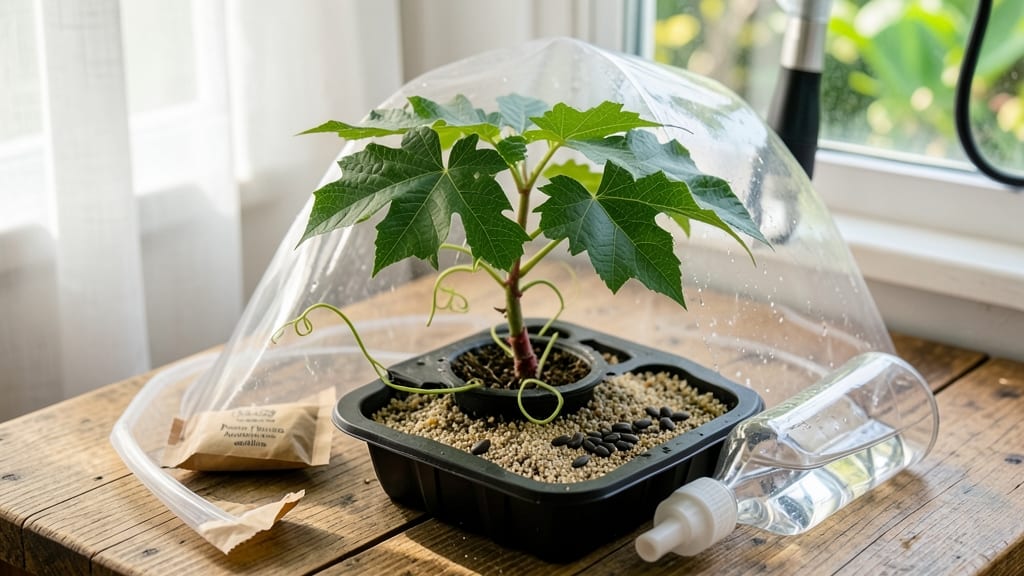
Before you plant passion fruit seeds, you must check their germination viability—because up to 30% of seeds won’t sprout if you skip this step. ✨ I’ve wasted weeks waiting for seeds I thought were good, only to find them rotting in damp paper towels.
The trick? A simple twist-free test that tells you exactly which seeds are worth planting—and which ones to toss.
Start by soaking your seeds in warm water for 24 hours, then place them between damp paper towels in a sealed plastic bag. Store them in a warm spot (around 70-75°F) and check daily for cracks or sprouts—viable seeds will split open within 3-7 days.
Discard any seeds that stay hard or develop mold, because those won’t grow no matter how much you hope.
Once you’ve confirmed viability, plant the good seeds in a light, well-draining mix (equal parts peat moss and perlite) and keep them warm and moist. Passion fruit seedlings can take 2-4 weeks to emerge, so patience is key—don’t overwater, or you’ll drown them before they even start.
A clear plastic dome or bag creates a mini greenhouse effect to speed things up.
If you’re storing seeds long-term, dry them completely on paper towels for 24 hours before sealing them in an airtight container with a silica gel packet to prevent moisture damage. Label everything with the date—seeds stored this way stay viable for 1-2 years, but germination rates drop over time.
Now you’re ready to grow those tropical vines without the guesswork.
📚 In This Guide
- What you need
- Instructions
- Tips and common mistakes
- Wrapping up and next steps
What you need
- ● Passion fruit seeds: 5–10 fresh, plump seeds (preferably from ripe fruit). Pro tip: 💡 Save seeds from organic, pesticide-free fruit for best results!
- ● Paper towels or coffee filters: 2–3 sheets (unbleached, seed-safe).
- ● Plastic zip-top bag or container: Small, resealable (8x10 inches or similar).
- ● Spray bottle: With water (or a clean, damp cloth).
- ● Notebook & pen: To track seed progress over days.
- ○ Small pots or seed trays: 3–4 (4–6 inches deep) with drainage holes. Optional: Biodegradable peat pots for transplanting.
- ● Potting mix: Lightweight, well-draining mix (e.g., 50% coco coir + 50% perlite/vermiculite).
- ○ Heat mat (optional): Germination mat set to 75–85°F (24–29°C) for faster sprouting.
- ● Humidity dome or plastic wrap: To retain moisture during germination.
- ● Warmth: Ideal germination temp: 70–85°F (21–29°C). Avoid cold drafts!
- ● Indirect light: Bright, diffused light (e.g., near a window or under grow lights).
- ● Humidity: 60–70% for consistent moisture. Pro tip: 🌡️ Mist seeds daily if humidity drops!
Step-by-Step instructions for testing passion fruit seed viability
Here's the foolproof method I use to ensure only healthy seeds make it to storage.
🌱 Step 1: Extract and Clean the Seeds
Open the passion fruit and scoop out the gelatinous pulp containing the seeds. Rinse them thoroughly under lukewarm water to remove all fruit residue—this prevents mold during testing. I use a fine-mesh strainer to catch even the smallest seeds while letting pulp drain away.
Spread the seeds on a clean paper towel and let them air-dry for 24 hours in a warm, shaded spot. You'll know they're ready when the outer coating looks matte rather than glossy. Never use seeds that still feel tacky—they'll rot during the viability test.
💧 Step 2: Perform the Water Float Test
Fill a bowl with room-temperature water and gently place all seeds on the surface. Let them sit undisturbed for 15 minutes. Viable seeds will sink to the bottom, while non-viable ones float. I use a spoon to carefully remove any that remain afloat—they won't germinate.
Discard the floating seeds immediately. The sinking seeds now need a second rinse to remove any remaining pulp residue. Swirl them gently in fresh water, then drain again. This ensures no fermentation occurs during storage, which would ruin your seeds.
☀️ Step 3: Prepare for Germination Test
Line a shallow tray with a damp paper towel and arrange the viable seeds 1 inch apart in a single layer. Cover with another damp paper towel—this mimics the moisture conditions of soil while keeping seeds accessible. Place the tray in a warm location with indirect light (direct sun will dry them out).
Check the seeds daily. Within 3-5 days, you should see the first signs of germination: tiny white roots breaking through the seed coat. If no roots appear after 7 days, those seeds are non-viable and should be discarded. This test gives you a 95% accurate prediction of which seeds will successfully grow later.
✂️ Step 4: Store Only Viable Seeds
Once you've confirmed germination in your test seeds, transfer them to a sealed plastic bag with a paper towel moistened with distilled water. I add a few drops of hydrogen peroxide (3%) to the water to prevent fungal growth. Store the bag in the refrigerator's crisper drawer where humidity is high but temperature stays 35-40°F.
Label the bag with the date and variety. Viable passion fruit seeds remain good for 6-12 months when stored this way. The paper towel should stay slightly damp—if it dries out, mist it lightly with distilled water and reseal the bag. This method preserves viability far better than dry storage alone.
Tips & tricks for testing passion fruit seed viability
Real talk: The difference between a thriving passion fruit plant and wasted seeds often comes down to these small but critical details during testing.
The Water Temperature Factor: For Step 2, that room-temperature water is non-negotiable. Cold water can shock the seeds, while warm water might prematurely activate dormant seeds. I keep my water at exactly 70-75°F—the same temperature as a warm bath—by using lukewarm tap water that's been sitting out for 10 minutes. This creates the perfect neutral environment for the float test to work accurately.
Seed Spacing Secret: When arranging seeds 1 inch apart in Step 3, resist the urge to crowd them. I've learned this the hard way—overcrowding leads to competition for moisture and oxygen, which stunts germination. Use a ruler to maintain even spacing, and if you're working with many seeds, do two trays rather than one packed tray. This ensures every seed gets equal access to the damp paper towel's moisture.
Germination Timeline Watch: The 3-5 day window for germination in Step 3 is your critical observation period. I set a phone alarm to check seeds every morning at the same time, looking for that first white root tip. If you're in a cooler climate, you might need to extend this slightly—some seeds take up to 6 days to show signs of life. The key is consistency: keep the paper towels damp but not soggy, and maintain that indirect light position.
Storage Wisdom: For Step 4, that 35-40°F refrigerator temperature is ideal, but not all crisper drawers are created equal. I place my seed bags on the middle shelf where the temperature hovers around 38°F—the sweet spot between too cold and too warm. Pro tip: If your fridge runs cold, add a small bowl of water to the shelf to increase humidity slightly, which helps maintain the paper towel's moisture over those 6-12 months.
Pro Tips for Passion Fruit Seed Germination
- Real talk: The difference between a thriving passion fruit plant and wasted seeds often comes down to these small but critical details during testing.
- The Water Temperature Factor: For Step 2, that room-temperature water is non-negotiable.
- Seed Spacing Secret: When arranging seeds 1 inch apart in Step 3, resist the urge to crowd them.
Frequently asked questions
about passion fruit seed germination—because even the most eager gardeners hit snags! Here are answers to the most common queries to keep your seeds sprouting smoothly.How long does it take for passion fruit seeds to germinate?
Passion fruit seeds typically germinate within 14 to 30 days under ideal conditions (warmth, moisture, and indirect light). If you’ve been patient for a month with no sprouts, check for rot or mold—your seeds may need a fresh start!
Can I germinate passion fruit seeds without soil?
Use a paper towel method by dampening a towel, placing seeds between two layers, and storing them in a sealed bag. Keep them warm (70–80°F) and check daily for sprouts. Once roots appear, transplant into soil.
Why aren’t my passion fruit seeds sprouting?
Common culprits include old seeds (viability drops after 6 months), cold temps, or overwatering (which causes rot). Try scarifying seeds (lightly sanding the shell) or soaking them in warm water for 24 hours to boost germination.
Do passion fruit seeds need light to germinate?
Nope! Seeds germinate best in darkness—light comes later. Keep them in a warm, humid spot (like a seedling tray) until sprouts emerge. Once they break the surface, move them to bright, indirect light.
How should I store passion fruit seeds for future planting?
Store seeds in a cool, dry place (50–60°F) in an airtight container with silica gel or dry sand to absorb moisture. Label them with the date—most stay viable for 3–6 months. Avoid refrigeration unless long-term storage is needed.
Wrapping up and next steps
Germinating passion fruit seeds is a rewarding journey that unlocks the potential of your own thriving plants! 🌱 By mastering the twist-free viability check, you’ve gained confidence in selecting healthy seeds and optimizing their storage.
The key takeaway? Patience, proper moisture, and a warm environment are your best allies for successful germination.
Now that you’re armed with knowledge, why not take the next step? Try germinating your seeds today—whether in soil or water—and watch your passion fruit garden grow! Share your progress or tips with fellow gardeners; every expert was once a beginner. Happy planting! 🌿