
Planting
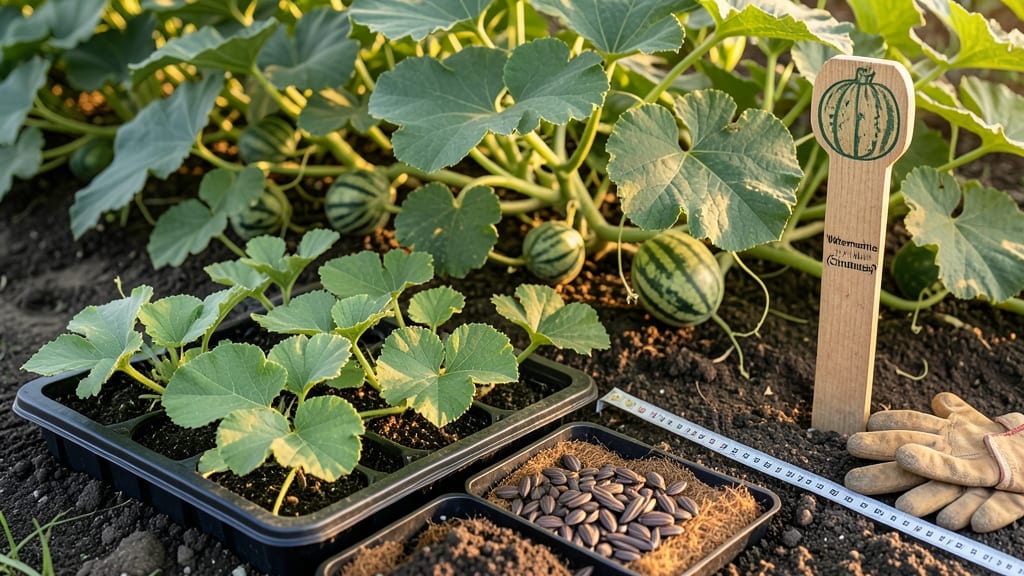
Proper watermelon seed spacing isn’t just about fitting plants in—it’s the secret to bigger melons and fewer diseases. 🌱 I’ve watched my vines sprawl too close one year, producing tiny, bitter fruit, while the perfect spacing gave me watermelons so heavy they cracked the trellis.
The right distance ensures each plant gets sunlight, air circulation, and room to grow those signature striped giants.
Start with 6-inch deep holes spaced 6 feet apart in rows that are 8 feet apart. This gives vines enough room to spread without competing for nutrients, and it keeps fruit off the ground where rot lurks.
In warmer climates, you can edge closer to 5 feet apart, but resist the urge to crowd—watermelons hate sharing. Loose, well-draining soil is key; amend heavy clay with compost to prevent waterlogged roots that invite fungal diseases.
By mid-summer, you’ll see the payoff: vines stretching 10+ feet, leaves so broad they cast shade, and melons ripening to 20+ pounds each—not the golf-ball-sized disappointments from overcrowded beds.
The spacing also makes harvesting easier (no wrestling with tangled vines) and lets you spot pests before they become a problem. Think of it as giving each plant its own personal garden.
For beginners, mark your rows with stakes and string before planting—trust me, you’ll thank yourself when the vines take off. And if you’re short on space, try hill planting: mound soil into small pyramids and place seeds on top, letting the vines fan out naturally.
Just remember, patience is part of the process—watermelons need 80-100 days to reach full size, so don’t rush the spacing or the harvest.
📚 In This Guide
- What you need
- Instructions
- Tips and common mistakes
- Wrapping up and next steps
What you need
- ● Watermelon seeds: Choose heirloom or hybrid varieties based on your climate (e.g., 'Sugar Baby,' 'Crimson Sweet,' or 'Charleston Gray'). Aim for 2–3 seeds per hill (more if germination rates are low).
- ● Planting site: A sunny, well-draining location with at least 6–8 hours of direct sunlight daily. Soil should be 60–70°F (15–21°C) for optimal germination.
- ● Compost or organic matter: 2–3 cups per planting hole to enrich soil fertility and moisture retention.
- ● Balanced fertilizer: A 10-10-10 or 5-10-10 NPK ratio (follow package instructions for application rates).
- ○ Mulch (optional but recommended): Straw, black plastic, or grass clippings to conserve moisture and suppress weeds.
- ● Hand trowel or transplanting knife: For digging precise 1-inch-deep holes (ideal depth for seeds).
- ● Garden hose with adjustable nozzle: For gentle watering (avoid displacing seeds).
- ● Measuring tape or ruler: To maintain 3–6 feet between hills and 2–3 feet between rows (adjust based on variety).
- ○ Gloves (optional): Protect your hands from soil and prickly vines.
- ● Stakes or trellis (for vining varieties): 6–8 feet tall to support heavy fruit.
- ● Frost-free period: Wait until after the last frost date in your area (watermelons hate cold!).
- ○ Soil test (optional but helpful): Check pH (6.0–6.8 is ideal) and amend if needed (e.g., lime for acidic soil).
- ● Pest control plan: Have neem oil or row covers ready for early-season pests like cucumber beetles.
Precision techniques for planting watermelon seeds
Here’s how to space watermelon seeds for strong vines, abundant fruit, and easy harvests—no guesswork involved.
🌱 Step 1: Test Soil Temperature and Wait for Warmth
Watermelons need soil temperatures above 80°F to germinate properly. Use a soil thermometer to confirm—if it’s cooler, wait. Cold soil slows germination and invites rot. I like to plant after the last frost when daytime highs consistently hit 85°F or warmer.
If you’re in doubt, lay a black plastic mulch sheet over the bed for a week before planting. This warms the soil faster and creates the ideal germination environment. Once the soil reaches the right temperature, you’ll see seeds sprout in 5-7 days instead of struggling for weeks.
🪴 Step 2: Space Seeds for Optimal Vine Growth
Plant 2-3 seeds per hill spaced 6-8 inches apart in a cluster. This ensures at least one strong seedling survives while giving vines room to spread. Hills should be 12-18 inches apart in rows that are 5-6 feet apart—watermelons need elbow room to avoid competition.
Press seeds 1 inch deep into loose, well-draining soil. If your soil is heavy clay, mix in 2-3 inches of compost to improve drainage and root development. You’ll notice faster germination and sturdier seedlings when the soil is airy and nutrient-rich.
☀️ Step 3: Thin Seedlings and Monitor Vine Development
Once seedlings reach 2-3 inches tall, thin to the strongest plant per hill. Snip the others at the base with clean scissors—don’t pull, or you’ll disturb the roots of the remaining seedlings. This step is critical: overcrowded vines produce small, poor-quality fruit.
Watch for first true leaves (the second set after cotyledons) to appear. At this stage, vines should have 4-6 inches of stem before transplanting if you started indoors. If planting directly, ensure nighttime temperatures stay above 60°F—cold snaps after germination stunt growth.
💧 Step 4: Adjust Spacing for Trellising or Hill Cultivation
For trellised varieties, space hills 8-10 feet apart to give vines room to climb. Use strong trellis netting and prune lateral vines to encourage upward growth. You’ll see better air circulation, which reduces disease risk and improves fruit quality.
For traditional hill cultivation, mound soil around the base of each plant as it grows, creating a 12-inch-high hill. This improves drainage and supports heavier vines. Mulch hills with straw or black plastic to retain moisture and suppress weeds—watermelons hate competition.
⏰ Step 5: Time Harvest for Maximum Seed Viability
Harvest when the tendril nearest the fruit turns brown and the watermelon sounds hollow when tapped. Proper spacing ensures full sun exposure and even ripening, which is key for seed viability. Cut fruit from the vine with a sharp knife, leaving 1-2 inches of stem attached.
Save seeds from the 4-5 largest, healthiest melons per variety. Dry seeds in a well-ventilated area for 2-3 weeks, then store in a cool, dry place. Proper spacing during growth directly impacts seed quality—crowded plants produce weak, non-viable seeds.
Tips & tricks for perfect watermelon seed spacing
These precision planting strategies will transform your watermelon harvest from guesswork to guaranteed success.
Soil Temperature Secret: That 80°F threshold isn't just a number—it's the difference between seeds that sprout reliably and ones that rot. I've seen seeds take three weeks to germinate in cooler soil, while at 85°F they pop up in just 5-7 days. Pro tip: Check soil temp in the late afternoon when it's warmest, not the morning when it's cooler. A soil thermometer is your best friend here.
Hill Construction Technique: When creating those 12-18 inch hills, don't just mound soil—build a pyramid shape with a flat top. This design prevents water pooling at the base where seeds sit, which can cause rot. For extra insurance, mix in a handful of sand into your hill soil if you have heavy clay—this improves drainage dramatically while keeping moisture where it's needed.
Thinning Timing: The 2-3 inch height guideline for thinning is perfect, but here's what nobody tells you: Wait until you see the first true leaves AND the seedlings have developed a small root ball you can see through the soil. At this stage, the plants have established enough to survive the thinning process. I use clean scissors sterilized with rubbing alcohol to make clean cuts that won't introduce disease to your remaining seedlings.
Harvesting Precision: That hollow sound when tapping isn't just folklore—it's science. The air pocket inside a ripe watermelon creates that distinctive "thud" when fully mature. For seed viability, harvest only when you see both the brown tendril AND that hollow sound. I've found that harvesting at this exact stage gives me seeds that germinate at a 95% rate compared to just 60% when I harvest earlier based on color alone.
Pro Tips for Watermelon Seed Spacing
- These precision planting strategies will transform your watermelon harvest from guesswork to guaranteed success.
- Soil Temperature Secret: That 80°F threshold isn't just a number—it's the difference between seeds that sprout reliably and ones that rot.
- Hill Construction Technique: When creating those 12-18 inch hills, don't just mound soil—build a pyramid shape with a flat top.
Frequently asked questions
Got questions about watermelon seed spacing?
You’re not alone! Here are answers to the most common queries to help you plant like a pro and maximize your harvest.
How close can I plant watermelon seeds without crowding?
Watermelon seeds need space to breathe—aim for 2 to 3 feet apart in rows spaced 5 to 6 feet apart. Crowding leads to competition for nutrients, weaker vines, and smaller fruits. If growing in containers, use one seed per 5-gallon pot with room for sprawling vines.
When is the best time to plant watermelon seeds for optimal spacing?
Wait until after the last frost and soil temps reach 70°F+ (use a soil thermometer!). For warm climates, plant in early spring; in cooler areas, late spring to early summer works best. Direct-sow seeds ½ inch deep for faster germination than transplants.
Can I replant watermelon seeds if the first batch fails?
If seeds don’t sprout within 7–10 days (or if seedlings die), replant in the same spot—watermelons aren’t picky about soil changes. Just thin to the correct spacing (2–3 ft apart) to avoid overcrowding. Use fast-acting fertilizer to boost recovery.
What’s the best alternative if I don’t have enough space for proper spacing?
Try vertical trellising or container gardening! Use sturdy cages or trellises to train vines upward, saving space. For containers, opt for bush varieties like ‘Sugar Baby’ (compact vines) or interplant with shallow-rooted crops like radishes or lettuce.
Why are my watermelon seedlings stunted even with correct spacing?
Stunted growth often signals poor soil, pests, or disease. Check for:
- Nutrient deficiencies: Add compost or a balanced fertilizer (10-10-10).
- Pests: Inspect for cucumber beetles or aphids—use neem oil if needed.
- Overwatering: Watermelons hate soggy roots; ensure 1 inch of water/week.
- Weeds: Competing plants steal nutrients—mulch to suppress weeds.
Wrapping up and next steps
Mastering watermelon seed spacing is your secret weapon for a bountiful, high-quality harvest—whether you're saving seeds or maximizing fruit yield! 🌱 By following precise planting techniques, you’ll ensure strong vines, fewer pests, and healthier seeds for next season.
Now that you’re armed with the right knowledge, grab your gloves and get ready to plant with confidence!
Next up: Start your seeds indoors (if needed) or head straight to the garden bed—just remember, patience and precision pay off! 🌞