
Propagation
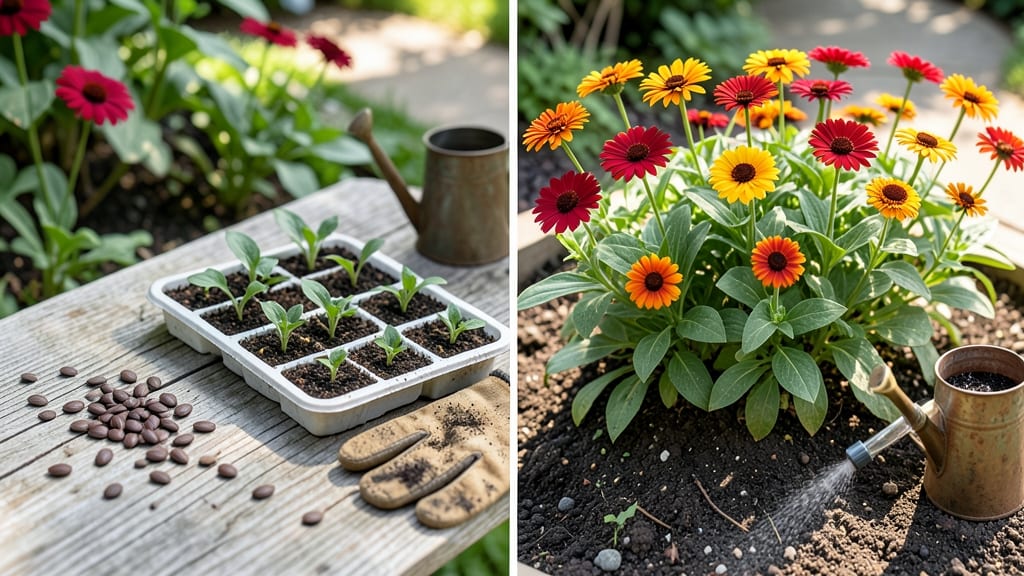
Growing zinnias from seed to bloom is like watching a sun-painted masterpiece unfold in your garden—60 days of pure color from tiny specks of seed. 🌻 I’ve grown zinnias for years, and the secret isn’t complicated: it’s all about timing, sunlight, and a little patience.
These cheerful flowers reward you with bold blooms that last from summer until frost, making them the perfect choice for quick gratification and long-lasting beauty.
The magic starts with well-draining soil and a sunny spot—zinnias thrive in full sun and can’t handle soggy roots. Plant seeds directly in the ground after your last frost date, about ¼ inch deep, and keep the soil consistently moist but not waterlogged.
Within 7-10 days, you’ll see those first tiny green leaves poking through, and before you know it, you’ll be pinching back leggy seedlings to encourage bushier growth.
By day 60, you’ll be cutting stems for bouquets or letting bees buzz happily among the blooms. The best part? Zinnias are disease-resistant and attract pollinators like crazy.
Varieties like ‘Benary’s Giant’ or ‘Profusion’ are foolproof for beginners, while ‘Crystal’ or ‘Zahara’ add extra height and texture to your garden beds.
Even if your first batch isn’t perfect, zinnias are forgiving—just adjust watering or thinning as needed. Once you master this, you’ll be growing zinnias every season, turning your garden into a riot of color that never fades. Ready to get started?
📚 In This Guide
- What you need
- Instructions
- Tips and common mistakes
- Wrapping up and next steps
What you need
- ● Zinnia seeds: Choose heirloom or hybrid varieties (e.g., 'Benary’s Giant,' 'Profusion,' or 'Crystal'). Buy 1–2 packets (50–100 seeds) for a small garden or 3–5 packets for larger patches.
- ● Seed-starting mix: 1–2 gallons of sterile, well-draining potting soil (avoid garden soil—it’s too dense!).
- ● Containers: For indoor starts: 4–6 small seed trays or 4–6 4-inch pots with drainage holes.
- ● For direct sowing: A shallow tray or 2–3 10-inch pots per variety.
- ● Grow lights or sunny windowsill: A full-spectrum LED grow light (12–16 hours/day) or a south-facing window with 6+ hours of sunlight.
- ● Watering can or spray bottle: With a fine mist nozzle to avoid disturbing seeds.
- ● Plant labels: 10+ wooden or plastic labels and a marker to track varieties.
- ● Fertilizer: A balanced, water-soluble fertilizer (e.g., 10-10-10) or compost tea for organic growers.
- ● Garden soil: Amend with 2–3 inches of compost or aged manure for nutrient-rich beds.
- ● Garden gloves: To protect hands while handling soil and seedlings.
- ● Trowel or transplanting tool: For digging small holes (2–3 inches deep).
- ● Mulch: 1–2 inches of straw or shredded leaves to retain moisture and suppress weeds.
- ● A seedling heat mat (if starting indoors in cool climates).
- ● Plant cloche or row cover to protect young seedlings from pests.
- ● Stakes or cages (6–12 inches tall) for taller varieties like 'Benary’s Giant'.
- ● Epsom salt (1 tbsp per gallon of water) for a magnesium boost if leaves yellow.
Step-by-step instructions for growing zinnias from seed
Watch your garden explode with color in under two months—here’s how to grow zinnias from tiny seeds to bold blooms!
🌱 Step 1: Start Seeds Indoors 6-8 Weeks Before Last Frost
Fill small seed-starting trays with moistened seed-starting mix and press it down gently to remove air pockets. Zinnia seeds are tiny, so I use a toothpick to create tiny divots—about ¼ inch deep—and place just one seed in each. Cover lightly with a sprinkle of mix, then mist with water until the surface feels damp but not soggy.
Place the tray in a warm spot (around 70°F) with bright light or under grow lights. Germination can take 7-14 days, so be patient. Once seedlings emerge, remove the grow lights or move them slightly higher to prevent leggy growth. You’ll know they’re ready when the first true leaves appear—these are the second set of leaves, not the initial cotyledons.
☀️ Step 2: Harden Off and Transplant Seedlings
About 2 weeks before your last frost date, start hardening off your seedlings by placing them outside in a sheltered spot for 1-2 hours the first day. Gradually increase their outdoor time over 7-10 days
Choose a sunny spot with 6+ hours of direct sunlight daily—zinnias thrive in full sun. Space seedlings 6-12 inches apart, depending on the variety. Dig a hole slightly deeper than the root ball, place the seedling in, and firm the soil gently around it. Water deeply right after transplanting to help roots settle. Zinnias hate soggy roots, so water deeply once a week (or more often in extreme heat) until the top inch of soil feels dry. Water at the base of the plant in the morning to prevent fungal diseases. Avoid overhead watering, especially when leaves are wet—this can lead to powdery mildew, a common zinnia problem. Feed your zinnias with a balanced 10-10-10 fertilizer every 3-4 weeks to encourage lush growth. Stop fertilizing once buds form—too much nitrogen will produce more leaves than flowers. You’ll see the first buds appear in about 60 days from seeding, and they’ll bloom nonstop if you deadhead spent flowers regularly. Here’s the secret to long-lasting zinnias: deadhead spent blooms by snipping the flower head just above the first set of healthy leaves. This encourages the plant to produce more flowers instead of going to seed. I do this every 2-3 days during peak bloom time—it’s a quick task that keeps your zinnias looking fresh and vibrant. If your zinnias start to look leggy or floppy, it’s time to cut them back by ⅓ of their height. This rejuvenates the plant and often triggers a second flush of blooms. Watch for pests like aphids or spider mites—spray the undersides of leaves with soapy water if you spot them early. With proper care, your zinnias will bloom until the first frost!💧 Step 3: Water and Fertilize for Strong Growth
✂️ Step 4: Deadhead and Maintain Blooms
Tips & tricks for growing zinnias from seed
These simple tricks will help you grow zinnias that bloom brighter and last longer than ever!
Germination Boost: Zinnia seeds are tiny and can be tricky to germinate. After planting your seeds in the ¼-inch deep divots, place the tray in a plastic bag with a few small holes poked in it. This creates a mini greenhouse effect that keeps moisture in and speeds up germination—you’ll often see sprouts in just 7 days instead of the full 7-14 days. Just remove the bag once the first true leaves appear to prevent mold.
Lighting Secret: The 70°F warm spot you place your seedlings in should also have strong light. If you don’t have grow lights, position your trays near a south-facing window where they’ll get at least 12 hours of light daily. I’ve seen seedlings stretch toward weak light and become leggy—this happens when they’re reaching for more light. If you notice this, move them closer to the light source immediately.
Harden Off Like a Pro: When you’re hardening off seedlings for the 2 weeks before last frost, start with just 1-2 hours in a sheltered spot like under a patio cover. I like to use a small cardboard box with ventilation holes to create a mini greenhouse during this transition. This gradual approach prevents transplant shock and gives your zinnias time to adjust to outdoor conditions without stress.
Sunny Spot Strategy: Zinnias absolutely thrive in 6+ hours of direct sunlight, but if your garden gets intense afternoon sun, consider planting them in a spot with morning sun and afternoon shade. This prevents the leaves from scorching while still giving them plenty of light to produce vibrant blooms. When transplanting, handle the seedlings gently by their leaves rather than the stems to avoid damaging their delicate roots.
Pro Tips for Zinnias From Seed To Bloom
- These simple tricks will help you grow zinnias that bloom brighter and last longer than ever!
- Germination Boost: Zinnia seeds are tiny and can be tricky to germinate. After planting your seeds in the ¼-inch deep...
- Lighting Secret: The 70°F warm spot you place your seedlings in should also have strong light. If you don’t have grow...
Frequently asked questions
Got questions about growing zinnias from seed? You’re not alone! Here are some of the most common queries—plus quick, practical answers to help you cultivate stunning blooms with ease.
How long does it take for zinnia seeds to germinate?
Zinnia seeds typically sprout in 7 to 14 days after planting, depending on temperature and soil moisture. For faster germination, keep seeds in a warm (70°F/21°C), moist environment. If you’re impatient, try soaking seeds overnight in warm water to kickstart the process!
Can I plant zinnia seeds directly in the garden, or should I start indoors?
Both work! For most climates, direct sowing outdoors after the last frost (when soil is 60°F/15°C+) is simplest. If you’re in a cooler zone or want a head start, start seeds indoors 4–6 weeks before transplanting. Just avoid overcrowding—zinnias need space to thrive!
Why aren’t my zinnia seeds sprouting? Troubleshooting tips?
Check these common culprits:
- Cold soil: Zinnias need warmth to germinate. Use a seedling heat mat if temps dip below 50°F (10°C).
- Too deep: Plant seeds only ¼ inch deep—burying them deeper can prevent sprouting.
- Dampness issues: Overwatering can cause rot, while dry soil halts germination. Keep soil consistently moist (not soggy).
- Old seeds: Zinnia seeds lose viability after 2–3 years. Test a few seeds in a damp paper towel to check viability.
Do zinnias need full sun to bloom?
Absolutely! Zinnias thrive in 6+ hours of direct sunlight daily. While they can tolerate partial shade, blooms will be sparser and leggier. If your garden is shady, opt for dwarf varieties like ‘Thumbelina’ or pair zinnias with taller sun-loving plants for mutual benefit.
How do I encourage zinnias to rebloom after cutting?
To keep your zinnias flowering nonstop:
- Deadhead spent blooms daily—this redirects energy to new flowers.
- Fertilize lightly every 4–6 weeks with a balanced, low-nitrogen fertilizer (e.g., 10-10-10).
- Avoid overwatering—zinnias prefer dry soil between waterings to prevent mildew.
- Pinch back young plants to encourage bushier growth.
Can zinnias survive winter, or do I need to replant every year?
Zinnias are annuals, so they won’t return after frost. However, you can save seeds from your best blooms for next year! Let a few flowers fully mature and dry on the stem, then collect the seeds inside. Store them in a cool, dry place for up to 3 years.
Wrapping up and next steps
Growing zinnias from seed to bloom is a rewarding journey that brings bursts of color to your garden in just 60 days! With the right soil, sunlight, and care, you’ll enjoy vibrant blooms that attract pollinators and brighten up any space.
Whether you’re a beginner or a seasoned gardener, these cheerful flowers prove that big beauty comes from tiny seeds.
Now that you’re armed with tips and tricks, why not try starting a few zinnias this season? Grab your seeds, pick a sunny spot, and let nature do the rest—your garden will thank you! 🌸✨