
Propagation
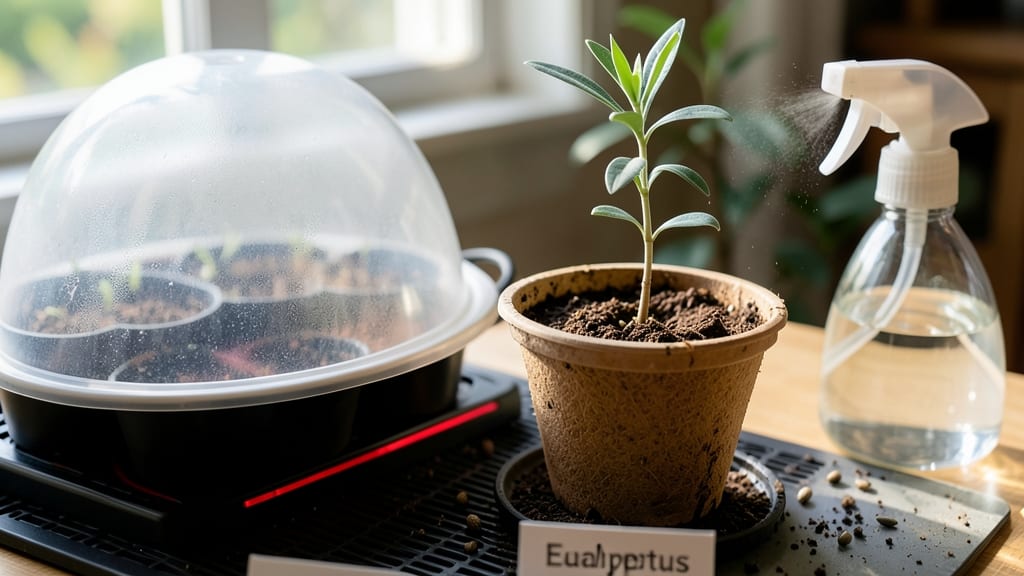
Eucalyptus seed germination starts with the right moisture balance—too dry, and they won’t wake up; too wet, and they’ll rot before sprouting. 🌱 I’ve learned that eucalyptus seeds need a carefully controlled damp environment to break dormancy, and the first signs of life often appear within 10 days if you get everything just right.
The key isn’t soaking them like you would tomato seeds—it’s keeping the soil consistently moist without turning it into swampy conditions.
You’ll need a shallow tray, a mix of 50% perlite and 50% peat moss (or coconut coir), and a spray bottle for gentle watering. Eucalyptus seeds are tiny, so scatter them lightly on the surface—don’t bury them.
Cover the tray with plastic wrap to trap humidity, but leave it slightly ajar for airflow. Place the tray in a warm spot (around 70-75°F) away from direct sunlight, since eucalyptus seeds need warmth to germinate but hate intense heat.
Within a week, you’ll see those first pale green shoots pushing through the soil—it’s a sight that makes all the patience worth it. Keep the soil moist (not soggy) and watch for mold, which can sneak in if the humidity gets too high.
Once the seedlings have a couple of true leaves, you can gradually introduce them to brighter light to prevent leggy growth. The goal is sturdy, compact seedlings ready for transplanting in 4-6 weeks.
This method works for both indoor starts and outdoor sowing in mild climates (zones 8-11). If you’re in a cooler zone, start seeds indoors in late winter and harden them off before moving them outside.
The secret to success? Consistency—eucalyptus seeds are finicky, but once they trust your care, they’ll reward you with fast, reliable germination.
📚 In This Guide
- What you need
- Instructions
- Tips and common mistakes
- Wrapping up and next steps
What you need
- ● Eucalyptus seeds: 10–20 fresh, viable seeds (preferably from a trusted supplier or freshly harvested).
- ○ Germination trays or seedling pots: 2–4 shallow containers (3–4 inches deep) with drainage holes. Optional: Clear plastic lids or plastic wrap for humidity control.
- ● Seed-starting mix: 1–2 cups of sterile, well-draining potting soil (e.g., cactus/succulent mix or a blend of peat moss + perlite at a 2:1 ratio).
- ● Spray bottle: 8–16 oz with a fine mist nozzle (for gentle watering).
- ● Humidity dome or plastic bag: A clear, breathable cover (e.g., humidity tent or zip-top bag with holes punched in it).
- ○ Heat mat (optional but recommended): A small seedling heat mat (set to 70–75°F/21–24°C) to speed up germination.
- ● Thermometer/hygrometer: To monitor soil temp (ideal: 65–75°F/18–24°C) and humidity (aim for 80–90%).
- ● Fertilizer (post-germination): A balanced liquid fertilizer (e.g., 5-5-5 NPK) diluted to half-strength, only after sprouts appear.
- ● Grow lights: LED full-spectrum bulbs (12–16 hours/day) for seedlings once they sprout.
- ● Fungicide: A natural fungicide (e.g., neem oil or hydrogen peroxide solution) to prevent mold.
- ● Label markers: To track seed varieties and planting dates.
- ● Tweezers: For delicate seed placement in soil.
- ● Notebook: To log germination progress and adjustments!
Step-by-step instructions for germinating eucalyptus seeds
Here's how to coax eucalyptus seeds into sprouting within 10 days—the key is keeping moisture just right.
🌱 Step 1: Prepare Seeds for Faster Germination
Eucalyptus seeds have a hard outer shell that slows down sprouting. To speed things up, soak the seeds in lukewarm water for 24 hours before planting. Place them in a small bowl or jar and let them sit undisturbed. You'll see the water turn slightly cloudy—this is normal and shows the seed coats softening.
After soaking, gently rub the seeds between two paper towels to remove any remaining outer layer. This step isn't mandatory but helps weak seeds break through faster. Handle them carefully—eucalyptus seeds are tiny and delicate. Once prepped, they're ready for planting within 24 hours.
💧 Step 2: Plant in Moist, Well-Draining Soil
Fill small seed-starting trays or individual pots with a mix of 50% peat moss and 50% perlite. This lightweight blend prevents waterlogging while keeping roots hydrated. Moisten the mix until it feels damp like a wrung-out sponge—it should hold together when squeezed but not drip water.
Sprinkle the prepped seeds on the surface, spacing them about ½ inch apart. Press them lightly into the soil so they make contact but don't bury them deeper than ¼ inch. Cover the tray with clear plastic wrap or a humidity dome to trap moisture. Place the tray in a warm spot, ideally between 70-75°F.
☀️ Step 3: Maintain Consistent Moisture and Light
Check the soil daily and mist with water when the top layer feels dry to the touch. Avoid soaking—eucalyptus seeds rot if overwatered. The plastic cover keeps humidity high, but remove it for 10 minutes daily to prevent mold. You'll see tiny sprouts in 5-7 days, but some may take up to 10 days.
Once seedlings emerge, move them to a bright spot with indirect sunlight. Direct sun can scorch delicate new leaves. Keep the soil consistently moist but never soggy. You'll know moisture is right when the soil surface looks slightly damp but not glistening.
✂️ Step 4: Thin and Transplant Young Seedlings
When seedlings reach 2 inches tall and have 2-3 true leaves, thin them to the strongest one per pot. Use small scissors to snip weaker sprouts at the base—this reduces stress on the remaining plant. Gently loosen the soil around the strongest seedling to encourage root spread.
After thinning, transplant into 4-inch pots with fresh potting mix. Water lightly to settle the soil, then place the pots in a spot with bright, filtered light. Avoid cold drafts—eucalyptus seedlings are sensitive to temperature drops below 60°F. With proper care, they'll grow into sturdy young trees ready for outdoor planting in 6-8 weeks.
Tips & tricks for perfect eucalyptus seed germination
These moisture-focused tricks will help you achieve reliable sprouting every time—no guesswork involved.
Soaking Strategy: The 24-hour soak in lukewarm water is your secret weapon. Use a glass jar so you can monitor the cloudiness—this visual cue confirms the seed coats are softening properly. If you forget to soak overnight, don't panic! A 12-hour soak still works, though germination may take 1-2 extra days. Just remember to keep the water lukewarm, not hot, to avoid damaging the delicate seeds.
Soil Mix Secret: That 50/50 peat moss and perlite blend isn't just arbitrary—it's the Goldilocks zone for eucalyptus roots. The peat holds moisture while the perlite prevents compaction. Pro tip: Sterilize your mix by microwaving it for 2 minutes first. This kills any hidden pathogens that could rot your seeds before they even sprout.
Humidity Dome Hack: The plastic wrap or humidity dome creates a mini greenhouse effect, but you must remove it daily for 10 minutes to prevent mold. Here's what I do: Set a phone alarm for the same time each day. While it's off, gently wipe any condensation from the plastic with a paper towel—this keeps the environment clean while maintaining humidity. This simple routine makes all the difference.
Light Transition: When those first sprouts appear in 5-7 days, resist the urge to rush them into direct sunlight. Start with bright, indirect light and gradually introduce more sun over 3-4 days. Think of it like sunbathing after winter—too much too soon causes leaf burn. I place my trays near an east-facing window first, then slowly move them toward more light as the seedlings strengthen.
Pro Tips for Eucalyptus Seed Germination
- These moisture-focused tricks will help you achieve reliable sprouting every time—no guesswork involved.
- Soaking Strategy: The 24-hour soak in lukewarm water is your secret weapon.
- Soil Mix Secret: That 50/50 peat moss and perlite blend isn't just arbitrary—it's the Goldilocks zone for eucalyptus roots.
Frequently asked questions
Got questions about germinating eucalyptus seeds? You’re not alone! Here are answers to the most common concerns—so you can grow strong saplings with confidence.
How long does it take for eucalyptus seeds to germinate?
With the right moisture and warmth (around 70–75°F), eucalyptus seeds typically sprout in 10–21 days. Some varieties may take longer—up to a month—so patience is key! Keep the soil consistently damp (not soggy) and monitor for tiny green shoots.
Can I speed up germination with cold stratification?
Eucalyptus seeds don’t usually need cold stratification, but a short chill (2–4 weeks in the fridge) can break dormancy for stubborn seeds. Afterward, return them to warm, moist conditions. Skip this step if your seeds are fresh—over-chilling can harm viability.
What’s the best way to keep seeds moist without overwatering?
Use a spray bottle to mist seeds lightly daily, or place the tray in a sealed plastic bag with a tiny air hole. Avoid standing water—eucalyptus seeds rot if too wet. A moisture meter (or finger test) helps gauge ideal dampness (like a wrung-out sponge).
Can I use regular potting soil for germination?
Not ideal! Mix 50% perlite or sand with 50% peat or coconut coir to improve drainage and aeration. Regular soil compacts easily, suffocating seeds. Sterilize your mix with a 10-minute bake at 200°F to prevent mold—especially critical for eucalyptus, which hates fungal competition.
Why aren’t my eucalyptus seeds sprouting after 3 weeks?
Check these fixes:
- Temperature: Too cold (<60°F) slows growth; too hot (>85°F) can kill seeds.
- Moisture: Dry soil = dormant seeds; soggy soil = rot.
- Seed viability: Old seeds (<1 year) may need scarification (lightly sandpaper the hard coat).
- Light: Keep seeds in indirect light until sprouts appear (2–3 inches tall).
Wrapping up and next steps
Mastering eucalyptus seed germination is a rewarding journey—with the right moisture control and patience, you’ll see those first sprouts in just 10 days! 🌱 Whether you’re a gardening novice or a seasoned green thumb, these techniques make it simple and reliable.
Now that you’re equipped with the know-how, why not expand your eucalyptus family? Try experimenting with different soil mixes or light conditions to refine your process even further. Happy growing!