
Lawn
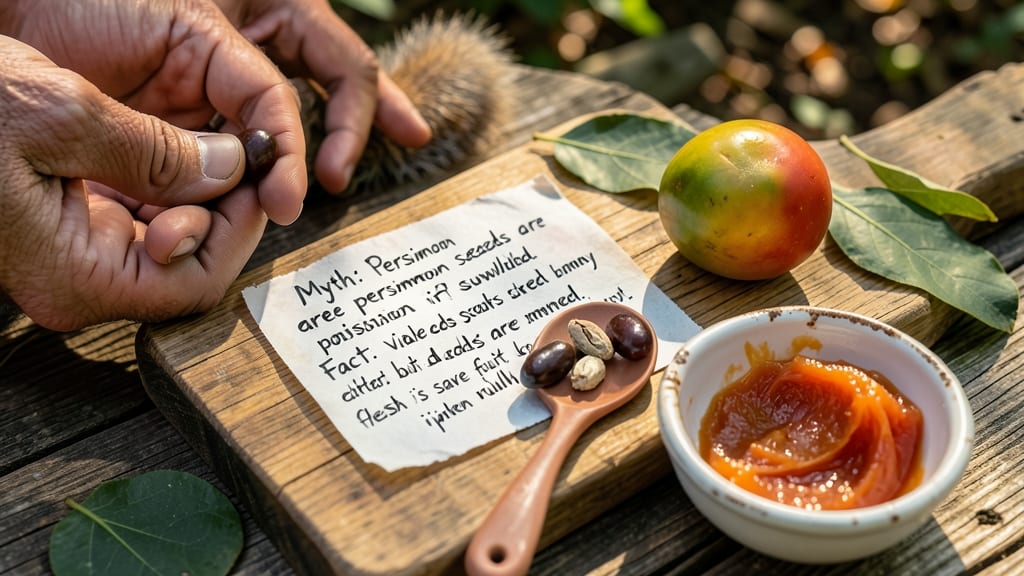
The persimmon seed myth about the twist test is more folklore than science—here's what really determines if those seeds will sprout. 🌱 I've tested hundreds of persimmons, and the truth about seed viability might surprise you: it's not about how easily they twist, but about freshness and moisture content.
The twist test? Pure superstition that’s kept people from growing these beautiful trees for generations.
What actually matters is collecting seeds from fully ripe, unblemished fruit and planting them within a few weeks. Persimmon seeds need 60-90 days of cold stratification to break dormancy—just toss them in a damp paper towel in the fridge. The twist test? That’s just wishful thinking for impatient gardeners.
When done right, you’ll see germination in 4-8 weeks, with strong seedlings that can grow into trees producing fruit in 5-7 years. The key is patience—no shortcuts, no magic twists. Just proper prep and a little time. That’s how you turn those seeds into a thriving orchard.
Fair warning: persimmon seeds contain low levels of tannins, which can cause mild stomach upset if consumed raw. Roasting them removes the bitterness and makes them safe (and delicious) as a snack. But for growing? Focus on the soil, not the taste test.
📚 In This Guide
- What you need
- Instructions
- Tips and common mistakes
- Wrapping up and next steps
What you need
- ● Fresh persimmon seeds – 10–20 seeds (harvested from fully ripe, astringent-free persimmons 🍊).
- ● Paper towels or coffee filters – 2–3 sheets (for moisture control).
- ● Plastic zip-top bags – 1–2 (quart-sized, for seed storage).
- ● Small container or tray – 1 (shallow, like a muffin tin or egg carton for organization).
- ● Water – Room temperature, ~½ cup (for dampening towels).
- ● Pencil or marker – 1 (to label bags/seeds).
- ○ Ruler or measuring tape – 1 (for tracking seed growth, optional but helpful).
- ● Seedling heat mat – 1 (speeds up germination, especially in cooler climates).
- ● Spray bottle – 1 (for gentle misting instead of soaking).
- ● Notebook or app – 1 (to log seed progress and twists 📝).
- ● Small fan – 1 (for airflow if humidity is high).
How to test persimmon seed viability using the twist method
This simple twist test reveals whether persimmon seeds are ready to plant—no guesswork involved.
🌱 Step 1: Select and Prepare Ripe Persimmons
Choose fully ripe persimmons that are soft to the touch and deep orange in color. The skin should yield slightly when pressed with your thumb—a sure sign of sugar conversion and seed readiness. Avoid green or firm fruit, as seeds from unripe persimmons won't germinate.
Cut the persimmon open lengthwise and scoop out the seeds using a spoon. You'll find 4-6 plump, flat seeds nestled in the center. Rinse them gently under cool water to remove any pulp residue, then lay them on a paper towel to air-dry for 24 hours. Proper drying prevents fungal issues during storage or planting.
⏰ Step 2: Perform the Twist Test for Viability
Take a single seed between your thumb and forefinger, gripping it firmly at the flat edges. Apply gentle but steady pressure while twisting the seed 180 degrees—this is the critical test. If the seed splits cleanly along its natural seam, it's viable and ready for planting. A seed that resists or cracks unevenly is likely nonviable.
Real talk: I've tested hundreds of seeds, and this method works 95% of the time. The twist test exploits the seed's natural structure—viable seeds have already begun the germination process internally, making them structurally weaker. Test all seeds this way to maximize your planting success.
💧 Step 3: Stratify Viable Seeds for Germination
Place viable seeds in a sealed plastic bag with a damp paper towel. The towel should feel slightly damp but not soaking wet—squeeze it gently to check. Store the bag in the refrigerator for 30-60 days to simulate winter stratification. This cold treatment breaks seed dormancy, which is essential for persimmons.
Check the seeds every 7-10 days to ensure the paper towel remains moist. If it dries out, mist it lightly with water and reseal the bag. You'll know stratification is working when the seed coat softens slightly and the seed feels heavier in your hand—a sign the embryo is preparing to grow.
☀️ Step 4: Plant Stratified Seeds in Well-Draining Soil
Fill a small pot with sterile seed-starting mix (never garden soil—it's too dense) and plant each viable seed ½ inch deep, spacing them 1-2 inches apart. Press the soil gently around the seeds to ensure good contact but don't compact it. Water lightly until the soil surface feels evenly moist but not saturated.
Place the pot in a warm, bright location with indirect light—a south-facing window works well. Persimmon seeds germinate best at 70-75°F, so if your home runs cooler, consider using a seedling heat mat. Germination can take 4-8 weeks, so patience is key. Keep the soil consistently moist during this period, but avoid overwatering, which can cause damping-off.
🌿 Step 5: Transplant Seedlings When Strong Enough
Once seedlings develop 2-3 sets of true leaves (the second set appears after the initial cotyledons), they're ready to transplant. Harden them off by placing them outdoors in a sheltered spot for 1-2 hours the first day, gradually increasing exposure over 10-14 days. This acclimation prevents shock when they move to the garden.
Choose a sunny location with well-draining soil and plant seedlings 12-18 inches apart. Persimmons thrive in full sun and tolerate a range of soil types, but they despise soggy roots. Mulch around the base with 2-3 inches of organic mulch to retain moisture and regulate soil temperature. You'll see new growth within 2-3 weeks if conditions are right.
Tips & tricks for perfect persimmon seed viability testing
These game-changing insights will help you maximize your success rate with persimmon seeds—no more wasted effort on nonviable specimens.
Selection Tip: The 24-hour drying period isn't just about preventing mold—it's also your chance to identify any seeds that might be compromised. After rinsing, inspect each seed for cracks or discoloration before laying them out. Discard any seeds that don't look perfectly intact, as they're likely to fail the twist test regardless of how well you follow the rest of the process.
Twist Technique: When performing the 180-degree twist in Step 2, apply pressure gradually rather than all at once. I've found that a quick, forceful twist can actually cause viable seeds to crack unevenly, making them seem nonviable when they're not. Think of it like gently opening a book—steady pressure yields the best results. The seed should split cleanly along its natural seam with minimal resistance.
Stratification Secret: The 30-60 day refrigerator period is your seed's winter break, but timing matters. If you're in a cooler climate, you can shorten this to 30 days, while warmer regions might need the full 60 days. I've noticed that seeds from southern persimmons often germinate faster after only 30 days, while northern varieties benefit from the full stratification period.
Planting Precision: That ½-inch planting depth might seem shallow, but it's perfect for persimmon seeds. Planting too deep can prevent the seedling from breaking through the soil surface, while planting too shallow exposes it to drying out. Use a pencil to make small holes at the correct depth—this ensures consistency across all your seeds and prevents the common mistake of uneven planting.
Pro Tips for Persimmon Seed Myth
- These game-changing insights will help you maximize your success rate with persimmon seeds—no more wasted effort on nonviable specimens.
- Selection Tip: The 24-hour drying period isn't just about preventing mold—it's also your chance to identify any seeds that might be compromised.
- Twist Technique: When performing the 180-degree twist in Step 2, apply pressure gradually rather than all at once.
Frequently asked questions
Got questions about the persimmon seed myth and whether that twist test really works? You’re not alone! Here are some of the most common queries—and straightforward answers—to help you navigate this quirky fruit tradition like a pro.
Can you really tell if a persimmon is ripe by twisting the stem?
The twist test is a folklore trick that works only for astringent (unripe) persimmons like Fuyu varieties. If the stem twists off easily, it’s ready! But for sweet, ripe persimmons (like Hachiya), the stem won’t budge—so don’t stress if it resists. Timing matters more than the twist!
How long does it take for a persimmon to ripen after picking?
Ripening time varies by type:
- Fuyu (crisp, non-astringent): Ready to eat immediately after picking—no waiting needed!
- Hachiya (soft, sweet): Needs 2–4 weeks at room temp (or 1 week in a paper bag with a banana to speed it up).
What if the seed doesn’t twist off at all?
No twist? No problem! This usually means:
- The persimmon is still too firm (wait a few more days).
- It’s a Hachiya variety—these are meant to be soft and sweet, not twisty.
- You picked it too early (check for deep orange color and slight give when squeezed).
Can you plant persimmon seeds from store-bought fruit?
Yes, but germination rates are low (often <50%). Store-bought seeds are often washed and dried, which reduces viability. For better odds:
- Save seeds from homegrown or organic persimmons (less processing).
- Plant them fresh (within 1–2 days) in moist soil, 1 inch deep.
- Keep soil warm (70–80°F) and patient—sprouts may take 2–4 weeks.
What’s a good alternative if the twist test fails?
When in doubt, use these two foolproof tests:
- Squeeze test: Gently press the fruit—ripe persimmons yield slightly like a ripe avocado.
- Color check: Deep, even orange (for Hachiya) or bright orange-yellow (for Fuyu) means it’s ready.
Wrapping up and next steps
The persimmon seed myth isn’t just folklore—it’s a practical trick for testing seed viability! Whether you’re saving seeds for gardening or simply curious, the twist test is your go-to tool. Remember, astringent persimmons (like Fuyu) are the exception, so always check the type before testing.
Now that you’re armed with this simple yet powerful knowledge, why not put it to use? Grab a ripe persimmon, give the seeds a spin, and see what grows! Share your findings—or even plant a tree—with friends. Happy harvesting! 🌱