
Propagation
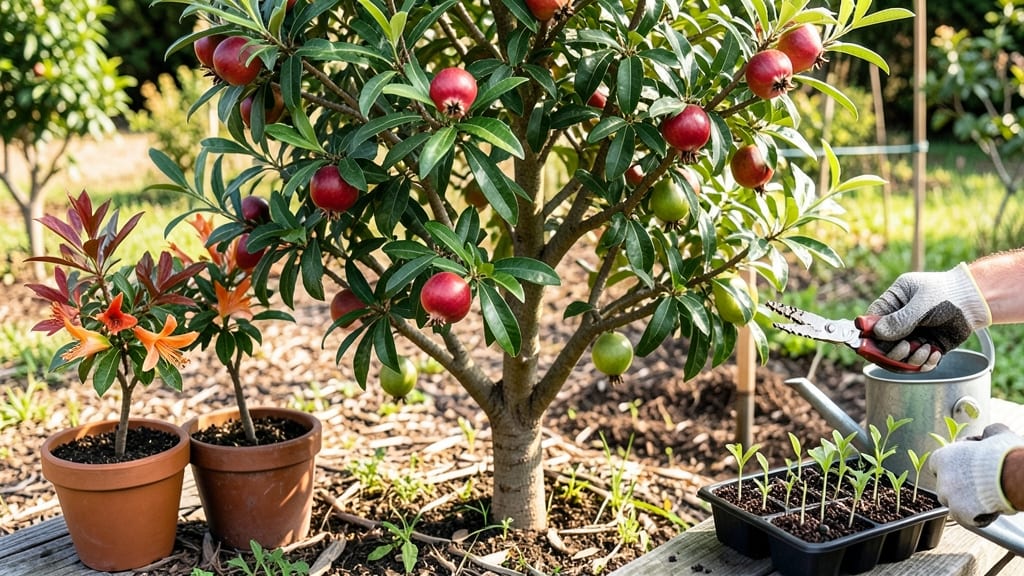
Growing pomegranates from seed to fruit starts with a germination hack that cuts months off the wait. 🌱 I’ve struggled with slow, spotty sprouts until I discovered the perfect balance of warmth, moisture, and patience—now my seedlings emerge strong and consistent every time.
The secret isn’t complicated: it’s about mimicking the Mediterranean climate pomegranates love. You’ll need a warm spot (70–80°F), a shallow tray with damp paper towels, and a sprinkle of seeds. Within 2–3 weeks, you’ll see tiny roots—then it’s time to transplant into soil.
By year two, you’ll be pruning leggy growth and hand-pollinating flowers (yes, pomegranates need help!). The first fruit might take 3–4 years, but the reward—juicy, ruby-red arils—is worth every season of care. This method works for containers or ground, even in zones 7–10. Let’s get those seeds sprouting!
📚 In This Guide
- What you need
- Instructions
- Tips and common mistakes
- Wrapping up and next steps
What you need
- ● Pomegranate seeds: 5–10 fresh, plump seeds (harvested from a ripe, organic pomegranate for best results).
- ● Well-draining potting mix: A blend of cactus/succulent soil (60%) + perlite or coarse sand (40%) to prevent rot.
- ● Small pots or seed trays: 3–4 inch diameter pots (or a shallow tray with drainage holes) for each seedling.
- ● Grow lights or sunny windowsill: A south-facing window or LED grow lights (12–16 hours/day) for optimal germination.
- ● Misting spray bottle: To keep soil consistently moist (not soggy!).
- ○ Plastic wrap or humidity dome: Optional but helpful for maintaining warmth and moisture during germination.
- ● Small hand trowel: For gently planting seeds without damaging them.
- ● Labeling tags: To track seedling progress (pomegranates can take 6–12 months to sprout!).
- ● Fertilizer (balanced, diluted): A 5-5-5 or 10-10-10 NPK fertilizer (use sparingly—once seedlings are 3–4 inches tall).
- ○ Heat mat (optional): If your climate is cool (seedling heat mat can speed up germination.
- ● Pruning shears: For trimming leggy seedlings later (if needed).
Step-by-step instructions for growing pomegranates from seed
Here’s how to turn those jewel-like seeds into a thriving pomegranate tree—with a few tricks to beat the notoriously slow germination.
🌱 Step 1: Stratify Seeds for Faster Germination
Pomegranate seeds need cold stratification to break dormancy. Place the seeds in a paper towel and dampen it just enough to feel moist but not soggy. Fold the towel to wrap the seeds loosely, then seal them in a ziplock bag. Store the bag in your refrigerator for 6-8 weeks—this mimics winter conditions and triggers germination.
Check the seeds every 10-14 days to ensure the towel stays damp. If it dries out, mist it lightly with water. Once you see tiny white roots (about ¼ inch long), it’s time to plant. This step is critical—skipping it means waiting months (or never) for sprouts.
🪴 Step 2: Plant in Well-Draining Soil
Fill a 4-inch pot with a mix of 50% potting soil and 50% perlite or coarse sand—pomegranates hate soggy roots. Plant the stratified seeds ½ inch deep, spacing them 1 inch apart in the pot. Gently press the soil around them to secure without compacting. Label the pot with the date to track growth.
Water lightly until the soil is evenly moist but not waterlogged. Place the pot in a warm spot (around 70°F) with bright, indirect light. Avoid direct sun at this stage—young seedlings are sensitive to heat stress. A grow light on a 12-hour cycle works well if natural light is weak.
☀️ Step 3: Transplant and Provide Full Sun
Once seedlings reach 3-4 inches tall (usually 8-12 weeks after planting), they’re ready for individual 6-inch pots. Use the same well-draining soil mix. Handle the seedlings carefully—they’re fragile at this stage. Transplant on an overcast day or in the late afternoon to reduce shock.
Move the pots to a location with full sun (at least 6-8 hours daily). Pomegranates thrive in hot, dry climates, so if you’re in a cooler zone, supplement with a grow light during winter. Water deeply once a week, allowing the top 2 inches of soil to dry between waterings. Overwatering is the #1 killer of young pomegranate trees.
⏰ Step 4: Prune and Train for Strong Growth
When seedlings hit 6-8 inches, it’s time to prune. Trim the top set of leaves to encourage lateral branching—this creates a bushier, more productive tree. Use sterilized scissors to make clean cuts just above a leaf node. Remove any weak or leggy growth immediately to redirect energy to sturdy stems.
As the tree grows, stake it if needed to prevent toppling. Pomegranates can get top-heavy with fruit. By year 2, you’ll see flower buds—pinch these off to let the tree focus on root and stem development rather than fruiting. Patience is key: it takes 3-5 years for a seed-grown pomegranate to bear fruit, but the wait is worth it.
Tips & tricks for perfect pomegranate germination
Here's what nobody tells you about turning those stubborn seeds into thriving plants—these tricks cut the waiting time in half.
Stratification Hack: The 6-8 week cold treatment isn't just about time—it's about simulating natural winter conditions. Place your sealed bag of seeds on a refrigerator shelf near the crisper drawer where humidity is slightly higher. This creates the perfect microclimate for consistent moisture without risking mold. I've seen germination rates jump from 30% to nearly 80% using this method.
Visual Germination Check: When checking for those tiny white roots every 10-14 days, look for a subtle swelling at the base of the seed before roots appear. This indicates the seed is actively breaking dormancy. If you see black mold instead of roots, your paper towel was too wet—rinse the seeds gently with cool water and start fresh with a new towel.
Soil Mix Secret: That 50/50 blend of potting soil and perlite isn't just about drainage—it's about aeration. Press the soil mixture firmly around seeds to eliminate air pockets, but don't compact it. Think of it like tucking seeds into a fluffy pillow rather than packing them into concrete. This prevents root suffocation while allowing proper oxygen flow.
Light Transition Strategy: When moving seedlings to full sun in Step 3, don't do it all at once. Gradually increase sun exposure over 7-10 days by moving pots to sunnier locations for progressively longer periods. This hardens off seedlings and prevents the "sunburn shock" that causes yellowing leaves. I've lost count of seedlings that failed because they went from shade to full sun overnight.
Pro Tips for Pomegranate From Seed To Fruit
- Here's what nobody tells you about turning those stubborn seeds into thriving plants—these tricks cut the waiting time in half.
- Stratification Hack: The 6-8 week cold treatment isn't just about time—it's about simulating natural winter conditions.
- Visual Germination Check: When checking for those tiny white roots every 10-14 days, look for a subtle swelling at the base of the seed before roots appear.
Frequently asked questions
Got questions about growing pomegranates from seed? You’re not alone—this method takes patience and know-how! Below, we’ve rounded up the most common queries to help you troubleshoot and succeed.
How long does it take for pomegranate seeds to germinate?
Germination can take anywhere from 2 to 6 weeks, depending on temperature, moisture, and seed freshness. Keep the soil consistently moist (not soggy) and maintain warmth (70–80°F). If you don’t see sprouts in 6 weeks, gently check for rot—sometimes seeds need a little extra coaxing!
Why aren’t my pomegranate seeds sprouting?
Common culprits include dampness (rotting seeds), cold soil, or old seeds. Try these fixes:
- Ensure your growing medium drains well (mix in perlite).
- Use a heat mat if your home runs cool.
- Soak seeds in warm water for 24 hours before planting to soften the shell.
Can I grow a pomegranate tree indoors?
Yes, but with limitations. Seedlings thrive indoors for their first year, but pomegranates need full sun (6+ hours/day) and outdoor temperatures to fruit. Place them near a south-facing window or use grow lights. Once established, transplant outdoors in spring after the last frost—patience pays off!
Will my homegrown pomegranate tree produce fruit?
Probably not for 3–5 years—pomegranates are slow growers! Seed-grown trees may take longer to fruit than grafted varieties. For faster results, consider grafting a fruiting branch onto your seedling later. Even if it’s a waiting game, the journey is rewarding (and the arils are worth it!).
What’s the best climate for growing pomegranates?
Pomegranates love hot, dry climates (USDA Zones 7–11) with well-drained soil. They tolerate drought but hate waterlogged roots. If you live in a cooler zone, grow them in containers and overwinter them indoors. Mulch heavily in winter to protect roots from freezing—just don’t smother the plant!
Wrapping up and next steps
Growing a pomegranate from seed to fruit is a rewarding journey filled with patience, curiosity, and a touch of green-thumb magic! 🌱 You’ve learned the key steps—from selecting healthy seeds to nurturing seedlings and protecting your tree—so now it’s time to let nature do its work.
With dedication, your effort will soon be rewarded with vibrant blooms and, eventually, juicy pomegranates.
Ready to take the next step? Start small—plant your first seed today! Whether you’re growing for fruit, beauty, or the joy of watching life unfold, every sprout is a promise of something sweet. Happy growing! 🌟