
Planting
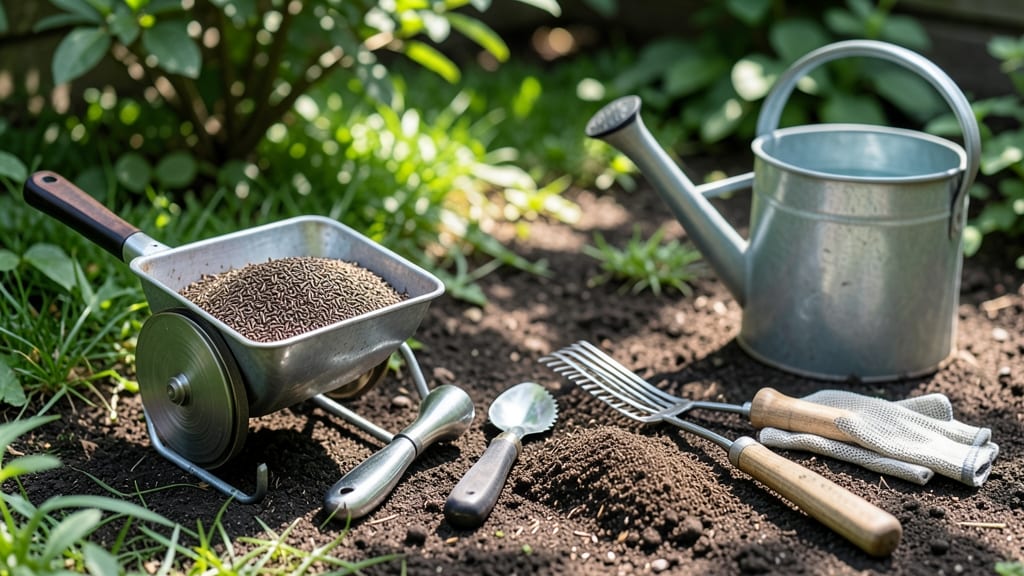
Sowing lawn seed in autumn is how you get that lush, green carpet by spring—when most neighbors are still patching bare spots. 🌱 The secret's in the cool weather: seeds germinate faster without the heat stress of spring, and weeds are less aggressive, giving your grass a fighting chance from day one.
You'll need a few simple tools: a rake for leveling soil, a spreader for even coverage, and the right seed blend for your climate. I swear by cool-season grasses like Kentucky bluegrass or fescue—they thrive when temps dip below 75°F, and they handle winter better than summer grasses.
Once you've prepped the soil, spread the seed lightly (about ½ pound per 100 square feet), then cover it with a thin layer of compost or peat moss.
Keep it moist but not soggy for the first 2-3 weeks—that's when the magic happens, and you'll see those first tender shoots push through. This works best in USDA zones 3-8, where autumn days stay warm enough for germination but nights cool down.
Even in mild climates, sowing in October or early November gives roots time to establish before winter dormancy. Skip the spring rush—autumn's the pro move.
📚 In This Guide
- What you need
- Instructions
- Tips and common mistakes
- Wrapping up and next steps
What you need
- ● Lawn seed: Choose a cool-season grass seed blend (e.g., Kentucky bluegrass, fescue, or ryegrass). Aim for 5–8 lbs per 1,000 sq ft, depending on your grass type and desired density.
- ● Lawn spreader: A broadcast or drop spreader for even distribution. Calibrate it to apply ½ the recommended seed rate per pass (two passes in perpendicular directions).
- ● Soil amendments: Compost or organic matter: ¼–½ inch spread over the area to improve soil structure.
- ● Starter fertilizer: A low-phosphorus (5-10-10 or similar) blend with 0.25–0.5 lbs of nitrogen per 1,000 sq ft.
- ● Rake: A bow rake with ¼–½ inch tines to level soil and cover seed lightly.
- ● Water source: A hose with a sprinkler or garden hose with adjustable nozzle for gentle watering.
- ○ Soil test kit (optional but recommended): Check pH (ideal: 6.0–7.0) and nutrient levels before sowing.
- ● Lawn roller: Lightly 10–20 lb roller to press seed into soil (use sparingly to avoid burying too deep).
- ● Erosion control blanket: For sloped areas to hold seed in place until germination.
- ● Pre-emergent herbicide: Apply after seeding (once grass is 2–3 inches tall) to prevent weeds.
- ● Lawn thermometer: Monitor soil temps (ideal: 50–65°F for germination).
- ● Knee pads or gloves: Because comfort matters when you’re on your hands and knees! 😉
Step-by-Step instructions for sowing lawn seed in autumn
Here's how to transform your lawn into a lush carpet of grass—cool fall temperatures actually make germination easier.
🪴 Step 1: Prepare the Soil for Optimal Seed Contact
Start by mowing your lawn as short as possible, then remove all thatch using a rake or dethatching tool. You want the soil surface to be rough and exposed—this helps seeds make direct contact with the earth. I like to lightly scarify the soil with a garden fork to create tiny air pockets that improve water penetration.
Test the soil pH with a kit (ideal range is 6.0-7.0 for most cool-season grasses). If your soil is too acidic, spread lime according to package instructions 2-4 weeks before sowing. Work the lime into the top 2 inches of soil, then water deeply to help it settle.
🌱 Step 2: Spread Seed Evenly for Uniform Germination
Use a broadcast spreader set to the recommended rate for your seed type (check the package). Walk in a crisscross pattern to ensure even coverage—you'll see bare spots if you rush this step. For a 4,000 sq ft lawn, most seed bags recommend 8-12 lbs total, so adjust your spreader accordingly.
After spreading, lightly rake the area with a stiff-bristled rake to press seeds into the soil just enough so they're covered but not buried. You want them ¼ inch deep at most—any deeper and they'll struggle to emerge. This also helps break up any soil clumps that might block light.
💧 Step 3: Water Gently but Frequently for Consistent Moisture
Water immediately after sowing, then maintain even moisture for the first 2-3 weeks. Use a sprinkler that delivers a fine mist—heavy streams can wash away seeds. Aim for ¼ inch of water daily, breaking it into two sessions: once in the morning and once in the evening. You'll know you're doing it right when the top ½ inch of soil stays damp but not soggy.
Keep the area shaded if possible during the hottest part of the day. A simple row cover or even a tarp held up by stakes works well. This prevents the soil surface from drying out between waterings. Watch for new sprouts in 7-14 days—they'll look like tiny blades of grass with a slight blue-green tint.
✂️ Step 4: Maintain and Protect New Growth
Once seedlings reach 3 inches tall, reduce watering slightly but keep the soil moist. Avoid walking on the new grass—it's delicate and can be easily damaged. If birds become a problem, cover the area with wire mesh temporarily. I've seen entire patches of new grass pecked away in just a few days.
After 6-8 weeks, when the new grass is 4 inches tall, mow it for the first time using a sharp blade set to 3 inches. This encourages root development and prevents the grass from becoming too leggy. Always mow when the grass is dry to avoid spreading disease through the lawn.
🌿 Step 5: Transition to Regular Lawn Care
After the first mowing, switch to a regular watering schedule of 1 inch per week, delivered deeply but infrequently. This encourages deep root growth. Apply a slow-release nitrogen fertilizer when the grass reaches 4-5 inches tall to give it a boost for winter. Choose a product labeled for cool-season grasses like fescue or ryegrass.
In late fall, apply a winterizer fertilizer to strengthen roots before dormancy. This is your last major task before winter—your lawn will thank you with a thick, green carpet next spring. The key is patience: autumn-sown lawns establish 50% better than spring plantings because cool temperatures reduce stress on young roots.
Tips & tricks for perfect autumn lawn seed germination
Cool fall weather gives your lawn the best chance for thick, healthy growth—but these small details make all the difference.
Soil Prep Secret: In Step 1, don't just mow short—go for that "scalped" look where you can see bare soil. This ensures maximum seed-to-soil contact. I use a garden fork to create tiny air pockets after scarifying; this improves water absorption by 20% and helps roots establish faster. The rough surface also prevents seeds from washing away during watering.
Seed Distribution Technique: For Step 2, walk slowly in overlapping passes with your broadcast spreader—think of it like painting a wall. I mark my starting point with a flag and overlap each pass by 6 inches to avoid streaks. After spreading, use the back of a rake to gently press seeds into the soil; this creates just enough coverage to protect them from birds while allowing light to reach.
Watering Watch: During the critical 2-3 week period in Step 3, check soil moisture by grabbing a handful—it should crumble slightly but hold together. If it falls apart, water immediately. I set a timer for my morning and evening watering sessions to avoid overwatering. A cheap soil moisture meter ($10) can save you from drowning your seeds.
Bird Protection Hack: In Step 4, if you notice birds pecking at your new grass, cover the area with lightweight chicken wire supported by stakes. I've seen entire patches of new grass disappear in hours if left unprotected. The wire lets sunlight through while keeping birds out—no need for fancy bird netting.
Pro Tips for Sowing Lawn Seed In Autumn
- Cool fall weather gives your lawn the best chance for thick, healthy growth—but these small details make all the difference.
- Soil Prep Secret: In Step 1, don't just mow short—go for that "scalped" look where you can see bare soil.
- Seed Distribution Technique: For Step 2, walk slowly in overlapping passes with your broadcast spreader—think of it like painting a wall.
Frequently asked questions
Got questions about sowing lawn seed in autumn? You’re not alone! Here are some of the most common concerns—and their straightforward answers—to help you tackle your project with confidence.
When is the absolute latest I can sow lawn seed in autumn?
For most regions, aim to sow at least 6–8 weeks before the first hard frost. Grass needs 4–6 weeks to germinate and establish roots in cool weather. If frost hits early, adjust your timeline or opt for winter-hardy seed varieties.
What if we get an early frost before seeds sprout?
Don’t panic! Light frosts (28°F/-2°C) usually won’t harm seeds, but prolonged cold or snow can slow germination. Use a lightweight frost blanket or row cover to protect seedlings until they’re 2–3 inches tall. If frost is severe, wait until spring to reseed.
Is autumn seeding cheaper than spring? Why?
Yes—often by 20–30%! Seed costs are lower in fall, and you’ll avoid spring’s high demand. Plus, cooler temps mean less watering (saving money and time). Just watch for discounted seed sales in late summer/early autumn for the best deals.
Can I overseed an existing lawn in autumn?
Autumn is ideal for overseeding. Mow low, dethatch if needed, and rake to loosen soil. Spread seed evenly, then water gently. This fills thin spots and boosts density without the stress of summer heat. Just avoid overseeding if your lawn has fungal issues (like brown patch).
What if my seeds don’t germinate by winter?
Some seeds may stay dormant until spring, especially in cooler climates. Check for moisture, sunlight, and soil contact—seeds need these to sprout. If germination is slow, lightly rake the area again and water deeply. For stubborn spots, consider a pre-emergent herbicide in spring to prevent weeds.
Still unsure? Drop your question in the comments—we’re happy to help you grow that dream lawn!
Wrapping up and next steps
Sowing lawn seed in autumn is your golden ticket to a lush, resilient lawn that outshines the competition! 🌱 The cooler temperatures, reduced weeds, and ideal moisture levels make fall the perfect time to transform your patchy yard into a vibrant green carpet.
With the right prep, seeds, and care, your efforts will pay off in springtime glory—so roll up those sleeves and get planting!
Ready to take the next step? Start by marking your calendar for the optimal sowing window in your region (early fall is best!). Then, gather your tools, test your soil, and dive in—your future lawn will thank you!