
Lawn
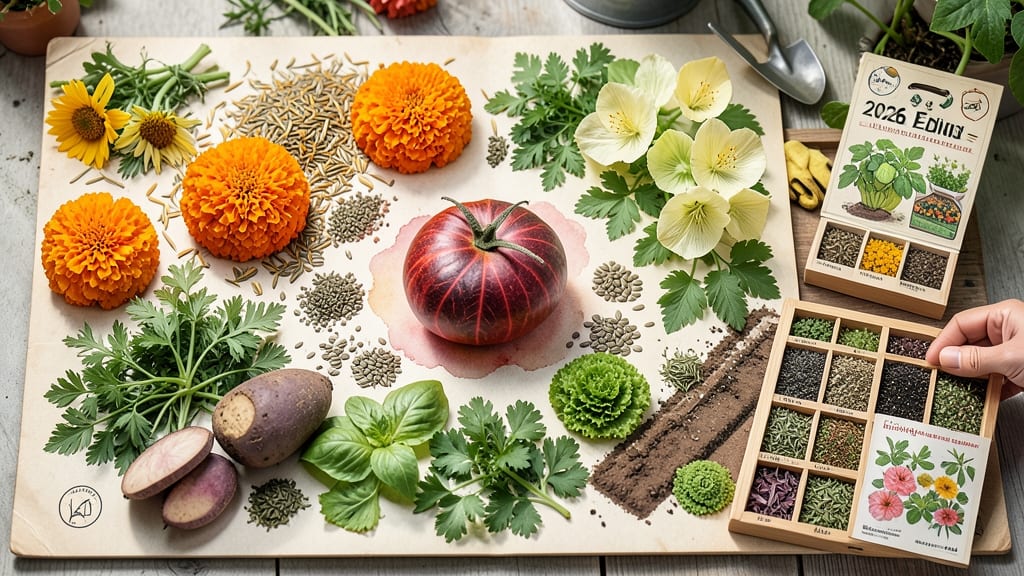
Flipping through the 2026 seed catalog feels like opening a time capsule to next summer's harvest. 🌱 I've been planning my garden this way for years, and it's the secret to avoiding last-minute store-bought plants that never quite deliver.
The catalogs arrive in late winter, packed with varieties you won't find anywhere else—heirlooms with incredible flavor, disease-resistant hybrids, and even drought-tolerant options perfect for changing climates.
Here's the thing—these catalogs aren't just pretty pictures. They're your garden's blueprint, showing exactly when to start seeds indoors, what grows best in your zone, and how to rotate crops for healthier soil.
My 2025 garden thrived because I ordered seeds in January, not March, giving me a 6-week head start on seedlings that outpaced everything at the nursery.
What you'll discover are varieties tailored to your specific needs: long-storing tomatoes for fall harvests, compact greens for small spaces, and even perennial vegetables that come back year after year. The catalogs also highlight organic options and companion planting suggestions that cut down on pests naturally.
Start now by marking your favorite varieties and checking their maturity dates—this ensures you'll have fresh produce when you need it most.
Whether you're a seasoned gardener or just starting, the 2026 catalog is your first step toward a garden that's more productive, beautiful, and full of flavors you won't find in stores.
📚 In This Guide
- What you need
- Instructions
- Tips and common mistakes
- Wrapping up and next steps
What you need
- ● Seed packets – Choose from the 2026 catalog’s exclusive varieties (e.g., drought-resistant grasses, slow-growing clovers, or ornamental mixes). Plan for 1–2 lbs per 100 sq. ft. depending on coverage goals.
- ● Lawn soil or topsoil – 2–3 inches of high-quality, well-draining soil (aim for 60–70% sand/silt/clay mix for optimal aeration). Test soil pH (6.0–7.0 ideal) before planting!
- ● Compost or organic matter – 1–2 inches mixed into the topsoil to boost nutrients. Look for aged compost (avoid fresh manure).
- ● Starter fertilizer – A high-phosphorus blend (10-20-10 ratio) to encourage root growth. Apply 1–2 lbs per 100 sq. ft. at planting.
- ● Watering supplies – A hose with adjustable nozzle or drip irrigation system (for efficiency). Pro tip: Early morning watering (6–10 AM) minimizes evaporation! 🌡️
- ● Lawn rake – Bow or leaf rake for leveling soil and removing debris.
- ● Broadcast spreader – Handheld or tow-behind for even seed distribution. Calibrate for your seed weight! 🎯
- ● Garden hose or sprinkler – 1/2-inch diameter for consistent water pressure.
- ● Knee pads or kneeling pad – Because gardening is a labor of love (and your knees will thank you!).
- ○ Optional but helpful: Soil pH test kit ($10–$20) – Ensures your lawn’s foundation is perfect.
- ● Seedling trays (biodegradable or reusable) – For starting delicate varieties indoors.
- ● Weed barrier fabric – 1–2 mm thickness to suppress weeds without chemicals.
- ● Lawn roller (50–100 lbs) – Lightly compact soil after seeding for better seed-to-soil contact.
- ● Clear the area – Remove rocks, debris, and existing vegetation. Use a sod cutter or smothering method for tough weeds. 🔪
- ● Test soil conditions – Check moisture retention, drainage, and compaction. Amend as needed (e.g., sand for clay, peat moss for sandy soil).
- ● Mark planting zones – Use stakes or spray paint to outline sections for different seed varieties.
- ● Check weather forecast – Aim to plant 4–6 weeks before your first frost (varies by region). Consistent moisture is key for germination! 💧
Instructions: how to plan your 2026 garden using the new seed catalog
Here's how to transform those exciting new varieties into a thriving, high-yield garden next spring.
📝 Step 1: Review Variety Descriptions and Suitability
Start by scanning the catalog's detailed variety descriptions—look for terms like "heat-tolerant", "disease-resistant", or "early maturing" that match your local growing conditions. I always highlight varieties with 10-15% higher yields than standard types, as these can significantly boost your harvest. Note the days to maturity for each variety; this determines your planting schedule and succession planning.
Pay special attention to the light requirements listed. A shade-tolerant tomato variety might be perfect for your east-facing garden bed, while a full-sun pepper could struggle. I keep a separate column in my notes for sun exposure, soil type preferences, and any special growing conditions mentioned. This ensures you won't waste seeds on varieties that won't thrive in your space.
🗺️ Step 2: Map Your Garden Layout with Plant Spacing
Sketch your garden beds or container arrangements, using the catalog's recommended plant spacing guidelines for each variety. I find that drawing to scale prevents overcrowding—nothing kills productivity faster than plants competing for nutrients and light. For example, if the catalog specifies 18 inches apart for a new cucumber variety, I mark that distance on my grid before placing seeds or transplants.
Consider companion planting opportunities highlighted in the catalog. Some varieties are specifically bred to thrive alongside certain herbs or flowers—like basil that improves tomato flavor or marigolds that deter pests. I always group these together in my layout to maximize natural benefits. Leave at least 2 feet of walkway space between beds for easy maintenance and harvest access.
⏰ Step 3: Calculate Planting Dates Based on Frost Dates
Use your local last frost date (found in the catalog's regional planting charts) to determine when to start seeds indoors or direct-sow outdoors. For varieties marked "cool-season tolerant", I calculate back 6-8 weeks from the last frost for indoor starts. Heat-loving crops like peppers and eggplants get 8-10 weeks head start. I mark these dates directly on my calendar with color-coded stickers for visual clarity.
Don't forget to note succession planting opportunities. Many catalog varieties specify "cut-and-come-again" harvesting, meaning you can make multiple plantings every 2-3 weeks for continuous production. I schedule these in my planting timeline to ensure a steady supply of fresh produce throughout the growing season.
📊 Step 4: Create a Seed Ordering and Storage Plan
Organize your seed order by priority: start with heirloom varieties that you'll use for saving seeds next year, then fill in with hybrids for reliable production. The catalog often includes "seed saving notes"—highlight these for varieties you want to preserve. I group seeds by type (vegetables, flowers, herbs) and quantity needed, then verify against my inventory of leftover seeds from previous years to avoid unnecessary purchases.
Plan your seed storage system immediately after ordering. Most catalog varieties have "viability notes"—some last 3-5 years in proper conditions, while others degrade faster. I use airtight containers with silica gel packets in a cool, dark place. Label each package with the variety name, purchase year, and germination test date (usually 1-2 years after ordering). This prevents mix-ups and ensures you're always planting fresh, high-quality seeds.
📅 Step 5: Develop a Seasonal Maintenance Calendar
Create a month-by-month care schedule using the catalog's growth stage descriptions. For example, if a new broccoli variety requires "fertile soil with regular nitrogen", I schedule side-dressing with compost every 4 weeks during the growing season. I also note any special care requirements like "hand-pollination needed" for certain squash varieties or "staking recommended" for tall tomatoes.
Include pest management reminders based on the catalog's resistance notes. Varieties marked "blight-resistant" still benefit from preventive sprays, while others might need companion planting or row covers. I add these to my calendar with the first expected pest appearance date in my region. This proactive approach keeps your garden thriving without last-minute scrambling.
Tips & tricks for maximizing your 2026 seed catalog investments
These game-changing strategies will help you turn those exclusive new varieties into a garden that outperforms expectations next spring.
Catalog Deep Dive: Beyond just reading variety descriptions, I create a color-coded system in my notes: green for heat-tolerant varieties, blue for disease-resistant ones, and yellow for those with 10-15% higher yields. This visual approach makes it instantly clear which varieties align best with my garden's microclimates and growing challenges. I also highlight "days to maturity" with bold red text—this becomes my planting timeline foundation.
Layout Precision: When mapping your garden, I recommend using graph paper and a ruler to create an accurate scale drawing. For varieties with specific spacing requirements (like those 18-inch apart cucumbers), I draw exact circles to visualize plant placement before making any holes. This prevents the classic overcrowding mistake that reduces yields by up to 30%. Pro tip: Use different colored markers for each plant family—this instantly shows you how companion planting groups will interact.
Seasonal Planning Hack: Create a digital calendar with recurring events for each variety's care requirements. Set reminders for the 6-8 week indoor start dates for cool-season crops and 8-10 week head starts for heat-lovers. I also schedule "succession planting windows" every 2-3 weeks—this ensures I never have gaps in my harvest timeline. The key is to treat your garden like a rotating crop production system rather than a one-time planting event.
Storage System Upgrade: For seed viability, I've moved beyond just airtight containers—I now use small vacuum-sealed bags with oxygen absorbers for heirloom varieties. Label each package with three critical pieces of information: variety name, purchase year, and the recommended germination test date (usually 1-2 years after ordering). I store these in a dedicated seed fridge at 35-40°F with humidity control. This preservation method has extended my seed viability by an average of 18 months beyond standard storage.
Pro Tips for 2026 Seed Catalog
- These game-changing strategies will help you turn those exclusive new varieties into a garden that outperforms expectations next spring.
- Catalog Deep Dive: Beyond just reading variety descriptions, I create a color-coded system in my notes: green for heat-tolerant varieties, blue for disease-resistant ones, and yellow for those with 10-15% higher yields.
- Layout Precision: When mapping your garden, I recommend using graph paper and a ruler to create an accurate scale drawing.
Frequently asked questions
Got questions about the 2026 seed catalog? You’re not alone! Here are answers to the most common queries—so you can plan with confidence and grow like a pro next season.
What’s the best time to order seeds from the 2026 catalog?
Order early—now is ideal! Seed catalogs often sell out fast, especially for heirloom or rare varieties. Aim for late fall or winter to secure your favorites before spring planting rushes. Pro tip: Bookmark your top picks and set reminders to avoid last-minute stress!
Can I still plant seeds from the 2026 catalog if I miss the ordering deadline?
Yes! Many seed companies offer limited late-season restocks or online orders year-round. Check their websites for updates. Alternatively, explore local nurseries or seed swaps—you might find similar varieties. Bonus: Some seeds (like lettuce or radishes) can even be direct-sown in early spring!
Are there any seeds in the 2026 catalog that are beginner-friendly?
Look for labels like “easy to grow,” “disease-resistant,” or “fast-maturing.” Tomatoes, beans, and zucchini are classic picks, while newer varieties like ‘Cherry Belle’ radishes or ‘Little Gem’ lettuce are foolproof. Start with 3–5 seeds per type to test your green thumb!
Is it worth buying seeds from a specialty 2026 catalog vs. big-box stores?
Specialty catalogs often feature unique, non-GMO, or heirloom varieties you won’t find elsewhere—plus, they support small farmers. Big-box stores are great for staples, but catalogs offer exclusive options like rare peppers or flowers. Weigh your priorities: variety vs. convenience!
What should I do if my 2026 seeds don’t germinate?
First, check storage—seeds need a cool, dry place (not the fridge!). If they’re fresh but stubborn, try soaking in warm water for 24 hours before planting. Poor soil or depth can also block growth. Troubleshoot: Test soil moisture, ensure proper sunlight, and consider a heat mat for slow starters!
Wrapping up and next steps
The 2026 seed catalog isn’t just a preview—it’s your garden’s blueprint for next year’s success! From drought-resistant blooms to heirloom vegetables, these exclusive varieties promise lush, thriving spaces that reflect your vision. Whether you’re a seasoned gardener or just starting, now’s the time to dream big and plan ahead.
🌱 Next step: Bookmark this catalog, sketch your dream garden layout, and start saving those seeds or seed packets. The growing season may be months away, but your preparation today will make all the difference tomorrow! 🌿