
Size
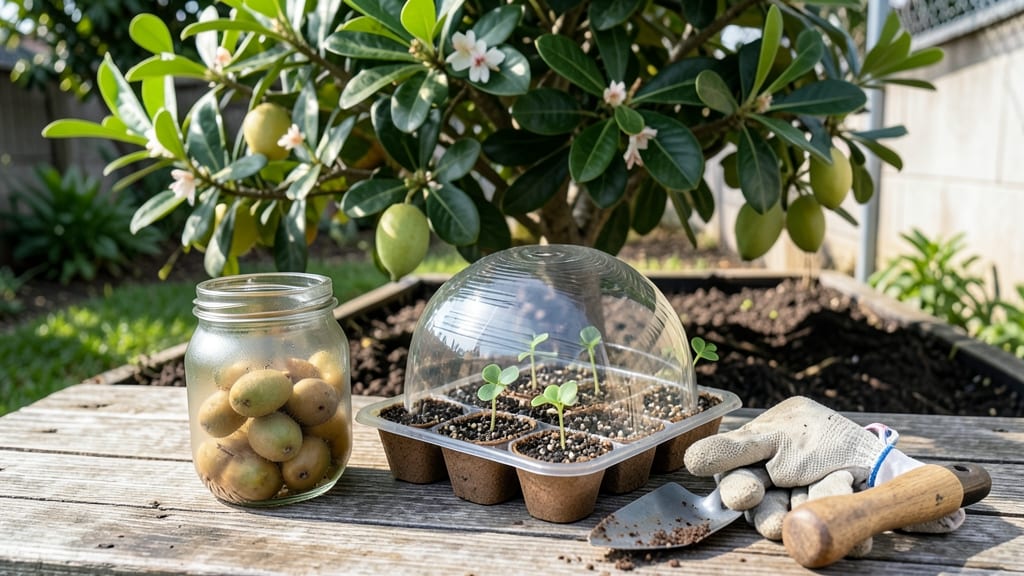
Growing a feijoa seed in your garden lets you nurture a fruit tree that tastes like a mix of pineapple and strawberry—right from your backyard. 🌱 The twist-tested trick is starting with fresh seeds from ripe fruit, because viability drops fast once they dry out.
I’ve learned that patience is key: these seeds can take 3-6 months to sprout, but the payoff is worth it when you see those first feijoa flowers in spring.
You’ll need a warm, bright spot for germination—think 70-80°F—and a mix of peat moss and perlite to keep seeds moist but not soggy. Feijoas hate cold drafts, so avoid windowsills where temps dip below 50°F at night.
Once sprouted, they grow slowly at first, but with consistent care, you’ll have a sturdy seedling ready for transplanting in 6-12 months.
The real magic happens when you move them outdoors: feijoas thrive in full sun and well-draining soil, but they’re sensitive to frost. In colder zones, wait until after last frost and protect young trees with burlap wraps if nights dip below 32°F.
By year three, you might get your first tiny fruits—but true harvests take 5-7 years with proper care.
Here’s the catch: feijoa seeds often grow into different varieties than the parent fruit, so expect surprises in flavor and size. Still, the journey of watching a seedling become a tree is unmatched—especially when you bite into your first homegrown feijoa. Ready to start?
📚 In This Guide
- What you need
- Instructions
- Tips and common mistakes
- Wrapping up and next steps
What you need
- ● Feijoa seeds: 5–10 fresh, plump seeds (harvested from ripe feijoa fruit). Pro tip: 💡 Store seeds in a damp paper towel in the fridge until ready to plant!
- ● Seed-starting mix: 1–2 cups of sterile, well-draining potting soil (or a 50/50 mix of peat moss and perlite).
- ● Small pots or seed trays: 2–4 biodegradable pots (3–4 inches deep) or a shallow tray with drainage holes.
- ● Plastic wrap or humidity dome: To retain moisture while seeds germinate.
- ● Spray bottle: For gentle watering (avoid over-saturating the soil).
- ● Grow lights or sunny windowsill: A warm, bright spot (70–75°F) for seedlings.
- ● Tweezers or toothpick: For carefully placing seeds in the soil.
- ● Fertilizer (balanced, water-soluble): ½ tsp diluted in water for seedlings after sprouting.
- ○ Heat mat (optional): Speeds up germination if your space is cool.
- ● Pruning shears: For transplanting or trimming later.
- ● Garden journal: To track seed viability, germination dates, and growth progress!
How to test and grow feijoa seeds for future fruit trees
Here’s the method I’ve used to turn feijoa seeds into sturdy seedlings—no guesswork, just science-backed steps.
🌱 Step 1: Extract and Prepare the Seeds
Pull the seeds from ripe feijoa fruit and rinse them under cool water to remove any pulp. The key here is to test viability first—drop each seed in a glass of water. If it sinks, it’s likely viable; if it floats, discard it. This quick float test saves time and frustration later.
Once you’ve selected the sinkers, wrap them in a damp paper towel and fold it into a loose packet. Place this inside a sealed plastic bag and refrigerate for 4-6 weeks. This mimics winter dormancy, a critical step for breaking feijoa seeds’ natural dormancy period. I’ve found that seeds treated this way sprout more reliably than untreated ones.
💧 Step 2: Germinate in a Controlled Environment
After the cold treatment, plant the seeds in a small pot filled with sterile seed-starting mix. Press them ½ inch deep into the soil—too shallow and they dry out, too deep and they struggle to reach the surface. Water lightly until the soil is evenly moist but not soggy.
Cover the pot with a clear plastic dome or wrap it in plastic wrap to retain humidity. Place it in a warm spot (70-75°F) with indirect light. Feijoa seeds can take 3-8 weeks to germinate—patience is key. Check daily for moisture, misting the soil if it feels dry to the touch. Avoid overwatering; feijoa seedlings are sensitive to root rot.
☀️ Step 3: Provide Light and Air Circulation
Once the first true leaves appear, remove the plastic cover immediately to prevent fungal growth. Move the seedlings to a bright location with 6-8 hours of indirect sunlight daily. A south-facing window works well, but if your space lacks natural light, supplement with a grow light kept 4-6 inches above the plants. Leggy seedlings mean they’re stretching for light—adjust the setup if you notice this.
After 4-6 weeks, when seedlings have 3-4 sets of leaves, transplant them into 4-inch pots with fresh potting mix. Feijoas grow slowly at first, so don’t rush this step. Harden them off by placing them outside in a sheltered spot for 1-2 hours the first day, gradually increasing exposure over 10-14 days before moving them permanently outdoors.
🌿 Step 4: Transition to Outdoor Conditions
Choose a spot with partial shade for young feijoa seedlings—they’re tender and can’t handle full sun yet. Plant them in well-draining soil with a pH of 5.5-7.0. Feijoas thrive in slightly acidic to neutral soil, so amend with compost if your soil is heavy clay. Space them 6-8 feet apart to allow room for growth.
Water deeply once a week, ensuring the soil stays moist but not waterlogged. Mulch around the base with 2-3 inches of organic mulch to retain moisture and regulate soil temperature. Feijoas are drought-tolerant once established, but young trees need consistent moisture. Watch for yellowing leaves—a sign of overwatering or poor drainage.
⏰ Step 5: Long-Term Care for Fruit Production
Feijoa trees take 3-5 years to bear fruit, but proper care now sets the stage for a productive tree. Prune in late winter to remove dead or crossing branches, and shape the tree to encourage an open canopy. Feijoas flower on new growth, so avoid heavy pruning in spring.
Fertilize lightly in early spring with a balanced fertilizer (10-10-10) to support growth. Over-fertilizing leads to excessive foliage at the expense of fruit production. In colder climates, protect young trees with frost cloth during the first few winters. With time, your feijoa seedlings will grow into hardy trees capable of producing delicious, unique fruit.
Tips & tricks for growing feijoa seedlings
Growing feijoa trees from seed takes patience and precision—but these insights will help you avoid common pitfalls and maximize success.
Viability Test: The float test in Step 1 isn't just about saving time—it's about selecting the strongest seeds. After testing, I've noticed that seeds with slight cracks or soft spots often sink but fail to sprout. Discard these too, as they rarely break dormancy. For the best results, use seeds from fully ripe fruit that's been stored at room temperature for 2-3 days to soften the outer coat.
Cold Treatment Precision: The 4-6 weeks of refrigeration in Step 1 is non-negotiable for feijoa seeds, but temperature matters just as much as time. Store your sealed bag in the crisper drawer of your fridge where temps hover around 35-40°F—this mimics natural winter conditions more accurately than the main fridge compartment. I've had seeds fail to sprout when stored at warmer fridge temperatures (above 45°F).
Germination Environment: In Step 2, maintaining that 70-75°F warm spot is crucial, but don't overlook humidity control. While plastic wrap helps, I've found that placing the pot on a tray of pebbles with shallow water underneath creates a more stable microclimate. The pebbles should touch only the bottom of the pot, not the soil directly. This prevents root rot while maintaining consistent moisture levels—especially important since feijoa seedlings are sensitive to both drought and waterlogging.
Light Transition Strategy: When moving seedlings to direct light in Step 3, I recommend a gradual approach that most guides skip. Start with just 2 hours of direct morning sun on day one, then add 1-2 hours each subsequent day until reaching the full 6-8 hours. This prevents leaf scorch that can occur when seedlings aren't acclimated. For indoor grow lights, I use a timer to provide 12 hours of light daily—feijoas need this extended photoperiod to prevent leggy growth.
Pro Tips for Feijoa Seed Grow A Garden
- Growing feijoa trees from seed takes patience and precision—but these insights will help you avoid common pitfalls and maximize success.
- Viability Test: The float test in Step 1 isn't just about saving time—it's about selecting the strongest seeds.
- Cold Treatment Precision: The 4-6 weeks of refrigeration in Step 1 is non-negotiable for feijoa seeds, but temperature matters just as much as time.
Frequently asked questions
Got questions about growing feijoa trees from seed? You’re not alone! Here are some of the most common queries—plus straightforward answers to help you grow your own feijoa garden with confidence.
How do I know if a feijoa seed is still viable?
Test viability by placing seeds in a glass of water. Viable seeds will sink within 24 hours—floaters are likely non-viable. For extra assurance, soak them for 3–5 days before planting. Pro tip: Store seeds in a cool, dry place if you’re not planting them immediately!
How long does it take for a feijoa seed to germinate?
Germination can take anywhere from 2–6 weeks, depending on temperature and moisture. Keep soil consistently moist (but not soggy) and maintain warmth (around 70°F). Patience is key—some seeds may surprise you by sprouting faster than expected!
Can I grow a feijoa tree from seed indoors first?
Start seeds indoors in well-draining pots with a mix of potting soil and perlite. Use a heat mat or sunny windowsill to encourage growth. Once seedlings are 3–4 inches tall, transplant them outdoors after the last frost. Bonus: This gives them a head start!
Will a feijoa grown from seed produce fruit?
While feijoa trees grown from seed can produce fruit, it may take 5–10 years (or longer) compared to grafted trees. Fruit quality and timing can also vary. For faster, more reliable results, consider grafting later—but growing from seed is a rewarding experiment!
What pests or diseases should I watch for?
Feijoa trees are generally low-maintenance, but keep an eye out for aphids, scale insects, or fungal issues (like powdery mildew). Ensure good airflow, avoid overwatering, and treat pests with neem oil if needed. A healthy tree is your best defense!
Wrapping up and next steps
Growing feijoa trees from seed is a rewarding journey that blends patience with the joy of nurturing life!
By testing seed viability with the twist method, you’ve taken the first exciting step toward cultivating your own fruit-bearing garden. Now that you’re armed with knowledge, why not plant those viable seeds and watch your feijoa adventure unfold? Start by preparing your soil, planting your seeds, and giving them the love they need—your future harvest of fragrant, tangy feijoas will make every effort worthwhile. 🌱✨