
Lawn
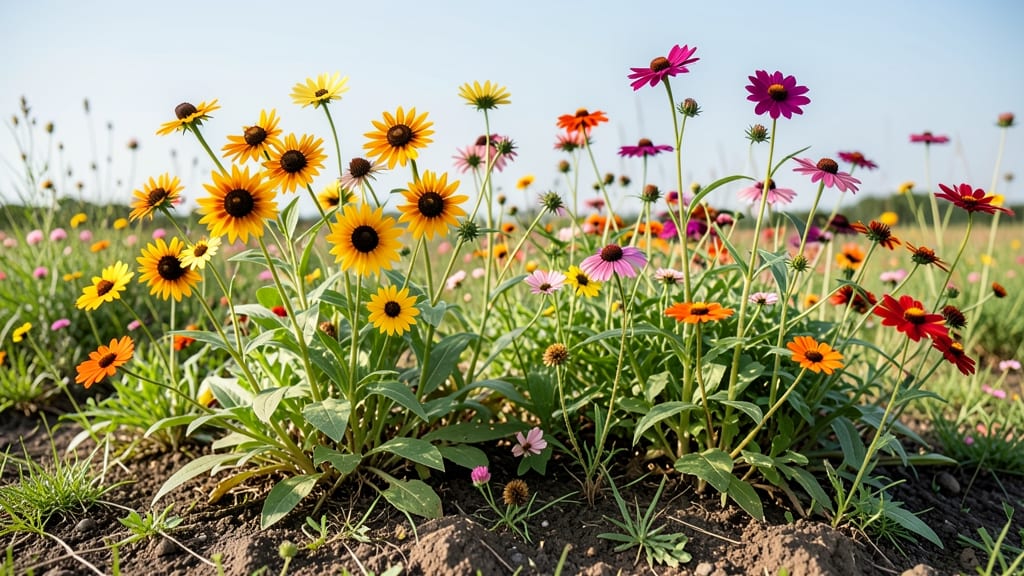
Your Georgia wildflower seed mix transforms bare soil into a pollinator paradise—cold-stratified seeds ensure vibrant blooms from spring through fall. 🌼 I learned the hard way that skipping stratification means waiting months for germination, but with this simple trick, you’ll see sprouts within 2-3 weeks of planting.
The secret lies in native species like black-eyed Susans, coreopsis, and butterfly milkweed—plants that thrive in Georgia’s heat and humidity. Start with well-draining soil, minimal tilling, and a light raking to create space for tiny seeds.
Plant in early spring or fall when temperatures are mild, and avoid heavy foot traffic until seedlings establish.
Once established, these wildflowers need little care—just occasional watering during droughts and deadheading spent blooms to encourage more flowers. The payoff? A meadow teeming with butterflies, bees, and birds, all while reducing erosion and cutting your lawn maintenance time.
For best results, source seeds from reputable native plant suppliers—avoid cheap mixes with fillers like annuals that won’t naturalize. Georgia’s wildflowers reward patience, turning even rocky slopes into low-maintenance, high-impact landscapes that outshine any manicured lawn.
📚 In This Guide
- What you need
- Instructions
- Tips and common mistakes
- Wrapping up and next steps
What you need
- ● Georgia Wildflower Seed Mix: 1–5 lbs (per 100 sq. ft.), depending on coverage goals. Choose a pre-mixed blend (e.g., native Georgia varieties like Black-Eyed Susan, Coneflower, or Coreopsis) for low-maintenance beauty.
- ● Garden Soil or Loamy Topsoil: 2–3 inches (for direct sowing) or a seed-starting mix (if cold-stratifying indoors). Aim for well-draining soil with a pH of 6.0–7.5.
- ● Rake or Hoe: For loosening soil and creating a fine, even seedbed (avoid compacting seeds!).
- ● Water Source: Hose with a fine mist nozzle or watering can (gentle watering is key!).
- ○ Optional Cold-Stratification Supplies (for indoor prep): Plastic storage bag with a zip-top closure (for moisture retention).
- ● Refrigerator or cool basement (34–40°F for 2–4 weeks).
- ● Broadcast Spreader: Saves time for large areas (calibrate for even distribution).
- ● Mulch (Straw or Pine Needles): ¼-inch layer to retain moisture and deter weeds.
- ● Organic Compost: Mix 1 part compost into the top 2 inches of soil for nutrient-rich growth.
- ○ Weed Barrier Fabric: (Optional) For high-weed areas—lay before sowing seeds.
- ● Garden Gloves & Kneepads: Because comfort matters! 😉
Step-by-Step guide to planting a Georgia wildflower meadow
Here's how to create a vibrant, low-maintenance wildflower meadow that thrives in Georgia's climate.
🌱 Step 1: Choose and Prepare Your Planting Site
Select an area with full sun exposure (6+ hours daily) and well-draining soil. Wildflowers despise soggy roots, so avoid low spots where water pools. I like to test drainage by digging a 6-inch deep hole—if it fills with water in under an hour, amend the soil with 2-3 inches of compost or sand to improve drainage.
Clear existing vegetation by mowing or hand-pulling weeds, then loosen the top 4 inches of soil with a rake or tiller. This creates space for seeds to contact the earth without being smothered. If your soil is heavy clay, mix in 1 part sand to 3 parts soil to prevent compaction.
💧 Step 2: Stratify and Plant the Wildflower Seeds
Georgia wildflower mixes often contain seeds that require cold stratification to break dormancy. I place the seeds in a sealed plastic bag with a damp paper towel, then refrigerate them for 4-6 weeks. This mimics winter conditions and triggers germination. After stratification, scatter the seeds evenly over the prepared area—aim for about 1/8 pound per 100 square feet.
Lightly rake the seeds into the soil just enough to cover them (about 1/8 inch deep). Press the soil gently with your hands or a board to ensure good seed-to-soil contact. Overwatering now can wash seeds away, so I use a gentle misting approach until the area looks uniformly damp but not soaked.
☀️ Step 3: Maintain Moisture and Control Weeds
Keep the soil consistently moist for the first 4-6 weeks—this is critical for seed germination. Water deeply 2-3 times per week until the seeds sprout, using a sprinkler or soaker hose to avoid disturbing the seeds. You'll see the first tiny shoots emerge within 2-4 weeks, signaling success.
Once seedlings appear, reduce watering to once weekly unless there's been no rain for 10+ days. Weeds will compete aggressively with your wildflowers, so I pull them by hand when they're small—don't let them grow taller than 2 inches, or they'll shade out your wildflowers.
✂️ Step 4: Encourage Year-Round Blooms and Maintenance
After the first year, your meadow will establish itself, but you'll need to manage it to keep it vibrant. I cut back the dead foliage in late winter or early spring (around February) to encourage new growth. Never cut more than 1/3 of the plant height—this ensures enough leaves remain for photosynthesis.
Wildflowers thrive with minimal intervention, but I do add a light layer of mulch (straw or leaves) in late fall to protect seeds and soil during winter. Avoid fertilizers—wildflowers prefer lean soil. If your meadow looks sparse after two years, simply scatter a little extra seed mix and water lightly to refresh the population.
Tips & tricks for perfect Georgia wildflower meadows
Creating a thriving wildflower meadow takes patience and precision—here's how to avoid common pitfalls and maximize your success.
Soil Preparation is Everything: The 4-inch soil loosening in Step 1 shouldn't just be surface scratching—dig deep enough to break up compacted layers. I like to use a broadfork for this, which aerates without disturbing the soil structure too much. For clay-heavy soils, mix in sand at this stage to prevent future compaction issues that could strangle your seedlings.
Stratification Timing: That 4-6 week cold stratification in Step 2 is non-negotiable for Georgia wildflowers. I start mine in early November so they're ready to plant by late December or January. Pro tip: Label your seed bags with the start date—some varieties need exactly 6 weeks while others do fine at 4. Check your seed mix's specific requirements if available.
Watering Wisdom: The gentle misting approach mentioned in Step 2 is crucial—overwatering at planting can wash seeds away or create mud that smothers them. I use a fine-mist setting on my hose with the nozzle held 12 inches above the soil to achieve that uniform dampness without disturbing the seeds.
Weed Control Strategy: Don't wait until weeds reach 2 inches as mentioned in Step 3—start pulling them when they're just sprouting. I find that a weekly 10-minute weed patrol after rain prevents them from gaining a foothold. For larger areas, consider a light mulch of straw after planting to suppress weeds while still allowing sunlight to reach your seeds.
Pro Tips for Georgia Wildflower Seed Mix
- Creating a thriving wildflower meadow takes patience and precision—here's how to avoid common pitfalls and maximize your success.
- Soil Preparation is Everything: The 4-inch soil loosening in Step 1 shouldn't just be surface scratching—dig deep enough to break up compacted layers.
- Stratification Timing: That 4-6 week cold stratification in Step 2 is non-negotiable for Georgia wildflowers.
Frequently asked questions
Got questions about transforming your Georgia landscape with wildflower seed mixes?
You’re in the right place! Here are answers to the most common queries—from timing to troubleshooting—to help you grow a vibrant, low-maintenance garden with ease.
When is the best time to plant Georgia wildflower seed mix?
For cold-stratified mixes, plant in late summer to early fall (August–October) or early spring (February–March). This timing ensures seeds germinate with cooler temps and winter moisture, giving them a head start. Avoid planting in peak summer heat—seeds need consistent soil dampness to sprout!
How long does it take for wildflowers to bloom after planting?
Most Georgia wildflower mixes take 6–12 weeks to germinate, with blooms appearing 60–90 days after planting. Some varieties (like black-eyed Susans or coreopsis) may flower sooner, while others (e.g., coneflowers) take longer. Patience pays off—first-year blooms may be sparse, but subsequent years deliver stunning color!
Do I need to water my wildflower seeds daily?
No! Overwatering can drown seeds. Instead, keep soil evenly moist (not soggy) for the first 2–3 weeks by watering lightly 2–3 times daily (early morning is best). Once seedlings emerge, reduce to 1–2 deep waterings per week. Georgia’s native wildflowers thrive on drought tolerance—once established, they rarely need extra H₂O.
Will wildflowers attract bees or pests I should worry about?
Wildflowers are bee magnets—great for pollinators! While they do attract bees, most Georgia mixes include non-invasive species. To minimize pests:
- Choose native mixes (they’re adapted to local ecosystems).
- Avoid over-fertilizing (wildflowers prefer lean soil).
- Deadhead spent blooms to encourage reblooming and deter fungus.
Can I mix wildflower seeds with grass seed?
Yes! For a wildflower-meadow blend, mix seeds at a 1:3 ratio (wildflower:grass). Plant in small patches (not full lawns) to avoid competition. Use native grasses like little bluestem for harmony. Pro tip: Mow high (4–6 inches) to protect wildflowers and promote deeper roots.
What if my seeds don’t germinate?
Try these fixes:
- Check soil temp: Seeds need 60–70°F soil to germinate. Use a soil thermometer.
- Scarify the soil: Lightly rake or scratch the surface to improve seed-to-soil contact.
- Re-stratify: If seeds are old, refrigerate them in a damp paper towel for 2–4 weeks before replanting.
- Test viability: Sprinkle a few seeds on damp paper towels—if they don’t sprout in 10 days, they may be past their prime.
Wrapping up and next steps
Transforming your Georgia landscape into a vibrant wildflower haven is easier—and more rewarding—than you think! With the right Georgia wildflower seed mix and a little patience, you’ll enjoy year-round color, support local pollinators, and create a low-maintenance oasis.
Start small: pick a sunny patch, prepare the soil, and let nature do the rest. Your future self (and the bees!) will thank you.
🌸 Ready to bloom? Grab your seeds, mark your calendar for spring planting, and watch your garden flourish. Happy gardening! 🌿