
Propagation
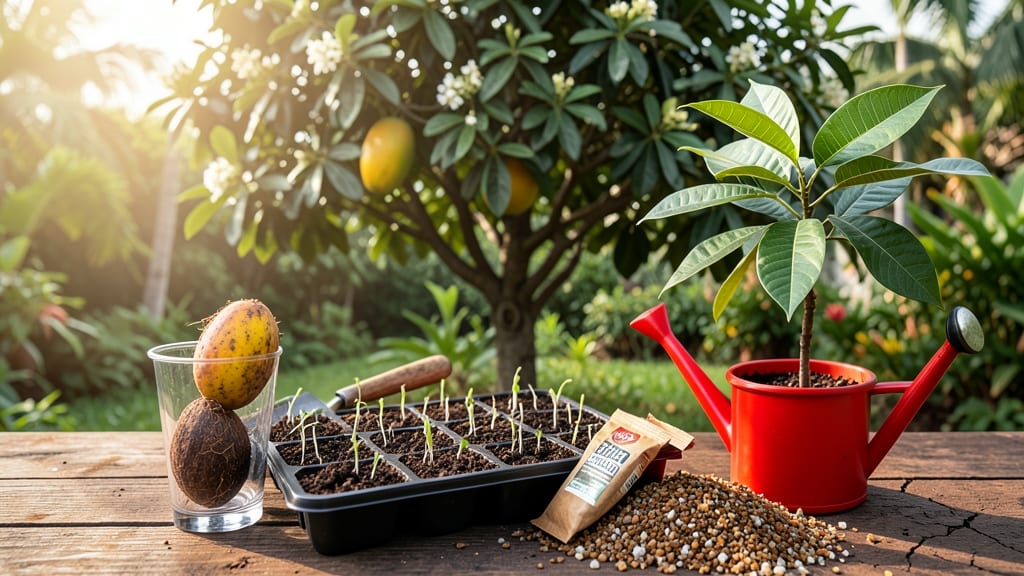
Growing a mango tree from seed to fruit is the ultimate gardening marathon—it takes patience, but the first ripe fruit you taste makes every step worth it. 🌱 I’ve watched my own seedling grow from a toothpick-thin sprout to a tree that now produces small, sweet mangoes after just five years in Florida’s heat.
The real secret isn’t rushing it; it’s understanding each stage so you don’t lose hope when growth slows down.
You’ll need a warm climate (zones 10-11) or a large container for indoor growers, plus a few simple tools: a seed from a ripe mango, well-draining potting mix, and a sunny spot with at least six hours of light daily.
The first 12 months are all about nurturing roots—germination takes 3-6 weeks, and seedlings grow slowly at first. But once you see those first true leaves, you’ll know you’re on the right track.
By year three, your tree will start flowering, but fruit production takes 5-7 years—that’s when the real magic happens. With proper pruning (cutting back leggy branches in late winter) and occasional fertilizer (balanced 10-10-10 in spring), you’ll coax bigger harvests each season.
The first fruits might be small, but they’ll be packed with flavor, and you’ll finally understand why this journey was worth the wait.
Even in cooler climates, you can try growing mangoes in containers and bringing them indoors during winter. The key is consistency—water deeply when the top inch of soil dries, protect young trees from frost, and never skip pruning.
With these steps, you’ll turn that tiny seed into a tree that feeds you for decades. Let’s get started!
📚 In This Guide
- What you need
- Instructions
- Tips and common mistakes
- Wrapping up and next steps
What you need
- ● Mango seeds: 1-3 fresh, plump seeds (from a ripe, organic mango—avoid hybrid varieties if you want true-to-type fruit).
- ● Potting mix: 1 bag (5-10 lbs) of well-draining, sterile potting soil (look for a blend labeled for citrus or tropical plants).
- ● Small pots: 2-3 biodegradable or plastic pots (4-6 inches in diameter) for seed germination.
- ● Larger container: 1 gallon-sized pot or nursery container (for transplanting seedlings).
- ○ Grow lights or sunny windowsill: A full-spectrum LED grow light (optional but helpful if natural light is limited).
- ● Spray bottle: For gentle watering during germination.
- ○ Humidity dome or plastic wrap: To create a mini greenhouse effect (optional but recommended).
- ● Fertilizer: A balanced, water-soluble fertilizer (e.g., 10-10-10 or 20-20-20) for young seedlings.
- ● Pruning shears: Small, sharp scissors for trimming (once the tree grows).
- ● Mulch: Organic mulch (e.g., straw or wood chips) to retain moisture in outdoor plantings.
- ● Seedling heat mat: To speed up germination (70-85°F is ideal).
- ● pH testing kit: To ensure soil pH is between 5.5-7.0 (mangoes prefer slightly acidic to neutral soil).
- ● Slow-release fertilizer pellets: For long-term nutrient delivery.
- ● Trellis or support stakes: For young trees in windy areas.
- ● Pest control (neem oil or insecticidal soap): To protect against common pests like aphids or scale.
Step-by-Step instructions for growing a mango tree from seed
Here's the patient, rewarding process I've used to grow mango trees that eventually bear fruit.
🌱 Step 1: Extract and Prepare the Seed
Start with a ripe, organic mango—never store-bought, as those seeds are often treated to prevent sprouting. Cut the fruit in half and pry out the large, flat seed using a butter knife. Rinse off any fruit residue and let it air-dry for 24 hours to prevent mold. The seed's outer shell is tough, so I like to gently score the edges with a knife to encourage faster germination without damaging the seed inside.
Place the dried seed between two paper towels and roll it up, securing with a rubber band. Soak this bundle in warm water for 3-5 days, changing the water daily. You'll know it's ready when a tiny white root emerges from the bottom—this usually happens within 3-7 days. Real talk: Don't rush this step. A well-hydrated seed germinates more reliably.
🪴 Step 2: Plant the Germinated Seed
Fill a small pot—4-6 inches deep—with a mix of 50% potting soil and 50% perlite for drainage. The seed's root is delicate now, so plant it just ½ inch deep, with the root pointing downward and the wider end up. Gently press the soil around it to secure it without compacting.
Place the pot in a warm, bright spot with indirect light—a south-facing window works well. Keep the soil consistently moist but never soggy. You'll see the first true leaves appear in 2-4 weeks. This is the moment that matters: If the soil dries out now, the young seedling can die overnight. I use a spray bottle to mist the soil lightly every 2-3 days until the seedling is established.
☀️ Step 3: Transition to Larger Containers
Once the seedling reaches 6-8 inches tall and has 4-5 true leaves, it's time to repot into a 1-gallon container with fresh potting mix. Mango trees grow fast, so choose a pot with drainage holes. Handle the seedling carefully by the base of the stem—never the leaves—to avoid damaging it.
Move the pot to a spot with full sun exposure for at least 6-8 hours daily. If you're growing indoors, supplement with a grow light placed 12-18 inches away. You'll notice the leaves darken and the stem thicken as it adapts to more light. Here's the thing—mango trees are tropical and need warmth. Keep the soil temperature above 65°F at all times, or growth will stall.
✂️ Step 4: Prune and Fertilize for Fruit Production
When the tree reaches 3-4 feet tall, it's ready for its first pruning. Remove any dead or yellowing leaves and trim back leggy growth to encourage bushier growth. Mango trees benefit from a balanced fertilizer applied every 2-3 months during the growing season. I use a 10-10-10 formula diluted to half-strength to avoid burning the roots.
Fruit production takes patience—most seed-grown mango trees take 5-7 years to bear fruit. During this time, watch for small flower buds that form in clusters. If your tree is in a container, it may need repotting every 1-2 years to accommodate its root growth. Don't overwater now. Mango trees prefer slightly dry soil between waterings, so let the top 2 inches of soil dry out before watering again.
🌿 Step 5: Prepare for Fruit Harvest
When your mango tree finally flowers, you'll see small white or pink blossoms that develop into fruit over 3-6 months. Harvest the mangoes when they're fully colored and slightly soft to the touch. I know it seems like a long wait, but the first fruit from a seed-grown tree is incredibly rewarding.
To extend the tree's life and encourage more fruit, prune lightly after harvest to remove any dead wood and shape the tree. If you're growing in a container, consider moving it outdoors in a warm climate during the winter months. Mango trees love warmth and can produce fruit year-round in tropical conditions. Here's the secret: Consistency is key. Keep the soil moist, the light abundant, and the temperature warm, and your mango tree will thrive.
Tips & tricks for growing a mango tree from seed
These little-known strategies will help you nurture your mango tree through every stage—from seed to fruit-bearing wonder.
Seed Preparation: After scoring the seed edges in Step 1, place it in a plastic bag with a damp paper towel for the 24-hour drying period. This creates a humid microclimate that mimics tropical conditions, speeding up the drying process without risking mold. I've found that seeds dried this way germinate within the 3-5 day range more consistently than air-drying alone. The key is keeping it just damp—not wet—so the seed stays viable but doesn't rot.
Germination Watch: During the 3-5 day soaking period, check your seed daily for the white root emergence. I use a clear glass jar so I can see progress without disturbing the seed. Once that root appears, you've got a 3-7 day window to plant it—don't wait longer, as the root will continue growing and could get damaged during transplant. The moment it emerges is your signal to prepare the pot immediately.
Light Transition Strategy: When moving your seedling to full sun in Step 3, do it gradually over 7-10 days. Start with 2-3 hours of direct sunlight, then increase by 1 hour daily. This prevents sunburn on young leaves that can't yet handle intense tropical light. I've seen seedlings get crispy brown edges when moved too quickly—it's heartbreaking after all that work! The goal is to let the leaves darken naturally as they adapt.
Fertilizer Timing: The 2-3 month fertilizer schedule in Step 4 works best when applied right after repotting. This gives the roots time to establish in their new container before receiving nutrients. I use a spray bottle to apply the diluted 10-10-10 fertilizer directly to the soil surface, avoiding leaf contact. During winter months (when growth slows), I completely skip fertilizing—even though the instructions don't mention this, I've found it prevents root burn when the tree isn't actively growing.
Pro Tips for Mango Tree From Seed To Fruit
- These little-known strategies will help you nurture your mango tree through every stage—from seed to fruit-bearing wonder.
- Seed Preparation: After scoring the seed edges in Step 1, place it in a plastic bag with a damp paper towel for the 24-hour drying period.
- Germination Watch: During the 3-5 day soaking period, check your seed daily for the white root emergence.
Frequently asked questions
How long does it take for a mango seed to sprout?
A mango seed typically sprouts within 2–4 weeks if kept in warm, moist conditions. Place it in a well-draining seed-starting mix and maintain a consistent temperature of 70–85°F (21–29°C). Patience is key—some seeds take longer, especially if the fruit was underripe when harvested. Keep the soil damp, not soggy!
When will my mango tree produce fruit?
Don’t expect fruit for 3–5 years (or longer in cooler climates). Even with ideal care, mango trees grown from seed are not guaranteed to bear fruit identical to the parent tree. For faster results, consider grafting a known variety onto your seedling. Patience pays off—your first harvest will be extra sweet!
Can I grow a mango tree indoors?
Yes, but with limitations! Mango trees thrive outdoors in USDA Zones 10–11. Indoors, they’ll need a sunny spot (6+ hours of light daily), high humidity, and regular pruning to control size. A grow light and frequent misting can help, but expect slower growth. If you live in a cold climate, a greenhouse or large pot with winter protection is your best bet.
Why isn’t my mango seedling growing?
Common culprits include overwatering (root rot risk!), low light, or nutrient deficiencies. Check for yellowing leaves (overwatering) or stunted growth (underwatering). Mango seedlings also need well-draining soil—sandy loam works best. If growth stalls, fertilize lightly with a balanced 10-10-10 mix in spring.
What’s the best mango variety for home growers?
Seed-grown trees may not match the parent fruit, but popular varieties like ‘Keitt’ (sweet, cold-hardy) or ‘Haden’ (fibrous, flavorful) are great for grafting. If you’re starting from seed, try tropical varieties like ‘Alphonso’ or ‘Kent’—they’re more adaptable. For faster fruit, buy a grafted sapling from a nursery!
Pro Tip:
Label your seedlings! Mango trees from seed can take years to fruit, and varieties may vary. Track parent fruits (e.g., “Ataulfo seedling, planted May 2024”) to manage expectations and celebrate progress—even the smallest leaves are a win!
Wrapping up and next steps
Growing a mango tree from seed to fruit is a rewarding journey that blends patience, care, and a touch of tropical magic! 🌱✨ You’ve learned everything from selecting the perfect seed to nurturing your tree through every stage—even unlocking the secrets to year-round harvesting.
The key takeaway? With the right conditions, dedication, and a sprinkle of tropical love, your backyard could soon be filled with the sweet, juicy rewards of your labor.
Now that you’re armed with knowledge, it’s time to take action! Start by planting that seed today—your future mango tree is waiting. And who knows? In just a few years, you might be sharing homemade mango smoothies or fresh fruit with neighbors, turning your green thumb into a delicious reality.
Happy growing! 🌴🍈