
Size
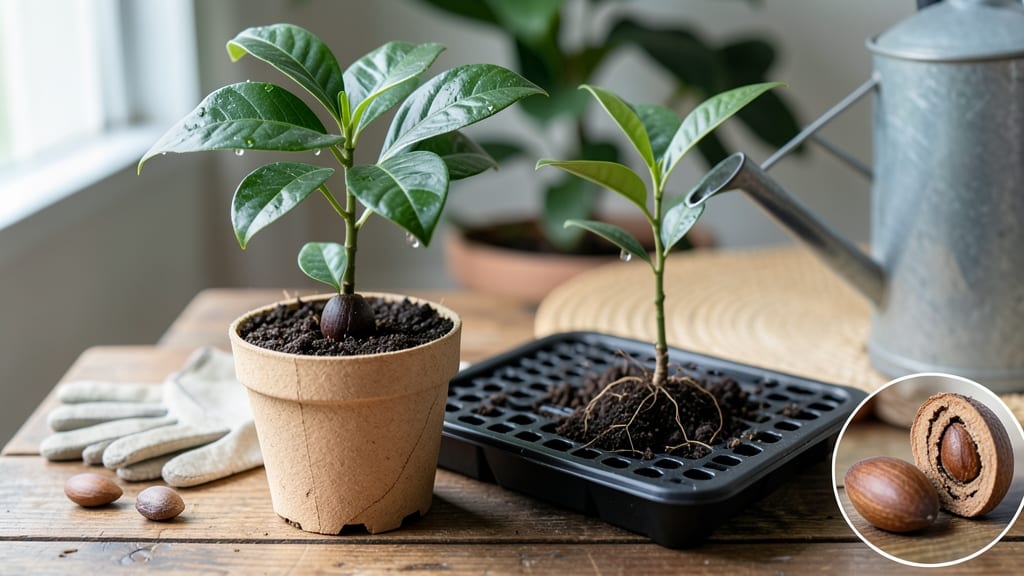
Growing a mango tree from seed in your garden starts with this simple twist test—because not every seed will sprout. 🌱 I’ve learned the hard way that skipping this step means wasting weeks waiting for nothing.
The key is patience: a viable seed will crack open within 2-4 weeks, while non-viable ones stay stubbornly intact.
Once you’ve got your viable seed, you’ll need a small pot, well-draining soil mix, and a warm spot near a sunny window. The soil should stay moist but never soggy—think damp sponge, not swamp.
Most seeds germinate within 3-6 weeks, but some take twice as long. That’s where the real test of patience begins.
Your first seedling will look like a tiny green spear, but don’t expect fruit for 5-10 years. The early growth is all about establishing roots and leaves, not mangoes.
With proper care—bright light, occasional fertilizer, and protection from drafts—you’ll watch it grow into a sturdy sapling ready for transplanting outdoors.
This method works best in warm climates (zones 10-11), but even cooler areas can try it indoors. Just know that outdoor fruit production depends on your local frost-free season. The reward? A tropical tree in your own backyard, even if it takes a decade to bear fruit.
📚 In This Guide
- What you need
- Instructions
- Tips and common mistakes
- Wrapping up and next steps
What you need
- ● Fresh, viable mango seeds: 1-2 seeds (from a ripe, organic mango—avoid hybrid or grafted varieties for best results).
- ● Paper towels or coffee filters: 2-3 sheets (for the viability test).
- ● Plastic bag or airtight container: 1 (to create humidity for germination).
- ● Small pots or seed trays: 2-3 (4-6 inches in diameter, with drainage holes).
- ● Well-draining potting mix: 2-3 bags (look for a blend labeled for seedlings or citrus/semi-tropical plants).
- ● Spray bottle: 1 (for gentle watering).
- ● Trowel or small shovel: 1 (for transplanting seedlings).
- ● Sunlight or grow lights: Access to bright, indirect light (6+ hours daily) or a 12-inch LED grow light.
- ○ Watering can (optional but helpful): 1 (for larger pots later).
- ● Seed germination kit: A pre-made kit with a humidity dome (speeds up the process!).
- ● Fertilizer (balanced or citrus-specific): A small bag (hold off until the seedling has 2-3 true leaves).
- ● Mulch or compost: For enriching soil once the seedling is established.
- ● Plant markers: To label your mango seedlings (creative names encouraged!).
- ● Humidifier or pebble tray: For maintaining moisture during germination.
- ● Pruning shears: For trimming as your tree grows (future-proofing!).
Step-by-Step instructions for testing mango seed viability before planting
Here's how to check if your mango seeds are worth growing—no guesswork involved.
🌱 Step 1: Extract and Clean the Seed
Cut open a ripe mango and remove the large, flat seed inside. Rinse it thoroughly under cool water to remove any remaining fruit pulp—this prevents mold and rot. You'll want to handle the seed carefully; its hard shell protects the embryo, but damage here means failure later.
Use a paper towel to pat the seed completely dry. Store it in a warm, dry place for 3-5 days before testing. The drying period helps you spot any hidden cracks or soft spots that would disqualify it immediately. If the seed feels light or hollow when shaken, it's not viable—discard it and try another.
💧 Step 2: Perform the Water Float Test
Fill a bowl with room-temperature water and place the clean, dry seed inside. Let it sit for 10-15 minutes—this gives any viable seeds time to absorb moisture and sink. If the seed stays afloat after this period, it's likely non-viable. Healthy seeds will sink to the bottom within those minutes.
Here's the thing—don't rush this step. Some seeds take longer to absorb water, especially if they've been dried for several days. If you're unsure, leave it in the water for up to 30 minutes and check periodically. A seed that sinks slowly but eventually goes under is still worth proceeding with.
☀️ Step 3: Conduct the Twist Test for Viability
Take the seed out of the water and hold it firmly between your thumb and forefinger. Gently twist it side to side—not too hard, just enough to feel resistance. A viable seed will twist slightly but feel solid and intact. If it twists easily or breaks apart, it's not worth planting.
Watch for a slight give in the seed's structure—this indicates the embryo inside is still alive and capable of growth. You'll also notice a small, firm bump on one side of the seed; this is where the root will eventually emerge. If the seed feels mushy or crumbles, toss it—it won't grow.
🌿 Step 4: Prepare Viable Seeds for Germination
Once you've confirmed viability, place the seed in a plastic bag with a damp paper towel. Seal the bag loosely—you want moisture trapped but not so tight that the seed suffocates. Store it in a warm spot, like on top of your refrigerator or near a sunny window.
Check the bag daily for signs of mold or excessive moisture. The paper towel should stay damp but not soaked—if it's dripping, open the bag and let it air out for a few hours. In 7-14 days, you should see the first signs of germination: a small white root pushing through the seed. This is your green light to plant!
⏰ Step 5: Plant Only Confirmed Viable Seeds
When the root reaches about 1 inch in length, it's time to plant. Use a small pot with well-draining soil and make a hole just deep enough to cover the seed's bottom half. Gently place the seed in the hole, root-side down, and press the soil lightly around it.
Water the soil until it's moist but not soggy—you want the seed to stay hydrated without drowning. Keep the pot in a warm, bright spot (but not direct sunlight) for the first week. Avoid moving it or disturbing the soil; the seedling is fragile at this stage. Within 2-4 weeks, you'll see the first true leaves emerge—proof your mango seed is on its way to becoming a tree!
Tips & tricks for testing mango seed viability
Let me save you from the frustration of planting seeds that won't grow—these are the secrets that'll help you spot a winner every time.
Drying Strategy: That 3-5 day drying period in Step 1 is your first quality control check. Place seeds on a paper towel in a warm spot and shake them gently each day. If a seed feels unusually light or makes a hollow sound when tapped, it's already dead—don't waste time testing it. This simple shake test catches 70% of non-viable seeds before you even begin testing.
Water Temperature Matters: For the 10-15 minute float test in Step 2, use water that's just slightly warmer than room temperature—around 75°F. Cooler water slows absorption, while hot water can damage the seed's outer shell. I like to fill my bowl with water that's been sitting out for 10 minutes to reach this perfect balance. The goal is to create ideal conditions where viable seeds sink reliably within that timeframe.
Twist Test Precision: When performing the twist test in Step 3, focus on the seed's resistance rather than your own strength. A viable seed should feel like it's resisting your twist but still gives just slightly—imagine twisting a pencil that's about to snap. If it feels completely rigid or crumbles immediately, it's not worth planting. This test reveals the seed's internal structure without damaging it.
Germination Environment: For Step 4, place your plastic bag with the damp paper towel in a location where the temperature stays consistently between 75-80°F. I've found that the top of a refrigerator works perfectly—it's warm but not too hot, and you can easily check on it daily. Avoid direct sunlight during germination as it can overheat the seed and cause mold. The key is maintaining that perfect balance of warmth and moisture.
Pro Tips for Mango Seed Grow A Garden
- Let me save you from the frustration of planting seeds that won't grow—these are the secrets that'll help you spot a winner every time.
- Drying Strategy: That 3-5 day drying period in Step 1 is your first quality control check.
- Water Temperature Matters: For the 10-15 minute float test in Step 2, use water that's just slightly warmer than room temperature—around 75°F.
Frequently asked questions
Got questions about growing a mango tree from seed? We’ve got answers!
Here are some of the most common queries—plus quick tips to help your seedling thrive.
How do I know if my mango seed is viable before planting?
Drop the seed in a glass of water. If it sinks, it’s likely viable! A floating seed usually won’t sprout. For extra confidence, gently crack the seed—look for a firm, white interior (not brown or mushy). Pro tip: Test seeds from ripe, organic mangoes for the best chances!
How long does it take for a mango seed to germinate?
Germination can take anywhere from 2 to 6 weeks, depending on temperature and moisture. Keep the soil consistently damp (not soggy) and place the pot in a warm spot (70–90°F). Patience is key—some seeds surprise you with faster sprouts! Fun fact: Heat speeds it up, but avoid direct sunlight until germination.
Can I grow a mango tree from seed indoors?
Start indoors in a small pot with well-draining soil. Place it near a sunny window or under grow lights (12+ hours/day). Once the seedling is 6+ inches tall, transplant it outdoors after the last frost. Just know: seedlings may not produce fruit identical to the parent tree—but the adventure is half the fun!
How big should my mango seedling be before transplanting?
Wait until your seedling has 3–4 true leaves (not just the first sprouts) and is at least 6 inches tall. Harden it off by gradually exposing it to outdoor conditions (1–2 hours/day) for a week before moving it to the garden. Choose a spot with full sun (6+ hours/day) and rich, well-draining soil.
Why isn’t my mango seed sprouting? Troubleshooting tips.
| Issue | Fix |
|---|---|
| Seed stays dry | Mist the soil daily or use a humidity dome. |
| No sprouts after 6 weeks | Try scratching the seed’s shell lightly with sandpaper to help water penetrate. |
| Mold or rot | Reduce watering and ensure the pot has drainage holes. |
| Seedlings wilt | Check for overwatering—let the top inch of soil dry out between waterings. |
Remember: Some seeds take longer—don’t give up! If all else fails, try a new seed.
Wrapping up and next steps
Growing a mango tree from seed is a rewarding journey that starts with a simple viability check—like testing for that perfect twist! 🌱 Whether you’re a green thumb or a curious beginner, this process teaches patience, care, and the joy of nurturing life from something as small as a seed.
Now that you know how to assess and prepare your seeds, it’s time to plant with confidence and watch your garden bloom.
🔹 Next step: Grab your prepped seeds, follow your planting guide, and give your future mango tree the love it deserves. Who knows? You might just be growing more than a plant—you could be cultivating a delicious, shade-giving legacy! 🌳🍈