
Lawn
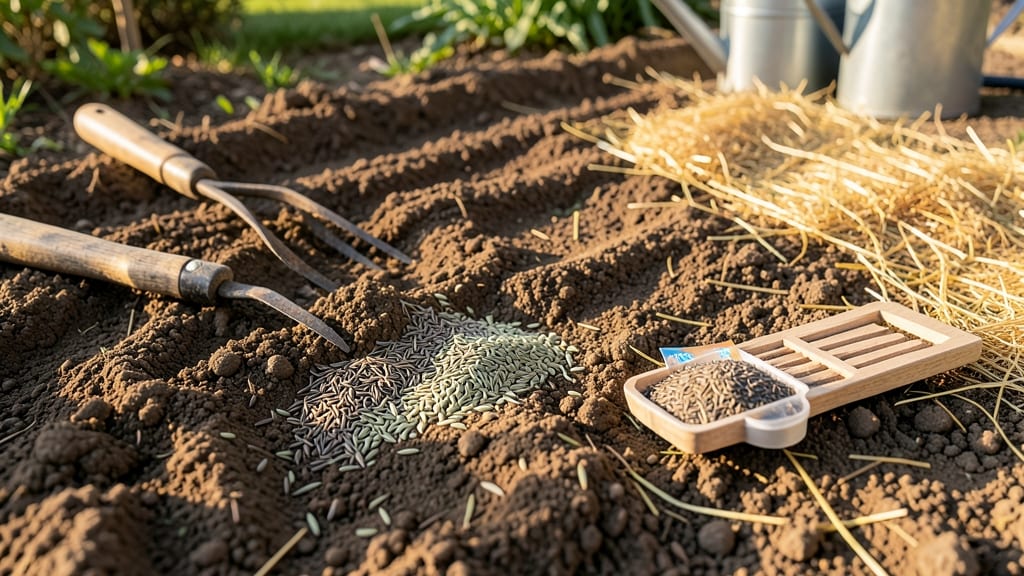
Putting grass seed down in fall transforms your lawn from patchy to lush before winter freezes it in place. 🌱 The secret isn't timing—it's how cooler temperatures and consistent moisture give seeds the perfect head start.
I've seen bare spots fill in so completely that neighbors ask how I did it, and the answer is simple: nature's built-in advantages. You'll need a core aerator or garden fork, your chosen grass seed, a light layer of compost, and a watering can or hose with a gentle spray.
The process takes about 2 hours for a 1,000-square-foot lawn, and you can rent equipment if you don't own it. The key is preparing the soil when it's still warm enough to work but cool enough to keep seeds from drying out.
Once planted, you'll watch germination happen in just 7-14 days—faster than spring—and the new grass will establish roots deep enough to survive winter. No more waiting until spring to see results, and the lawn stays green longer into fall.
This is how pros get ahead of the game every year. Avoid the common pitfalls: don't seed too late when frost is forecast, and never let the soil dry out completely. Water lightly twice daily for the first two weeks, then taper off as the grass grows.
Spring seeding works, but fall gives you a head start on next year's growth.
📚 In This Guide
- What you need
- Instructions
- Tips and common mistakes
- Wrapping up and next steps
What you need
- ● Grass seed: Choose cool-season varieties (e.g., Kentucky bluegrass, fescue, or ryegrass). Aim for 5–10 lbs per 1,000 sq ft, depending on your lawn’s condition.
- ● Lawn fertilizer: A high-phosphorus blend (e.g., 16-20-0 or 10-20-10) to promote root growth. Use 1–1.5 lbs per 1,000 sq ft.
- ● Soil amendment: Compost: ¼–½ inch spread over bare spots.
- ● Topsoil or peat moss: ¼ inch layer for thin or compacted soil.
- ● Rake: A bow rake (for leveling) and a garden rake (for seed-to-soil contact).
- ● Broadcast spreader: For even seed distribution (manual or drop-type).
- ● Water source: Hose with a gentle spray nozzle or irrigation system.
- ● Starter fertilizer: Pre-mixed with seed for faster germination.
- ● Erosion control blanket: For slopes or high-wind areas.
- ● Soil test kit: Check pH (ideal: 6.0–7.0) before seeding.
- ● Lawn roller: Lightweight (50–100 lbs) to press seed into soil.
Step-by-Step instructions for planting fall grass seed
Fall's mild temperatures and steady rains create perfect conditions for germination—here's how to take advantage.
🪴 Step 1: Prepare the Soil for Maximum Seed Contact
Rake the existing lawn vigorously to remove dead grass and debris, creating a smooth, even surface. You want the soil to look like a freshly plowed field—no clumps or thick thatch remaining. I like to use a stiff-bristled rake to break up any compacted areas, especially around the edges where foot traffic tends to pack things down.
Test the soil pH with a simple test kit—ideal lawn grass thrives in 6.0-7.0 range. If your soil tests outside this, apply lime to raise pH or sulfur to lower it, following package instructions. Wait 2-3 weeks after amending before seeding to let the soil settle and prevent seed burial.
💧 Step 2: Spread Seed Evenly for Uniform Germination
Use a broadcast spreader set to the correct setting for your seed type—check the package for the recommended rate per 1,000 square feet. Walk in a crisscross pattern to ensure even coverage, keeping the spreader moving at a steady pace. I find it helpful to divide the lawn into sections and work methodically to avoid overlapping or missing spots.
Lightly rake the area again after seeding to press seeds ¼ inch deep into the soil. This ensures good soil contact while protecting them from birds and wind. Water immediately after planting—your goal is to keep the soil surface damp but not saturated until germination occurs.
☀️ Step 3: Maintain Consistent Moisture for Germination
Water lightly every day for the first 2-3 weeks to keep the top ½ inch of soil consistently moist. Use a gentle sprinkler that delivers a fine mist—heavy watering can dislodge seeds or create runoff. I set my sprinkler for 10-15 minutes daily and monitor the soil; it should feel damp like a wrung-out sponge.
Once seedlings reach 2-3 inches tall, gradually reduce watering to 2-3 times per week, allowing the top inch of soil to dry slightly between waterings. This prevents fungal diseases that thrive in constantly wet conditions. You'll know you've got it right when new grass blades appear uniformly across the lawn.
✂️ Step 4: Protect New Growth During Establishment
Wait until new grass reaches 3-4 inches tall before your first mowing—this usually takes 6-8 weeks in fall. Set your mower blade to 3 inches high to encourage deep root growth. Never remove more than ⅓ of the blade height at one time, or you'll stress the young plants.
Keep foot traffic to a minimum until the lawn is fully established—this typically takes 60-90 days. If pets or children must use the area, designate a small path and avoid compacting the new seedling areas. You'll see the payoff when your lawn develops a thick, lush appearance that lasts through summer.
Tips & tricks for perfect fall lawn planting
Fall planting gives you the best chance for a thick, resilient lawn—but these small details make all the difference between success and disappointment.
The Soil Prep Secret: Don't just rake once! After your initial raking in Step 1, go over the area with a stiff-bristled rake again to create tiny furrows. These little grooves help seeds settle naturally at that perfect ¼-inch depth without needing extra raking later. I've found this cuts my seeding time by nearly half while ensuring better seed-to-soil contact.
Timing is Everything: Those 10-15 minutes of daily watering in Step 3 are more important than you think. Set a timer or use a sprinkler with a built-in controller—overwatering is just as bad as underwatering. I like to water in the early morning so the lawn has all day to dry slightly, preventing fungal issues that can kill new seedlings before they take root.
Bird Protection Strategy: Birds are the #1 enemy of fresh grass seed. After spreading in Step 2, I immediately cover the area with lightweight straw or a protective netting. This keeps seeds from becoming a buffet while still allowing sunlight and water to reach them. Remove the covering after germination begins (usually around week 2).
First Mowing Caution: Waiting until the grass reaches 3-4 inches in Step 4 is crucial, but don't rush the first cut! The roots need that height to establish themselves. I've seen people cut too early and end up with patchy lawns that take months to recover. When you do mow, leave the clippings—they act as natural fertilizer.
Pro Tips for Putting Grass Seed Down In Fall
- Fall planting gives you the best chance for a thick, resilient lawn—but these small details make all the difference between success and disappointment.
- The Soil Prep Secret: Don't just rake once!
- Timing is Everything: Those 10-15 minutes of daily watering in Step 3 are more important than you think.
Frequently asked questions
Got questions about seeding your lawn in the fall? You’re not alone! Here are answers to the most common concerns to help you get started with confidence.
When is the exact best time to put grass seed down in fall?
The ideal window is 4–6 weeks before your first hard frost—typically late August to early October in most U.S. regions. This gives seeds time to germinate before winter slows growth. Check your local frost dates for precision!
Do I need to kill my existing grass before seeding?
Not always! If your lawn is thin but not overrun by weeds, you can overseed directly. For dense grass or weeds, consider spot-treating with a non-selective herbicide 4–6 weeks before seeding to avoid harming new growth.
Can I use topsoil or just compost instead of soil mix?
While topsoil works, a light layer (¼–½ inch) of starter fertilizer mixed with compost is better for moisture retention and nutrients. Avoid heavy clay or sand—aim for a loose, seed-friendly blend to encourage rooting.
What if my lawn doesn’t look perfect after seeding?
Patience is key! New grass may look patchy at first. Water daily (lightly) to keep soil moist, and avoid foot traffic for 2–3 weeks. Thin spots often fill in by spring—consistency beats perfection!
Is fall seeding worth it if I’m renting or selling soon?
Fall-seeded grass establishes deeper roots over winter, making it hardier and greener faster than spring seeding. If you’re moving, time it so new grass is fully rooted by late fall for minimal upkeep.
Wrapping up and next steps
Fall is your lawn’s golden opportunity to grow thick, lush, and resilient—so don’t miss it!
By choosing the right grass seed, prepping the soil, and planting before winter sets in, you’re setting your lawn up for springtime success. 🌱 The cooler temps and frequent rain make fall the perfect time to transform bare patches into a vibrant carpet.
Ready to take action? Grab your tools, follow the steps, and watch your lawn thrive. Need extra help? Check out our lawn care checklist or tag us in your before-and-after photos—we’d love to see your progress! 📸