
Lawn
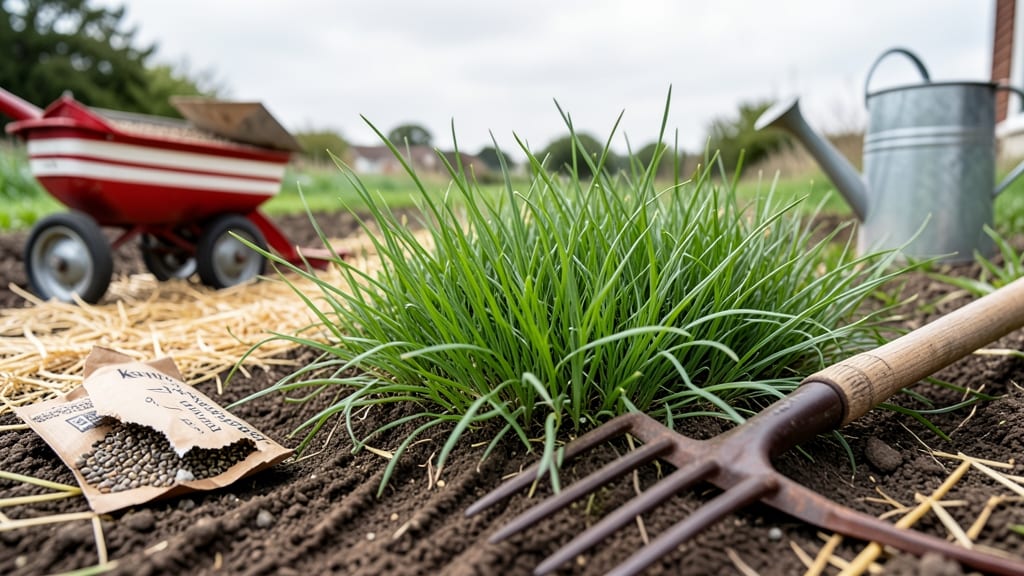
Fall reseed grass when soil temps dip to 65°F—this is the secret to lawns so thick they out-compete weeds before spring. 🌱 I learned the hard way that spring seeding means battling summer drought and crabgrass before your grass even gets established.
But fall? The cooler weather means seeds germinate steadily, roots grow deep before winter, and you skip the "brown patch" phase entirely.
Start by mowing low—just 1.5 inches—then rake up debris and loosen compacted soil with a core aerator. The goal is to create a seed bed so fine it almost feels like powdered sugar.
Choose cool-season grasses like tall fescue or Kentucky bluegrass, and scatter seeds at twice the rate on the bag (birds are sneaky thieves). Lightly rake them in, then water gently every morning for 2-3 weeks, keeping the top inch moist but never soggy.
By late fall, you'll see sprouts pushing through, and those roots will keep growing until frost—meaning next spring, your lawn emerges dense, green, and weed-free. No more patchy spots or bare dirt where weeds move in.
The best part? You can walk on it in 4-6 weeks, unlike spring seeding which needs weeks of "do not disturb" rules.
Works in zones 3-8, but adjust timing: Northern climates aim for September-October, Southern zones hold off until October-November to avoid winter germination. Skip this step, and you're basically handing your lawn over to weeds. Do it right, and you'll have the envy-inducing grass of your neighborhood by Memorial Day.
📚 In This Guide
- What you need
- Instructions
- Tips and common mistakes
- Wrapping up and next steps
What you need
- ● Grass seed: Choose a cool-season variety (e.g., Kentucky Bluegrass, Fescue, or Ryegrass) for fall planting. Quantity: 5–10 lbs per 1,000 sq ft (check seed bag for exact coverage rates).
- ● Lawn fertilizer: High-phosphorus blend (e.g., 10-20-10 or 16-4-8) to encourage root growth. Apply ½ lb of nitrogen per 1,000 sq ft at seeding.
- ● Topsoil or compost: ¼–½ inch layer to cover seeds and retain moisture.
- ● Garden rake: Fine-toothed (¼–½ inch teeth) for loosening soil and leveling.
- ● Broadcast spreader: For even seed distribution (manual or wheel-type).
- ● Water source: Hose with gentle spray nozzle or sprinkler for light, frequent watering.
- ○ Lawn roller (optional but helpful): Lightweight (50–75 lbs) to press seed into soil.
Step-by-Step guide for reseeding grass in fall
Fall is the best time to thicken your lawn naturally—here's how to do it right.
🌱 Step 1: Prepare the Soil for Optimal Seed Germination
Start by mowing your lawn shorter than usual—set the mower to its lowest setting to remove any existing seed heads or thatch. This creates a clean surface for new seeds to make contact with the soil. I like to finish by raking lightly with a stiff-bristled rake to loosen the top ½ inch of soil without disturbing deeper roots.
Test the soil's moisture level by grabbing a handful—it should crumble slightly but hold together when squeezed. If it's too dry, water lightly until the top 2 inches feel damp but not soggy. The key here is preparing a loose, moist bed where seeds can settle just below the surface without being buried too deeply.
💧 Step 2: Spread Grass Seed Evenly Across Problem Areas
Use a broadcast spreader to evenly distribute the seed over bare spots or thin areas. I walk in a crisscross pattern, overlapping slightly with each pass to avoid missed patches. For small areas, a hand spreader works just as well—just take your time to ensure even coverage. You'll know you've done it right when you can barely see the soil through the seed layer.
Don't skip this step—uneven seeding leads to patchy growth. If you're reseeding a large area, divide it into sections and focus on one at a time. Lightly rake the seeded area again to press seeds into the soil, ensuring good soil-to-seed contact. This prevents seeds from washing away during watering.
☀️ Step 3: Water Gently but Consistently for Germination
Water immediately after seeding, keeping the soil surface moist but not saturated. Use a gentle sprinkler or soaker hose to avoid dislodging seeds. The goal is to maintain 1 inch of water per week, broken into daily light waterings for the first 2-3 weeks. You'll see the first sprouts appear in about 7-14 days, depending on your grass type and fall temperatures.
Here's the thing—overwatering now can drown seeds, while underwatering halts germination. Check the soil daily by sticking your finger ½ inch deep. If it feels dry, water again. Once seedlings reach 2 inches tall, you can gradually reduce watering to 1 inch per week, letting the roots establish deeper.
✂️ Step 4: Maintain and Protect New Growth Through Winter
Once the new grass reaches 3-4 inches tall, mow it at the highest setting on your mower to encourage root growth. Avoid walking on seeded areas—they're delicate until roots are fully established. If frost threatens, cover the area with a thin layer of straw or leaves to protect young seedlings without smothering them.
In early spring, you'll notice the newly seeded areas filling in naturally. Keep mowing at the recommended height for your grass type, and avoid heavy foot traffic until the lawn is fully established. This fall's effort will pay off with a thicker, more resilient lawn next season.
Tips & tricks for perfect fall grass reseeding
Here's what nobody tells you about getting that thick, lush lawn next spring—these are the secrets I've learned after reseeding my own yard.
Timing Secret: The ideal window for reseeding is late summer to early fall, when temperatures are still warm enough for germination but cooling enough to prevent drought stress. Aim for 4-6 weeks before your first frost date—this gives seeds time to establish roots before winter sets in. I always check my local frost dates and mark the calendar so I don't miss this critical window.
Soil Preparation Tip: When loosening that ½ inch of topsoil in Step 1, think of it like fluffing a pillow—you want to create a soft landing zone for seeds. If your soil feels compacted or hard, consider renting a core aerator for 1-2 square feet per minute to create deeper channels. This helps roots penetrate more easily, especially in clay-heavy soils. The goal is to break up compaction without disturbing deeper roots.
Seed Selection Wisdom: Not all grass seed is created equal—choose a blend that matches your climate zone and lawn use. Cool-season grasses like Kentucky bluegrass or fescue thrive in fall planting. For shady areas, look for seed labeled "shade-tolerant." I always read the back of the seed bag for recommended planting times and sun exposure—this ensures you're planting the right variety for your specific yard conditions.
Watering Strategy: The 1 inch of water per week guideline in Step 3 is your golden rule, but timing matters just as much. Water in the early morning (between 6-10 AM) to allow foliage to dry before evening. This prevents fungal diseases that thrive in damp conditions. I set up a timer on my sprinkler for 10-15 minutes daily—just enough to keep the top ½ inch consistently moist without creating puddles.
Pro Tips for Reseed Grass In Fall
- Here's what nobody tells you about getting that thick, lush lawn next spring—these are the secrets I've learned after reseeding my own yard.
- Timing Secret: The ideal window for reseeding is late summer to early fall, when temperatures are still warm enough for germination but cooling enough to prevent drought stress.
- Soil Preparation Tip: When loosening that ½ inch of topsoil in Step 1, think of it like fluffing a pillow—you want to create a soft landing zone for seeds.
Frequently asked questions
Got questions about reseed grass in fall? You’re not alone—here are the most common ones to help you get it right!
When is the exact best time to reseed grass in fall?
The ideal window is 4–6 weeks before your first hard frost (typically mid-September to early October in most U.S. regions). This gives seeds time to germinate and establish roots before winter dormancy. Check your local frost dates for precision!
Can I reseed grass in fall if my lawn already has weeds?
Yes! Fall is actually a great time to tackle weeds before reseeding. Mow short, apply a pre-emergent herbicide (if needed), then overseed. For stubborn weeds, spot-treat with a post-emergent herbicide 2–3 weeks before planting grass seed to avoid harming the new growth.
Do I need to till my lawn before reseeding in fall?
Not always! Lightly rake or dethatch (if thatch is >½ inch thick) to loosen soil and improve seed-to-soil contact. Skip tilling unless your lawn has compacted soil or severe bare patches—over-tilling can damage existing grass roots.
What’s the fastest way to keep seeds from washing away after planting?
Use a starter fertilizer with mulch (like peat moss or straw) to protect seeds and retain moisture. Water lightly but frequently (2–3 times daily for 10–15 minutes) until germination (7–21 days). A lightweight straw blanket can also help on windy days.
Can I reseed grass in fall if I have pets or kids?
Just wait 2–3 weeks after planting before letting pets back on the lawn (to avoid seed/soil ingestion). For kids, use pet-safe seed (like Kentucky Bluegrass) and avoid fertilizers with high phosphorus until the grass is established.
What if my grass doesn’t grow after fall reseeding?
Check these fixes:
- Moisture: Soil should stay consistently damp (not soggy).
- Temperature: Seeds need 50–70°F soil temps to germinate.
- Sunlight: Ensure the area gets at least 4–6 hours of sun daily.
- Seed viability: Test old seeds with a water float test (sink = good; float = bad).
Wrapping up and next steps
Fall is the perfect time to reseed your lawn—cool temperatures and frequent rain give grass seeds the ideal conditions to sprout strong roots before winter.
By following these steps—preparing the soil, choosing the right seed mix, and maintaining proper care—you’ll wake up to a lush, thicker lawn next spring. Don’t wait! Grab your tools, roll up your sleeves, and give your yard the fresh start it deserves.
Ready to take action? Mark your calendar for a weekend project—your future lawn will thank you! 🌱✨