
Planting
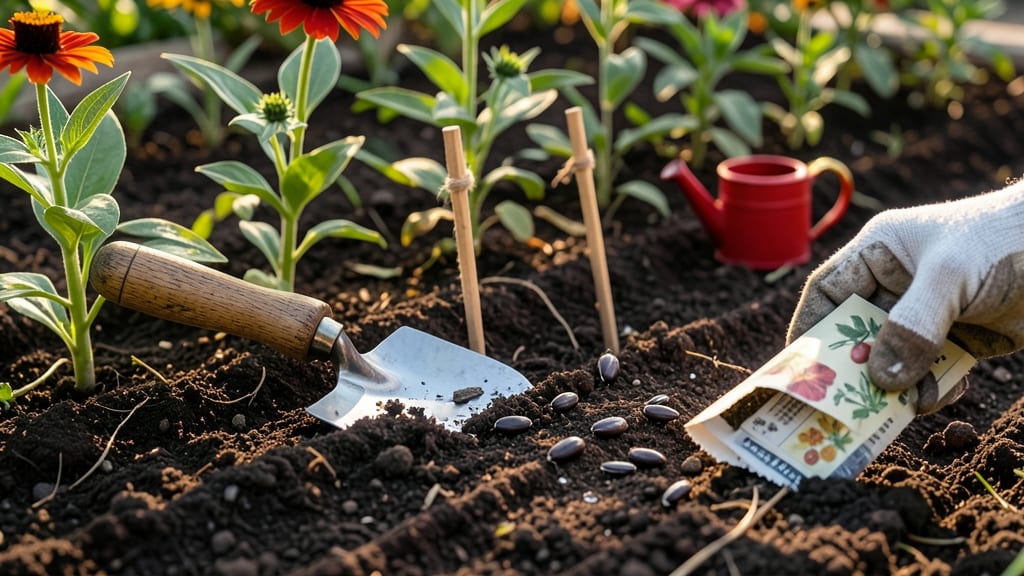
Perfect zinnia seed spacing means the difference between a wildflower meadow of blooms and a sad, leggy mess. 🌻 I learned this the hard way—my first year, I crammed seeds too close, and by summer, they fought for sunlight instead of flowering.
The right spacing gives each plant room to grow strong stems and showstopping blooms, not just a few weak stems fighting for space.
Start with well-draining soil mixed with compost—zinnias hate soggy roots. Plant seeds ¼ inch deep, then space them 12-18 inches apart for single-stem varieties or 6-12 inches apart for bushier types.
Rows should be 18-24 inches apart to allow airflow, which cuts down on powdery mildew. Thin seedlings to the recommended spacing once they have their first true leaves—it’s brutal, but worth it.
With proper spacing, you’ll end up with bold, healthy plants that produce dozens of blooms per stem instead of just a few. The stems stay sturdy enough for cutting, and the flowers last longer in arrangements.
Even in hot summers, well-spaced zinnias bounce back from heat stress better than crowded ones. The payoff? A garden that looks like a pro designed it.
Works for both in-ground beds and containers—just scale the spacing down for pots. Here’s how to avoid the most common mistakes and keep your zinnias thriving all season.
📚 In This Guide
- What you need
- Instructions
- Tips and common mistakes
- Wrapping up and next steps
What you need
- ● Zinnia seeds: Choose high-quality, disease-resistant varieties (e.g., 'Benary’s Giant,' 'Profusion'). Aim for 100–200 seeds depending on your garden size.
- ● Garden soil or potting mix: Well-draining, loamy soil (pH 6.0–7.0) or a seed-starting mix for indoor sowing. 5–10 gallons (or enough to fill your planting area).
- ● Planting containers or garden beds: For direct sowing outdoors: A sunny, well-drained bed (minimum 6–12 inches deep, width varies by variety).
- ● For indoor starts: 2–3 inch diameter pots or seed trays with drainage holes.
- ● Watering can or hose with a gentle spray nozzle: For precise, even moisture without disturbing seeds.
- ● Plant labels or markers: 10–20 labels (if planting multiple varieties) to track spacing and varieties.
- ○ Gloves (optional but recommended): To protect hands from soil and prickly stems.
- ● Row markers or string: For guiding even spacing (e.g., 12–18 inches apart for dwarf zinnias, 18–24 inches for tall varieties).
- ● Mulch (straw or shredded leaves): To retain moisture and suppress weeds.
- ● Fertilizer (balanced 10-10-10 or compost): A light application at planting time boosts early growth.
- ● Shade cloth: For protection from intense sun if sowing early in hot climates.
- ● Planting grid or ruler: For measuring precise seed spacing (especially useful for small seeds!).
Step-by-step guide to perfect zinnia seed spacing
Here's how I space zinnias for maximum blooms—no guesswork, just consistent results.
🌱 Step 1: Prepare the Soil and Planting Area
Zinnias thrive in well-draining soil with a pH between 6.0 and 7.0. Work the top 6 inches of soil to loosen it, removing any rocks or debris. I like to mix in a 1-inch layer of compost before planting to give those roots a nutrient boost right from the start. This ensures your zinnias won't struggle for food later when they're putting on big, bold blooms.
Choose a spot that gets full sun—at least 6-8 hours daily. If you're planting in a garden bed, mark your rows with a string and stakes to keep spacing consistent. For containers, make sure each has proper drainage holes, as zinnias hate soggy feet. The key here is preparation—skipping this step means weaker stems and fewer flowers down the line.
🌱 Step 2: Sow Seeds at the Right Depth and Spacing
Plant zinnia seeds ¼ inch deep—that's roughly the width of a dime. I use my finger to poke small holes in the soil, then drop 2-3 seeds per hole for better germination odds. Space your holes 12-18 inches apart for single-stem varieties like 'Benary's Giant' or 6-12 inches apart for shorter types like 'Profusion'. Crowding leads to weak stems and fewer blooms, so don't skimp on space.
After planting, cover the seeds lightly with soil and tap gently to settle them. Water immediately with a fine mist—no heavy stream that could wash seeds away. You'll see tiny sprouts in 7-14 days, but patience is key. If your soil stays too wet, seeds may rot before germinating. Keep the area moist but not soggy until you spot those first green leaves.
☀️ Step 3: Thin Seedlings for Stronger Growth
Once seedlings reach 2 inches tall, it's time to thin them. Use sharp scissors or your fingers to snip the weakest stems at soil level, leaving only the strongest plant per hole. This might feel cruel, but trust me—thinning prevents competition for nutrients and air circulation, which keeps plants healthier. You'll end up with one sturdy zinnia per planting spot, ready to burst with blooms.
Space remaining seedlings to match your original plan: 12-18 inches apart for tall varieties or 6-12 inches for compact ones. If you're growing zinnias in rows, maintain 18-24 inches between rows for easy access and airflow. After thinning, water deeply to help roots establish. You'll notice a difference in plant vigor within a week—that's your reward for precision spacing.
🌿 Step 4: Maintain Spacing as Plants Mature
Zinnias grow fast, so check spacing every 2-3 weeks and adjust if needed. If you planted densely, stems may lean or sprawl—this is a sign they need more room. Gently transplant any overcrowded seedlings to new spots, being careful not to disturb roots. Strong, properly spaced zinnias develop thicker stems and more abundant blooms, while crowded plants produce fewer, smaller flowers.
Deadhead spent blooms regularly to encourage continuous flowering. Pinch back leggy stems to promote bushier growth, but avoid cutting into the main stem. With proper spacing, your zinnias will stand tall and proud, ready to steal the show in any garden bed. The payoff for this upfront work? A summer of nonstop color that turns heads—and maybe even gets you compliments from neighbors.
Tips & tricks for perfect zinnia planting
Here's what nobody tells you about getting those zinnias to thrive—these are the little details that make all the difference between a patchy garden and a showstopper display.
Soil Prep Secret: Before mixing in that 1-inch layer of compost, I always do a quick soil test with a simple at-home kit. Zinnias love that pH range of 6.0-7.0, but if your soil tests acidic (below 6.0), add a handful of lime to the planting area a week before sowing. The compost will give them nutrients, but balanced pH is the foundation for strong roots. I've seen zinnias struggle in acidic soil even with perfect spacing—don't skip this step if your soil feels heavy or looks dark brown.
Planting Depth Visual: That ¼-inch depth might seem tricky, but here's my trick: use a dime as your guide. The width of a dime is exactly ¼-inch, and it's always with me when I'm planting. Press the seeds gently into the soil so they're covered by that dime's thickness. Too deep and they won't sprout; too shallow and they'll dry out. I also like to tap the soil lightly after planting to settle everything—this prevents seeds from washing away during your first watering.
Thinning Timing Tip: When you're checking those 2-inch seedlings for thinning, look for the one with the most vibrant green leaves and the sturdiest stem. The others might look fine, but that one will be your winner. I've learned the hard way that waiting until seedlings are taller makes thinning more traumatic for the roots. Do it early, and your zinnias will thank you with thicker stems and bigger blooms. After thinning, give them a good drink—those roots need to recover from the shock.
Sunlight Strategy: Those 6-8 hours of full sun are non-negotiable, but here's the thing about sun exposure: morning sun is gentler than afternoon heat. If you're in a hot climate, I recommend planting zinnias where they'll get afternoon shade during the peak summer months. You'll notice the difference in plant vigor—zinnias can handle heat, but they'll reward you with more consistent blooming if you give them a break from the midday sun when temperatures climb above 90°F.
Pro Tips for Zinnia Seed Spacing
- Here's what nobody tells you about getting those zinnias to thrive—these are the little details that make all the difference between a patchy garden and a showstopper display.
- Soil Prep Secret: Before mixing in that 1-inch layer of compost, I always do a quick soil test with a simple at-home kit.
- Planting Depth Visual: That ¼-inch depth might seem tricky, but here's my trick: use a dime as your guide.
Frequently asked questions
Got questions about zinnia seed spacing?
You’re not alone! Here are some of the most common concerns—and their solutions—to help you grow a showstopping display of zinnias.
How close can I plant zinnia seeds together?
Zinnia seeds need space to breathe—aim for 12–18 inches apart for dwarf varieties and 18–24 inches for tall types. Crowding leads to weak stems and fewer blooms. If you’re direct-sowing, thin seedlings to these distances once they sprout.
When is the best time to space zinnia seedlings?
Wait until seedlings have 2–3 true leaves (about 3–4 weeks after germination) to thin. This ensures they’re sturdy enough to handle transplanting. Early thinning prevents competition for water and nutrients, giving your zinnias a head start for vibrant blooms!
Can I grow zinnias in containers? What’s the ideal spacing?
For containers, space dwarf zinnias 6–8 inches apart and taller varieties 12–16 inches apart. Use a well-draining mix and ensure the pot is at least 12–18 inches deep to support root growth. Just like in gardens, avoid overcrowding to prevent disease.
What if my zinnias get too close together after planting?
No stress! Gently snip or pull seedlings at the base to make room, leaving the healthiest ones. If you’re late to the game, mulch heavily to suppress weeds and reduce competition. Over time, your zinnias will reward you with bold, cheerful blooms—worth the extra effort!
Does spacing change for different zinnia varieties?
Yes! Dwarf zinnias (like ‘Thumbelina’) thrive in tight clusters (6–12 inches apart), while giant varieties (like ‘Benary’s Giant’) need 24+ inches to avoid flopping. Always check seed packets for variety-specific guidelines—precision planting = happier plants!
Wrapping up and next steps
Mastering zinnia seed spacing is your secret to a garden bursting with vibrant blooms! 🌸 By following the right spacing—whether in containers, raised beds, or open ground—you’ll ensure strong stems, abundant flowers, and easy maintenance. Now that you’re armed with tips, tools, and answers, it’s time to get planting.
Ready to transform your garden? Grab your seeds, mark your rows, and enjoy the satisfaction of watching your zinnias thrive. Happy growing! 🌱