
Lawn
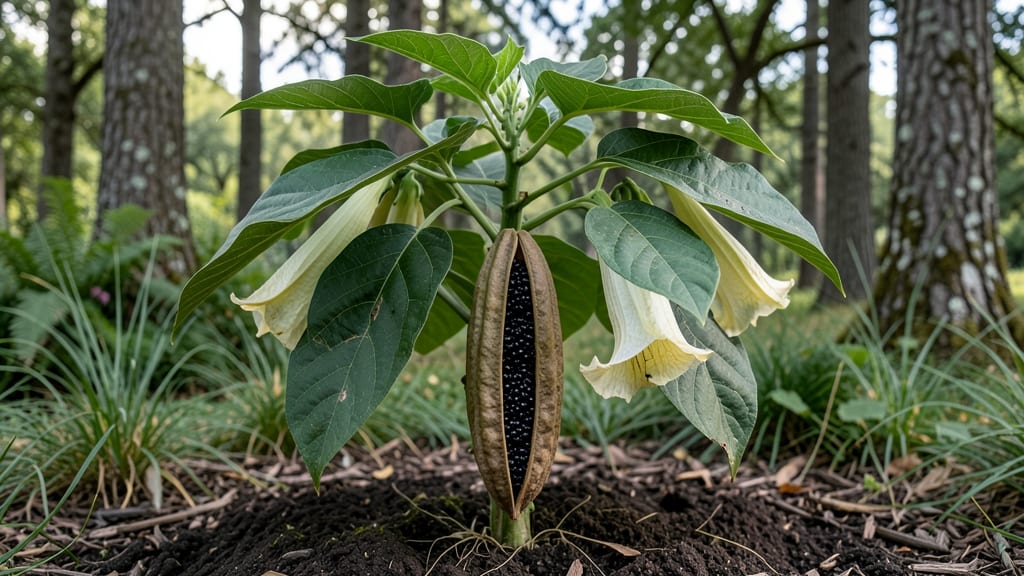
Harvesting devil's trumpet seed pods without the twisty mess is the secret to growing these stunning plants next season. 🌿 The key is knowing exactly when to pick them—before they split open and scatter seeds everywhere.
I learned the hard way that patience pays off when you're dealing with these large, pendulous pods that can weigh a pound or more.
You'll need a pair of sharp pruners, a bucket, and a dry, well-ventilated space to work. The pods must be fully mature but still firm to the touch—think late fall when they turn from green to yellowish-brown.
Once you've collected them, let them dry completely for about two weeks before cracking them open to reveal the seeds inside.
Germination takes time but is worth the wait—plant the seeds in a mix of peat and perlite, keep them barely moist, and maintain temperatures around 70°F. Within 4-6 weeks, you'll see those first delicate sprouts emerging, ready to grow into your own thriving devil's trumpet plants.
Remember, every part of this plant is toxic, so wear gloves and keep it away from pets and children. With the right care, your homegrown devil's trumpets will reward you with dramatic, fragrant blooms that transform any garden into a tropical paradise.
📚 In This Guide
- What you need
- Instructions
- Tips and common mistakes
- Wrapping up and next steps
What you need
- ● Mature devil’s trumpet seed pods – Harvest when they’re fully dry and brown (usually late fall/winter). Aim for at least 10-15 pods for a reliable seed stash.
- ● Pruning shears or sharp scissors – For cleanly snipping pods from the vine without damaging the plant.
- ● Brown paper bags or breathable mesh bags – 2-3 bags to collect pods and allow airflow during drying.
- ● Tweezers or fine-tipped forceps – Helps gently extract seeds from pods without crushing them.
- ● Small bowl or shallow tray – For sorting seeds from chaff (a 9-inch ceramic or glass dish works great).
- ○ Fine-mesh strainer or sifter – Optional but handy for separating seeds from debris.
- ● Labeling tags & permanent marker – To mark bags with the harvest date and variety (e.g., “Datura stramonium – 2024”).
- ● Air-tight seed storage container – A small glass jar with a lid or resealable plastic bag with a silica gel packet.
- ● Desiccant packets – Placed in storage containers to absorb moisture and extend seed viability.
- ● Hand lens or magnifying glass – For inspecting seeds for pests or damage before storage.
- ● Rubbing alcohol (70% isopropyl) & cotton swabs – To sterilize tools and surfaces if working with multiple seed types.
- ● Notebook & pen – For logging growing conditions (e.g., “Harvested in Zone 8, 45°F nights”).
How to harvest devil’s trumpet seed pods without twisting them
Here’s my foolproof method for collecting seeds from these delicate pods—no frustration, no broken stems.
🌱 Step 1: Wait for the Right Stage
Harvest when the seed pods turn deep brown and split open naturally—usually 4-6 weeks after flowering. If you pick them too early (green or yellow), the seeds won’t mature. I check daily in late summer: when a pod opens just a crack, that’s your cue.
Gently squeeze the pod between your fingers—if it releases seeds easily, it’s ready. If it’s still firm, wait another day. Overripe pods crumble, so timing matters. A magnifying glass helps spot the subtle color shift from green to brown.
💧 Step 2: Cut Stems at the Base
Use clean, sharp pruners to snip the stem 1-2 inches below the pod. Cutting too close risks tearing the pod, while leaving too much stem weakens the plant. Hold the pod firmly with one hand to steady it while cutting.
Don’t yank or twist—this ruins the stem and can damage the main plant. If the pod resists, it’s not fully ripe. Place harvested pods in a paper bag immediately to catch any seeds that might drop.
☀️ Step 3: Dry the Pods and Extract Seeds
Spread the pods in a single layer on a dry, shaded surface (like a mesh screen or paper towel) for 7-10 days. Avoid direct sun—it can bake the seeds. Stir them daily to prevent mold. You’ll know they’re dry when they’re lightweight and brittle when shaken.
Once dry, gently crush each pod over a clean tray or paper. The seeds will fall out easily—no need to force it. Discard any empty husks or damaged seeds. Store the viable ones in a paper envelope in a cool, dark place for next season.
✂️ Step 4: Clean Up and Store for Next Year
Wipe down pruners with rubbing alcohol to prevent disease spread. If you have extra pods, tie them in small bundles and hang them upside down in a dry, airy spot—this lets seeds drop naturally into a container below.
Label your seed packets with the harvest date and variety. Devil’s trumpet seeds stay viable for 2-3 years if stored properly. I keep mine in a glass jar with a silica gel packet to absorb moisture—this ensures they’re ready for spring planting.
Tips & tricks for devil's trumpet seed pod harvesting
These little details make all the difference when handling delicate seed pods—trust me, I've learned the hard way!
Timing Secret: In Step 1, when checking for deep brown pods, look for that subtle "just opened" crack—it's your golden window. I've waited too long and ended up with crumbly pods that released seeds everywhere. The 4-6 week window is tight, so check daily once you spot the first color change. A magnifying glass reveals the tiny shifts you'd miss with your eyes alone.
Equipment Matters: For Step 2, invest in a good pair of pruners with a sharp blade—dull tools tear stems and damage pods. I keep mine cleaned with rubbing alcohol between uses, and I always cut at that exact 1-2 inch mark below the pod. Too close and you risk tearing; too far and you weaken the plant. Hold the pod steady with one hand while cutting—this prevents twisting that ruins everything.
Drying Wisdom: During Step 3, that 7-10 day drying period is non-negotiable. I've tried rushing it with a hairdryer, but the seeds bake and lose viability. Spread pods in a single layer on mesh screens or paper towels in a dry, shaded spot. Stir them daily to prevent mold—this is where most people fail. When they're brittle and lightweight, you're ready to crush them gently over a clean tray. No need to force it; the seeds will release naturally.
Storage Strategy: For Step 4, I've found glass jars with silica gel packets work best for long-term storage. Label everything with the harvest date—this helps track viability. Devil's trumpet seeds last 2-3 years, but I always test a few each spring to confirm germination. The key is keeping them cool and dry; any moisture will trigger mold before planting season.
Pro Tips for Devil'S Trumpet Seed Pod
- These little details make all the difference when handling delicate seed pods—trust me, I've learned the hard way!
- Timing Secret: In Step 1, when checking for deep brown pods, look for that subtle "just opened" crack—it's your golden window.
- Equipment Matters: For Step 2, invest in a good pair of pruners with a sharp blade—dull tools tear stems and damage pods.
Frequently asked questions
Got questions about harvesting devil’s trumpet seed pods?
You’re not alone! Here are answers to the most common queries—from timing to troubleshooting—to ensure your seeds stay viable for next season’s garden.
When is the best time to harvest devil’s trumpet seed pods?
Harvest pods when they’re fully dry and brown but before they split open—usually late summer to early fall. Test by gently pressing a pod; if seeds rattle inside but the pod stays intact, it’s ready! Avoid harvesting too early (seeds won’t be mature) or too late (they’ll scatter on the ground).
How do I know if the seeds inside are still good?
Viable seeds should be plump, firm, and dark-colored (not shriveled or pale). For extra assurance, conduct a float test: Drop seeds in water—viable ones sink, while hollow or old ones float. Store seeds in a cool, dry place (like a paper envelope) for up to 2 years.
What if my pods crack open before I can harvest them?
Don’t panic! If pods split prematurely, collect the scattered seeds immediately and dry them indoors on a paper towel for 3–5 days. To prevent future losses, harvest pods earlier (when they’re still slightly green but firm) or use breathable mesh bags to contain them on the plant.
Can I grow devil’s trumpet from store-bought seeds, or do I need to harvest my own?
Store-bought seeds can work, but harvesting your own ensures better germination and local adaptation. Plus, devil’s trumpet plants (Brugmansia) often produce hybrid or sterile seeds when cross-pollinated. For consistent results, stick to seeds from your own healthy plants!
Are devil’s trumpet seeds toxic? Should I handle them with gloves?
Yes! All parts of the devil’s trumpet (including seeds) contain toxic alkaloids that can cause nausea, hallucinations, or worse if ingested. Wear gloves when handling pods/seeds, and wash hands thoroughly afterward. Keep seeds out of reach of pets/kids—even dried seeds pose a risk.
Pro Tip:
Label your seed pods with the harvest date and plant variety to track maturity. Use a fine mesh sieve to separate seeds from chaff after drying—it’s faster than picking them by hand!
Wrapping up and next steps
The devil’s trumpet seed pod holds a world of potential for next season’s garden—if harvested with care! By mastering twist-free techniques, you’re not just preserving seeds; you’re ensuring stronger, healthier plants and a more rewarding growing cycle. 🌱
Ready to put your new skills to the test? Start by identifying ripe pods in your garden this week, then practice your harvesting method. Share your progress with fellow gardeners—you’ll inspire others to grow with confidence! 🌟